“I Was Poking Around Your Website Last Night.”
Eight words. No prior access. No deck. No pitch.
Just 20 minutes with a free tool the night before — and suddenly you're the most credible person they've talked to this month. Before they've handed you a single login.
If you're an agency owner, freelancer, or consultant who's tired of showing up to prospect calls empty-handed, hoping they'll give you something to work with — I get it. I spent years doing exactly that. But here's the thing: there's a better way to approach your Google Analytics 4 setup conversations that flips the entire dynamic.
Today, I'm walking you through the three-test system I've been running since 2006. It works now, and honestly? It's never been easier than it is today.
Watch the Full Breakdown
The video above walks through the complete three-test GA4 Audit diagnostic system in real time — including the exact tools, prompts, and conversation flow I use with prospects. Below, I've broken the whole framework down step by step so you can reference it before your next call.
What You'll Learn in This Post
- How to run a complete tag audit in 15-20 minutes using free browser tools — no client access required
- Why the “invisible conversion gap” between GA4 data and reality is typically 30-50%
- How every ad platform double-counts conversions, usually claiming 2-3x actual sales
- Why each test naturally earns you permission to run the next one
- How bad data undermines every marketing decision — and every AI tool trained on it
Table of Contents
- The Prospecting Mistake Almost Everyone Makes
- Test 1: Auditing Google Analytics 4 Setup Without Access
- Test 2: Finding the Invisible Conversion Gap in GA4
- Test 3: Exposing Platform Attribution Lies
- How Bad Data Destroys Data-Driven Marketing ROI
- The Three-Test Progression: Putting It All Together
- Your Next Steps
The Prospecting Mistake Almost Everyone Makes
Here's what most people get wrong about prospecting.
They show up trying to BE the answer. They build the deck, they prep the proposal, they have the solution ready before they've even had the conversation.
And the prospect can smell it.
Nobody wants to hire an agency. Nobody wants to feel dependent on someone they just met. But everyone — and I mean everyone — wants to look smart in front of their boss. They want to feel like they already knew something was off, and now someone just confirmed it.
Your job isn't to fix anything. Not yet.
Your job is to show them something they couldn't see themselves. Give them that information, stay quiet, and let them arrive at the conclusion on their own.
That's the whole game.
Test 1: Auditing Google Analytics 4 Setup Without Access
This one requires nothing from them. No access request. No awkward email asking for logins. You run this before the call, on your own, in about 15-20 minutes using free tools sitting right there in your browser.
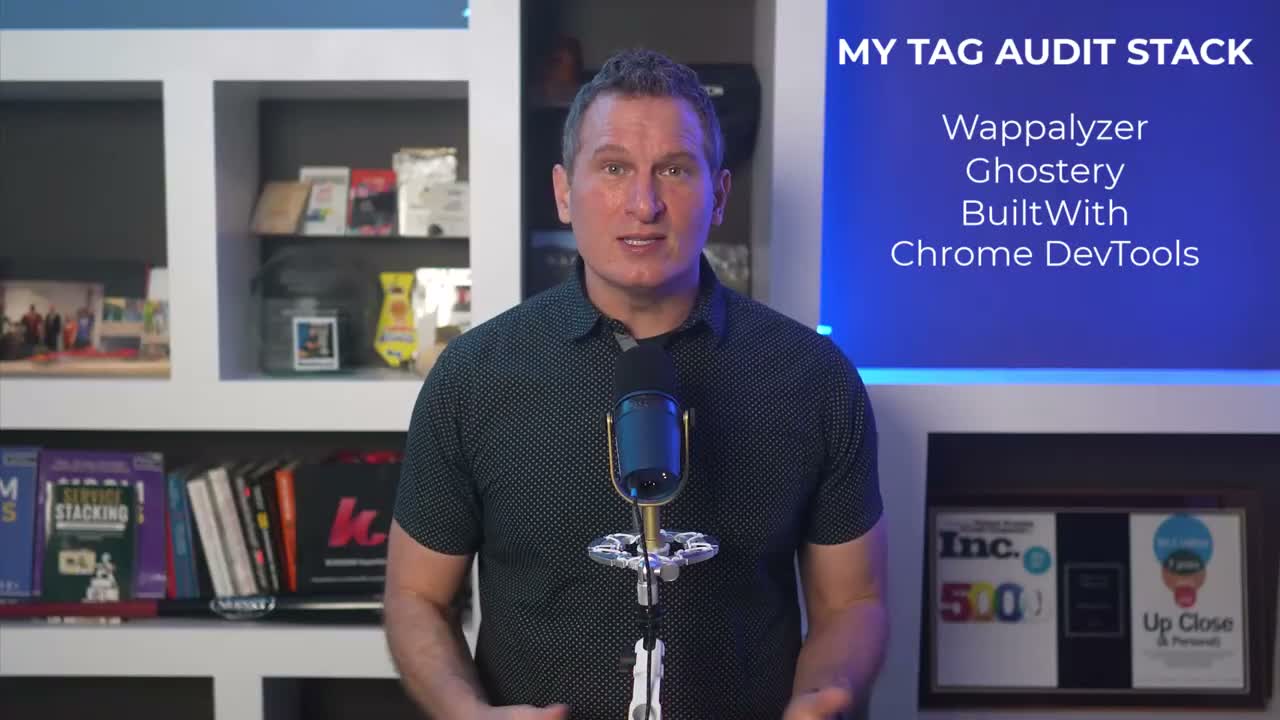
Here's my stack:
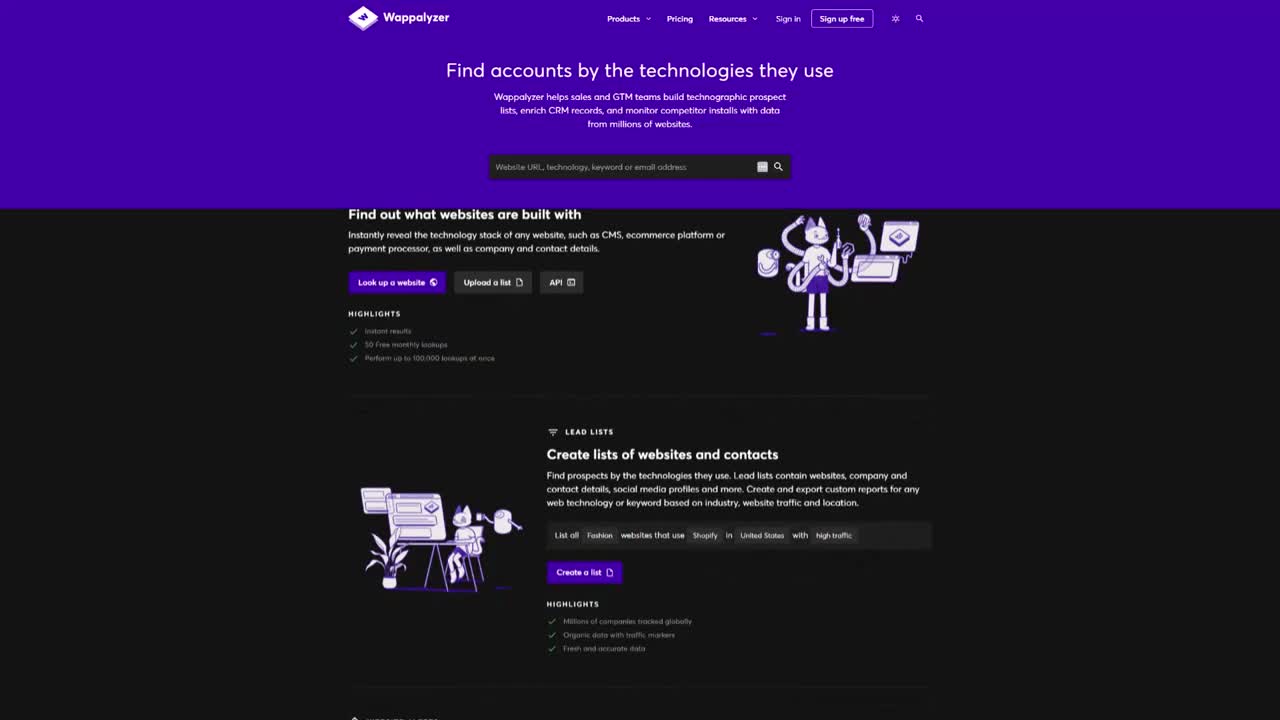
Wappalyzer — Free Chrome extension. One click and it shows you every technology running on their site. Analytics platforms, tag managers, ad pixels, all of it. You now know their entire tracking setup before you've said a word to them.
Ghostery — Also free. This one shows you every tracker firing on any page in real time — what's loading, what's blocked, what's broken.
BuiltWith — Technology profiler. No extension needed. Just plug in their URL and it tells you what they're running. Great for deeper research before you even visit the site.
Chrome DevTools — Built into every Chrome browser. Free forever. Hit the Network tab, filter by “google” or “facebook” or “analytics.” You can see exactly what's firing versus what should be firing.
Why This Matters More Than You Think
Research shows that 81% of GA4 migrations have misconfigured events and tracking gaps. 81%.
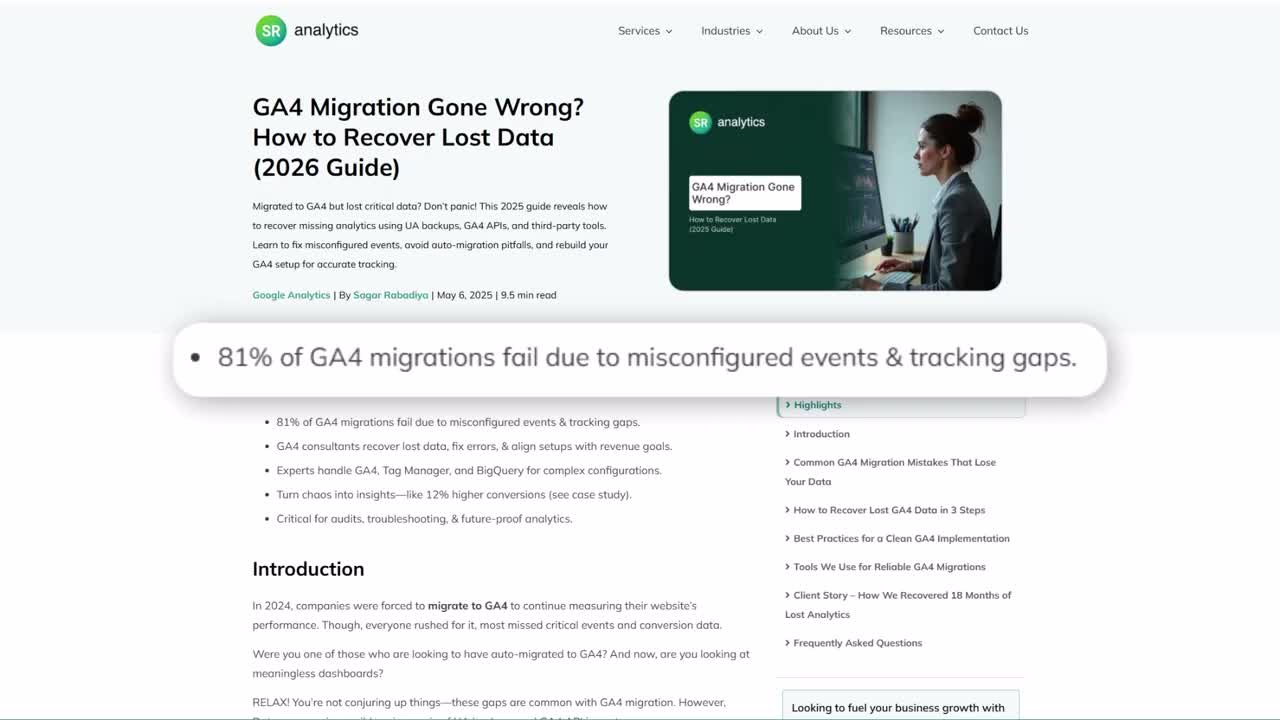
So statistically, before you've even run a single test, the odds are already in your favor that something is broken.
Run the scan. Screenshot what you find.
That's your homework. And when you show up and say “I was poking around your website last night” — you've got receipts. You're not guessing. You're showing them a screenshot of their own broken setup.
I'll paste my findings into an AI prompt and get a plain-English summary of exactly what's wrong in about 90 seconds. No jargon. Something I can share on screen mid-conversation without the prospect's eyes glazing over.
The Psychology Behind This
You've just demonstrated that you know their business better than they do. Before they've given you anything.
And now — naturally, comfortably — they want to show you more.
That's how you earn the ask for GA4 access. Not by requesting it. By making them want to hand it to you.
Test 2: Finding the Invisible Conversion Gap in GA4
So now they've seen the tag audit. They're leaning in. And at some point in that conversation — naturally, without pressure — I'll say:
“Hey, would you be open to letting me take a quick look at your GA4? I want to show you something.”
That's where Leadsie comes in. The prospect clicks one link, grants read-only access, and I can revoke it when we're done. No sharing passwords. No IT ticket. No friction.
And that matters — because any amount of friction kills the momentum you just built.
The 3-Minute Test
Once I'm in GA4, the test takes about three minutes:
- Pull the conversion count for the last 30 days
- Write that number down
- Ask them: “How many actual sales — or leads, or form fills, whatever your conversion is — did you get last month?”
They'll tell you. And when they do, compare those two numbers.
That gap? That's the invisible conversion problem.
The Gap Is Usually Massive
In my experience, the gap is usually 30 to 50 percent — meaning GA4 is only seeing half to two-thirds of what actually happened.
Think about what that means for every decision they've made based on that data:
- Every budget call
- Every channel they scaled up or killed
- Every report they sent to their boss or their board
It was all built on a number that was missing a third of the picture.

Research from Commerce Signals shows that 47% of marketing budgets are wasted on bad attribution. That's not a rounding error. That's almost half of every dollar they're spending — optimized against data that was never accurate to begin with.
What NOT to Do
Here's what I do NOT do at this point.
I don't launch into a fix. I don't start explaining solutions. I let that gap sit there for a second.
Because they're already doing the math.
And then usually, without me saying anything, they ask: “So… where is that number going?”
That's the question I'm waiting for. Because now I can show them Test 3.
Test 3: Exposing Platform Attribution Lies
This is the one that makes people's jaws drop.
Because Test 2 showed them data they were missing. This one shows them data they were counting twice. Sometimes three times.
Here's what I ask for now: read-only access to their ad platforms. Google Ads. Meta Ads. Whatever else they're running. Same frictionless Leadsie link — one click, read-only, they can revoke it whenever.
The Embarrassingly Simple Test
Once I'm in, the test is almost embarrassingly simple:
- Pull the conversion numbers from each platform for the same 30-day window we used in Test 2
- Google Ads says X
- Meta says Y
- Maybe LinkedIn says Z
- Add them up
- Compare that total to actual sales
Every single time — every single time — the platform total is 2x to 3x reality.

Because every platform takes credit for the same conversions. Google says it drove the sale. Meta says it drove the sale. They're both counting the same customer.
And the client has been looking at those numbers and thinking their marketing is working great.
Google's Own Admission
This is where I'll often bring up something that stopped me cold when I first read it: Google's own behavioral modeling documentation acknowledges that when users deny consent, Google fills in the gaps by guessing. Their word, essentially. They model the behavior.
So not only is attribution double-counted across platforms — part of what you're seeing isn't even real data. It's a statistical estimate dressed up as a conversion.
Where AI Actually Earns Its Place
Pulling this data manually — logging into each platform, exporting, building a comparison spreadsheet — used to take hours.
With AI and MCP servers, I can connect to multiple ad accounts and run the full comparison in minutes. I'm not doing spreadsheet math. I'm reviewing a summary that's already done the work.
How Bad Data Destroys Data-Driven Marketing ROI
PwC's 2026 Global CEO Survey reported that 56% of CEOs say they're seeing no meaningful ROI from AI — despite significant investment.
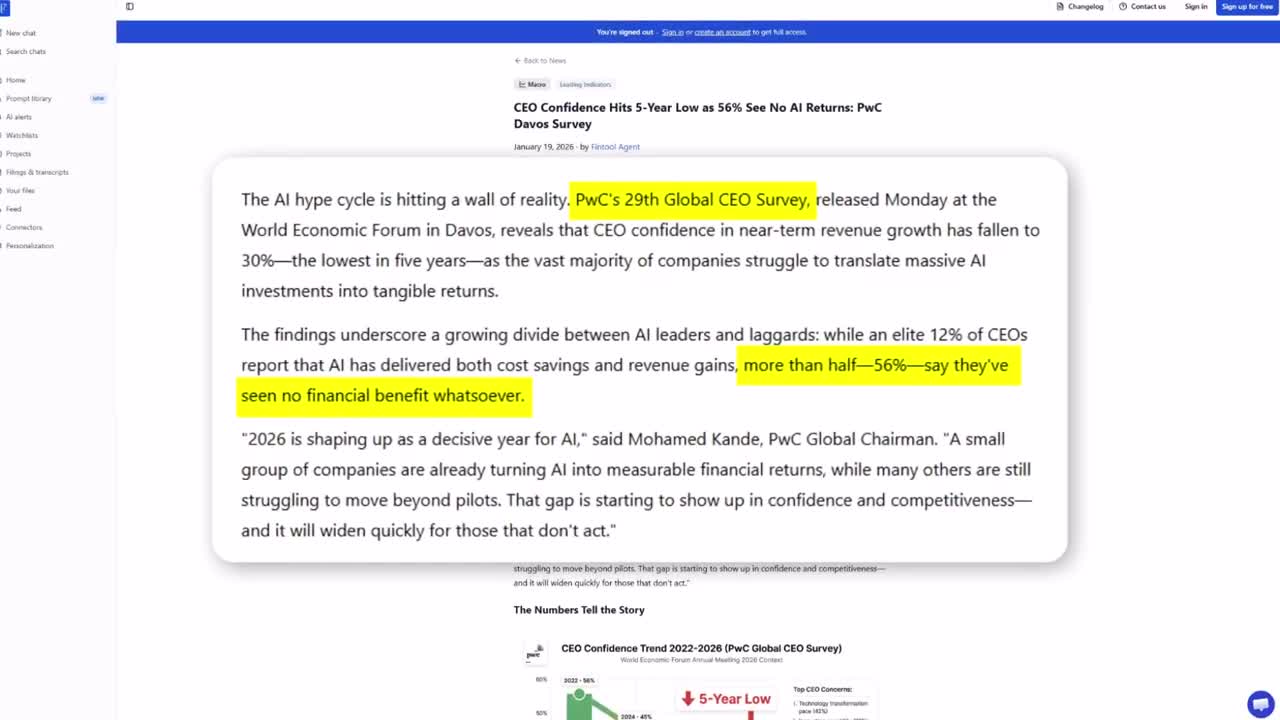
And I'd bet most of those companies are feeding AI tools data that looks exactly like what we've been looking at today. Garbage in. Confident-sounding garbage out.
Clean data isn't a nice-to-have. It's the whole game.
Your data-driven marketing ROI depends entirely on whether the data you're driving with is actually accurate. And as we've seen:
- 81% of GA4 setups have configuration problems
- 30-50% of conversions are invisible to analytics
- Platforms are double or triple counting the same customers
- Some of what you're seeing is modeled guesses, not real data
Every decision optimized against this data is compromised. Every AI tool trained on this data is learning the wrong patterns.
By the time I've walked a prospect through all three of these tests, they're not thinking about whether to hire me.
They're thinking about how fast we can start.
The Three-Test Progression: Putting It All Together
So that's the three-test progression:
Test 1 — Tag Audit
- No access required
- 15-20 minutes the night before
- You show up knowing more about their setup than they do
Test 2 — Invisible Conversions
- GA4 access, three minutes, one question
- The gap between their data and reality does the selling for you
Test 3 — Double-Counting
- Ad platform access, one comparison
- Every platform is lying to them and now they know it
Each test earns you the next one. And by the end you're not a vendor they're evaluating. You're the person who finally told them the truth.
Your Next Steps
Ready to see where your own data stands?
Take the free CLEAN Data Quiz — a quick assessment that scores your current tracking setup and tells you your single highest-priority fix.
Browse the 99 services list — everything we offer for analytics, tracking, and data quality. If the three-test system showed you something broken, we can help you fix it.
And if you want to start right now: run Test 1 on your next prospect tonight. Before your next call. Show up with screenshots of their broken setup and watch the dynamic shift.