Tired of watching every “AI is changing everything” video and still not knowing how to actually monetize any of it?
Yeah, me too. For a while anyway.
But here's what those videos miss: they're the appetizer. The business model that makes all of this possible—the engine that actually pays for the AI revolution—is advertising. And right now, we're watching that engine get built in real time.
ChatGPT just turned on ads for 800 million users. Google is scrambling to stuff ads into AI Overviews to protect their search revenue. Perplexity is building a commerce engine. And almost nobody has figured out how to run campaigns on any of it yet.
That's the opportunity. That gap between “the platforms are live” and “someone actually knows what they're doing.”
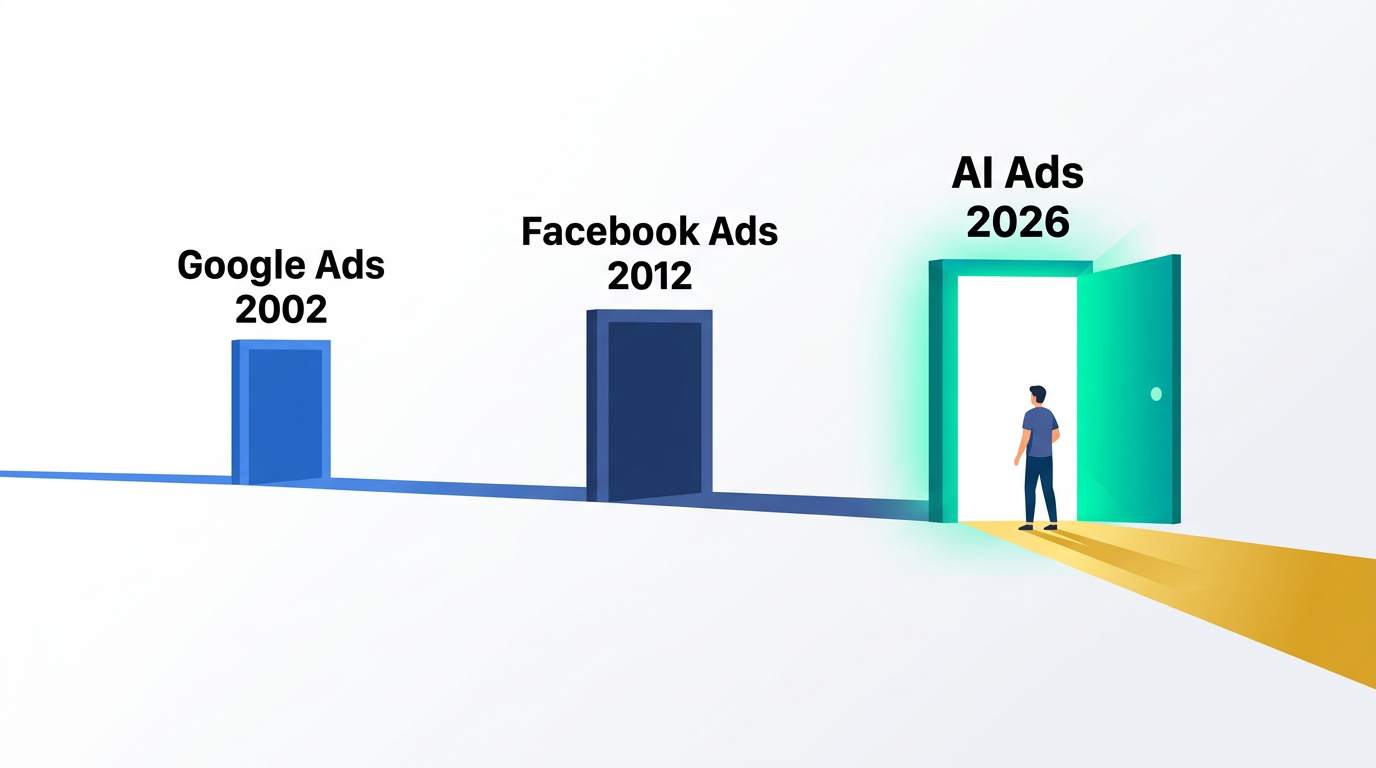
I've seen this movie before. I was there for the Google Ads wave in 2002. Rode it early, built an agency on it, created a course that over 10,000 people bought. Being a first mover on that platform changed my entire career. And I'm telling you—AI ads management is the opportunity I'm most excited about since Google Ads launched.
Not because the technology is cool. Because the window is open right now. And it won't stay that way for long.
Watch: The Complete AI Ads Breakdown
What You'll Learn
- AI advertising represents a once-in-a-decade category-creation opportunity—the first since Facebook Ads in 2012
- The shift from search engines to answer engines fundamentally changes advertising economics (shrinking inventory, exploding placement value)
- A freelancer with 6 months of experimentation can know more than a 20-year veteran who's been ignoring this
- Two parallel service stacks (AI Ads Management + Answer Engine Optimization) work synergistically for premium positioning
Table of Contents
- Why This Is a New Category (Not Just a New Ad Format)
- The Challenger Platforms: ChatGPT Ads and Perplexity's Commerce Engine
- The Incumbent Response: Google AI Overviews and Microsoft Copilot
- Service Stack 1: AI Ads Management (The Main Event)
- Service Stack 2: Answer Engine Optimization as the Visibility Foundation
- What Early Adopters Are Actually Doing Right Now
- Your Action Plan
Why This Is a New Category (Not Just a New Ad Format)
When Google Ads launched, it wasn't just “banner ads but on a search engine.” It was a completely different model. You bid on intent. You paid when someone clicked. The whole economics of advertising changed.
Same thing with Facebook. It wasn't just “Google Ads but on social media.” It was targeting based on who people are, not what they're searching for. Different model. Different skillset. Different experts emerged.
AI ads are the same kind of shift. We're moving from search engines to answer engines.
Think about how people used to search:
- Type in a query
- Get ten blue links
- Open five tabs
- Compare options
- Finally decide
The user does all the work.
Now? You ask ChatGPT a question and it gives you the answer. One answer. Maybe a few options. The AI did the synthesis for you.
That changes everything about advertising.
The Old Model: Ten organic spots and seven ad spots on a page. Plenty of real estate.
The Answer Engine Model: One answer. Maybe a carousel of three or four options. Inventory is shrinking but the value of each placement is exploding.
Here's a number that puts this in perspective: OpenAI is projecting $25 billion in ad revenue by 2030. That would make ChatGPT the third largest ad platform in the world. Behind only Google and Meta.
We're not talking about a niche opportunity here.
And the leads that come through? They're different. Our friend JJ Reynolds over at Vision Labs—they've been doing a ton of AEO and AI visibility work—told me the leads they get from AI are the best they've ever seen. We're talking high double-digit conversion rates.
Because when someone asks an AI a question and the AI recommends you, that carries weight. That's not a banner ad someone scrolled past. That's a trusted recommendation.
The Challenger Platforms: ChatGPT Ads and Perplexity's Commerce Engine
Let's look at what's actually happening right now. I'm splitting this into challengers and incumbents because they're playing very different games.
ChatGPT Ads: The 800 Million User Opportunity
OpenAI launched ads in the free and Go tiers. That's 800 million weekly users seeing sponsored content inside their conversations.
How it works:
- Ads show up as sponsored modules below the AI response
- Contextually matched to what you're talking about
- Planning a trip to Tokyo? You might see a sponsored hotel recommendation
- Asking about CRM software? You might see a sponsored option in the mix
Here's the thing that matters: it's contextual, not behavioral. They're not tracking you across the web. They're reading the conversation you're having right now and matching ads to that intent.
In some ways, that's more powerful than what Google or Meta can do. You're catching someone at the exact moment they're trying to solve a problem.
No self-serve platform yet—it's invite-only pilot programs with big agencies. But that's going to change. And when it does, the people who've been paying attention will have a massive head start.
Perplexity Ads: The Commerce Engine Pivot
Perplexity actually launched ads back in late 2024. Sponsored follow-up questions—you ask something, and one of the suggested follow-up questions is sponsored. Pretty native to the experience.
But here's where it gets interesting. They paused the ad program in late 2025. Not because it failed—because they're pivoting to something bigger.
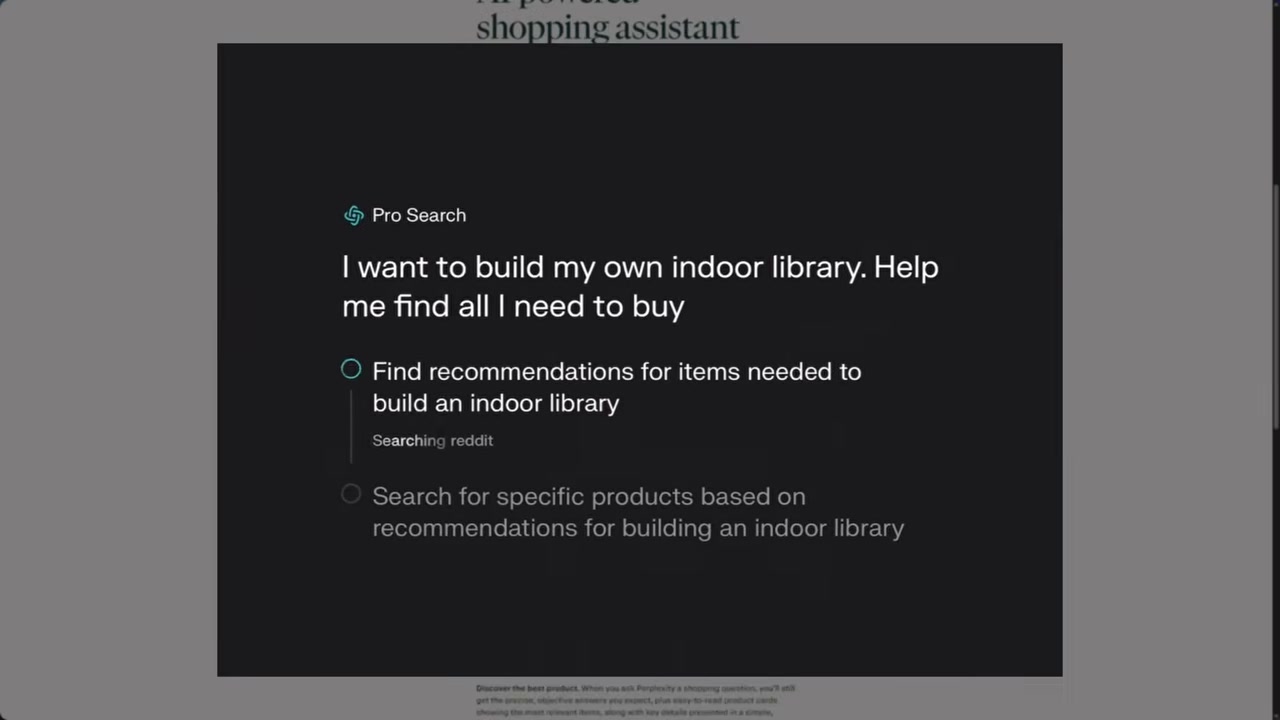
They're building a commerce engine. “Buy with Pro” lets you purchase products directly inside Perplexity. One-click checkout. They've partnered with PayPal. The conversion happens inside the chat.
Think about what that means. The entire funnel—ad, landing page, cart, checkout—collapses into a single step. That's not a new ad format. That's a new transaction model.
When Perplexity reopens ads (and they will), the brands who are already in their Merchant Program, already have their product feeds indexed—they're going to have a huge advantage.
So if you're thinking about this for clients, or for yourself: get in that program now. Before the ads turn back on.
The Incumbent Response: Google AI Overviews and Microsoft Copilot
Now let's talk about the incumbents. Google and Microsoft. They're not building something new—they're protecting something old.
Google AI Overviews: How the Incumbent Is Protecting Search Revenue
Google is in a weird position right now.
AI Overviews are cannibalizing their own search results. You know what I'm talking about—you search for something and there's that AI-generated summary at the top that answers your question. Great for users. Terrible for Google's business model.
Because if the AI answers your question, you don't click anything. No clicks, no ad revenue. Google essentially built a product that competes with itself.
So what are they doing? Stuffing ads into AI Overviews.
They've rolled out sponsored placements inside those AI-generated answers. It's already live if you're running Performance Max campaigns—your ads can show up in AI Overviews automatically. You don't even have to opt in. It's just… happening.
The opportunity here for service providers: helping clients understand what's actually going on inside their PMax campaigns. Because Google isn't exactly being transparent about where your budget is going. Someone who can audit that, optimize for it, explain it—that's valuable.
Microsoft Copilot: The B2B Sleeper
Everyone's focused on ChatGPT and Google, but Microsoft is quietly sitting on something powerful.
They have access to the Microsoft Graph—that's your emails, your calendar, your documents, your company org chart. The context they can build around a user is insane.
And they've got Bing ads infrastructure already built. They know how to run an ads platform. They're just waiting for Copilot usage to hit critical mass.
For B2B specifically, Copilot might end up being the most valuable AI ads platform. Because they know you're a marketing director at a 500-person company who has a meeting about CRM software next Tuesday. That targeting doesn't exist anywhere else.
The takeaway: The challengers—ChatGPT, Perplexity—are inventing new models. The incumbents—Google, Microsoft—are adapting old ones. Both represent opportunities. But they require different approaches.
And right now, almost nobody has figured out either one.
Service Stack 1: AI Ads Management (The Main Event)
So let's get into how you actually build a service around this.
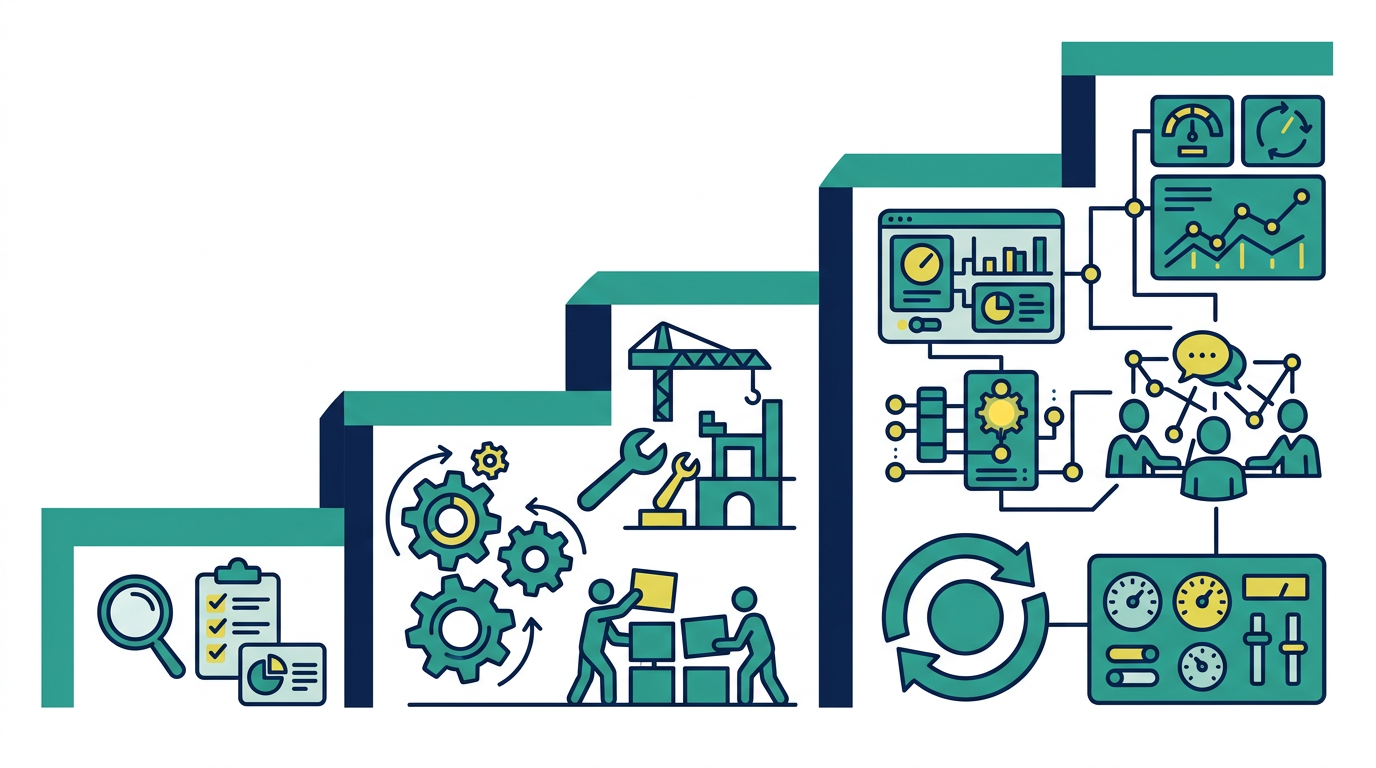
If you've watched my other videos on service stacking, you know I break things into three tiers. Low risk, Implementation, and Retainer. Low risk to high commitment. That structure works perfectly here.
Tier 1: Strategy Package (Low Risk Entry)
This is how you get clients in the door without them having to commit a ton of budget. You're not running ads yet. You're doing the thinking.
What you deliver:
- Campaign structure planning
- Budget allocation across platforms
- Audience strategy (which is different in AI—you're thinking about intent clusters, not keywords or demographics)
- Creative briefing for conversational contexts
You're basically handing them the blueprint. Here's what we would do, here's why, here's what it would cost to execute.
Low risk for them. High value. And it qualifies whether they're actually ready to move forward.
And here's the thing—even if you can't implement everything today because the platforms are in private beta or the self-serve tools aren't live yet, you're setting yourself up to be the one who flips the switch when it opens.
You're not trying to upsell them. But the upsell is built in. They trust you because you've been thinking about this longer than anyone else they know.
Tier 2: Implementation (Campaign Execution)
This is where you actually run campaigns.
The work includes:
- Setup and configuration
- Bid strategy development
- Audience testing across platforms
- ChatGPT ad platform management (when self-serve opens)
- Google PMax optimization for AI Overview placements
- Copilot testing for B2B clients
The work here is different from traditional paid media. You're not optimizing for keywords. You're optimizing for conversational context.
What questions are people asking? What problems are they describing in natural language? How does the AI interpret that intent?
It's a different skillset. Which means there's room for new experts who aren't anchored to the old way of doing things.
Tier 3: Retainer (Ongoing Optimization)
Once campaigns are running, someone needs to watch them.
Retainer deliverables:
- Bid adjustments
- Creative testing
- Performance reporting
- Scaling what's working
- Staying on top of platform changes
The retention angle here is strong because the platforms are evolving so fast. What works in January might not work in March. Clients need someone who's staying on top of changes they don't have time to track.
The Economics Reframe (This Is Important)
We talked about the speculated $60 CPMs on ChatGPT. That's premium. That's 3-4x what you'd pay for display on Meta.
But here's why that comparison doesn't hold up.
Traditional display ads are spray and pray. You show an ad to a thousand people, maybe three of them care. You're paying for impressions, not intent.
AI ads are recommendation-based. You're showing up inside a conversation where someone is actively trying to solve a problem. The AI is essentially vouching for you.
So when someone asks you “why would I pay $60 CPM when I can pay $15 on Meta?”—that's the wrong comparison.
You're not paying for eyeballs. You're paying for trusted placement at the moment of decision.
That reframe is part of the value you bring as a service provider. Helping clients understand why the old benchmarks don't apply.
Service Stack 2: Answer Engine Optimization as the Visibility Foundation
Now let's talk about Stack 2. AI Visibility. This is what some people call AEO—Answer Engine Optimization.
And I want to address something right off the top because I know some of you are skeptical.
The “Snake Oil” Objection
There's a lot of noise out there about AI visibility being snake oil. And honestly? I get it.
The results are personalized. You run the same prompt twice, you might get different answers. You can't guarantee rankings the way you could with old school SEO. The metrics are fuzzy. Attribution is a nightmare.

All of that is true.
And that's exactly why this stack pairs with ads.
Here's the reframe: You can't reliably control organic AI visibility. But you CAN buy your way into the answer. The audit just tells you where you stand and what gaps to fill. It's diagnostic, not a ranking guarantee.
So Stack 2 feeds Stack 1. You figure out where clients are showing up—or not showing up—in AI answers. Then you use paid placement to fill the gaps.
Tier 1: AEO Audit (Low Risk Entry)
You're answering one question: are you even showing up in AI answers? And if so, how are you being represented?
What you deliver:
- Run their brand through ChatGPT, Perplexity, Gemini, Copilot
- Document what comes back
- Look for hallucinations (is the AI saying things about them that aren't true?)
- Look for gaps (are competitors showing up where they should be?)
This is valuable even if they never buy another service from you. Because most businesses have no idea how AI is representing them right now. You're showing them something they can't unsee.
Tier 2: Implementation (Fix What You Found)
The work includes:
- Schema markup so AI can understand their site structure
- Product feeds for commerce-enabled platforms like Perplexity
- Training data PR—getting mentioned in sources that AI models are trained on
This is more technical work. Not every client needs all of it. But for e-commerce brands especially, getting your product feed into Perplexity's Merchant Program before their ads reopen—that's a real competitive advantage.
Tier 3: Retainer (Ongoing Monitoring)
AI models update constantly. What they say about a brand today might change next month.
Monitoring deliverables:
- Watch for hallucinations
- Track citation sources
- Clean up misinformation when it pops up
This is also where the synergy between organic and paid kicks in.
Remember how having good SEO actually helped your Google Ads perform better? Same thing here. If AI already knows about your brand and trusts the sources citing you, your paid placements carry more weight. The recommendation feels more natural because the AI has context.
So you're not choosing between visibility and ads. You're building both, and they reinforce each other.
What Early Adopters Are Actually Doing Right Now
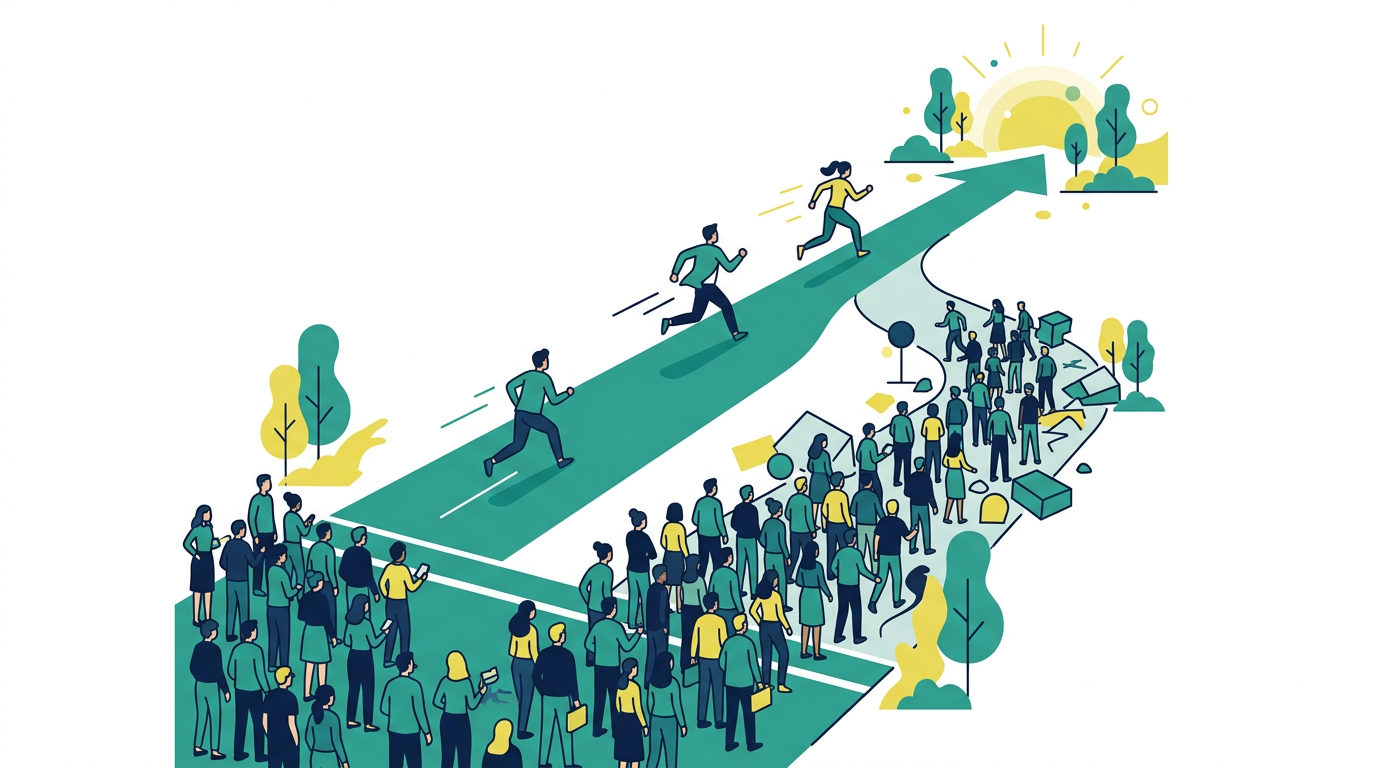
So what are the early adopters actually doing?
Our research shows a few patterns.
The agencies getting early access to ChatGPT ads—companies like Omnicom, Interpublic, WPP—they're not waiting for best practices to emerge. They're running test budgets and building their own playbooks.
Same with the brands in Perplexity's pilot program. They got in before the pause. They had campaigns running. Now they're positioned to scale when ads reopen because they already have data.
That's the pattern. Get in before you have to. Build the skill before the market demands it.
Here's what that looks like if you're not a holding company with a direct line to OpenAI:
1. Get into the Perplexity Merchant Program now. If you're in e-commerce or you have e-commerce clients, this is a no-brainer. Your product feeds get indexed. When ads come back, you're already in the system. Everyone else will be scrambling to catch up.
2. Start tracking where your brand shows up in AI answers. Or where your clients' brands show up. Just run the queries manually if you have to. Build a baseline. Because you can't optimize what you're not measuring.
3. Experiment on yourself. Run some budget through Google PMax and actually look at where your ads are showing up in AI Overviews. Most people have no idea this is already happening inside their campaigns. Be the person who does.
4. If you're offering services, start with the low risk tier. Strategy packages. Audits. Get clients in the door with something that doesn't require a huge commitment. Position yourself as the person who understands this before you need to prove you can execute it at scale.
Your Action Plan
Here's where we're at.
AI ads are not coming. They're here. ChatGPT has ads. Google is stuffing them into AI Overviews. Perplexity is building a commerce engine. Microsoft is waiting in the wings with more user context than anyone.
The platforms are live. The budgets are moving. And the playbook doesn't exist yet.
That last part is the opportunity.
Every time a new ad category emerges, there's a window. A window where the experts haven't been crowned yet. Where someone with six months of experimentation knows more than the veteran who's been ignoring this. Where you can build a reputation by being early instead of being the best.
That window is open right now. It won't stay open.
Your next steps:
- Run an AI visibility audit on your own brand this week (takes 30 minutes)
- Check your Google PMax campaigns for AI Overview placements
- Apply for Perplexity's Merchant Program if you're in e-commerce
- Package your first AI ads strategy offering (even if you price it at cost to get reps)
The agencies who figure out AI ads management in 2026 are going to own that category for the next decade. The same way the Google Ads pioneers owned search. The same way the Facebook Ads early movers owned social.
You can be one of them. Or you can catch up later at ten times the cost.
The ground floor is now. Go build something.
Want the full list of services I'm watching this year? AI Ads management was just one of 99 on our Services report—the one I'm most excited about, but there are 98 others depending on what kind of business you want to build. Check out the full list of 99 freelance marketing services.