I spent over 3 million dollars building my agency.
Consultants. Specialists. Generalists. People who charged $6,000 a day just to sit in a room and give me their opinions.
And half the time? They were wrong.
We hired research firms. Strategy firms. People with fancy titles who'd hand us 50-page reports that took 6 weeks to produce and cost more than most people's cars.
All so we could answer one question: What should we do next?
That was the game. You either had money to buy certainty… or you guessed. And guessing is why most agencies fail.
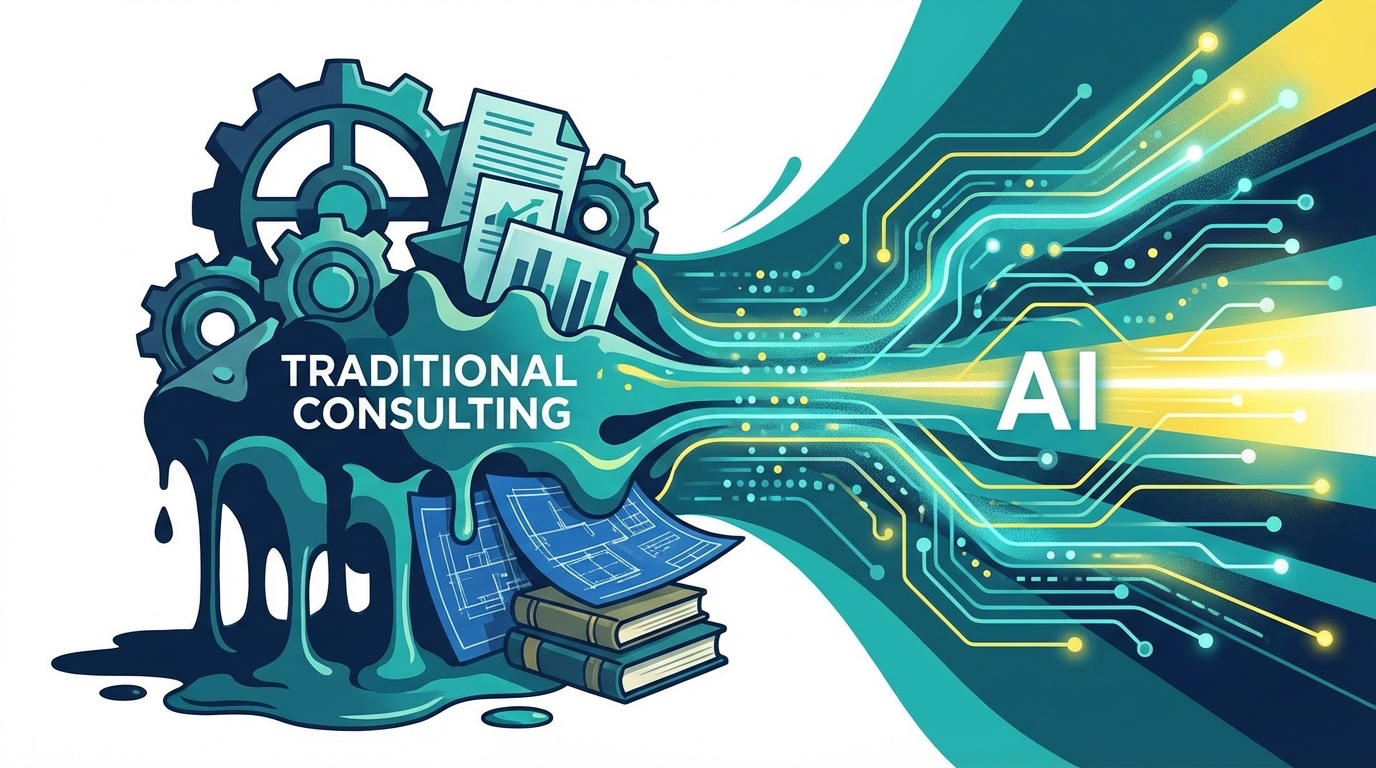
But here's what's wild. The research that used to cost me hundreds of thousands of dollars? The strategic clarity that took weeks or months to produce? I can now get it in 5 minutes.
Not a watered-down version. Not some chatbot summary.
I'm talking about comprehensive, sourced, actionable research that tells you exactly what services to offer, how to price them, what objections you'll face, and where the market is heading.
5 minutes. Multiple sources. Zero gray area. And data-driven decisions that actually stick.
Today I'm showing you the exact process.
Watch: The Complete Multi-LLM Research Process
Key Takeaways:
- Running the same prompt across Gemini, Perplexity, and ChatGPT gives you comprehensive coverage no single tool can match
- The “mega-prompt” approach with thousands of characters produces dramatically better research than generic queries
- NotebookLM consolidates multiple reports into visualizations you can actually use
- Custom Gems turn static research into interactive advisors that back recommendations with data
Table of Contents
- Why I Stopped Trusting Opinions (And Started Demanding Evidence)
- The Real Problem: Operating on OPO (Other People's Opinions)
- The Multi-LLM Research Setup for AI Business Strategy
- Crafting the Mega-Prompt That Actually Works
- Processing Your Agency Research with NotebookLM
- Activating Research: Building Your Data-Driven Decision Engine
- The Challenge: Stop Guessing at Your Business
Why I Stopped Trusting Opinions (And Started Demanding Evidence)
Look — I'm not saying this to brag about spending 3 million dollars. Honestly? A lot of that money was wasted.
But it taught me something that most agency owners never learn: the difference between opinions and evidence.
I'm Jeff Sauer. I came in as a partner at an agency and helped grow it 1,000% in 5 years. We made the Inc 5000 list five times. And we sold it for 8 figures.

The entire time, the hardest part was never the work. It was knowing what to do next with confidence.
Should we add this service? Is this niche worth pursuing? How do we price this thing we've never sold before?

Those questions used to paralyze me. Because the answers were always opinions. My opinion. My partner's opinion. Some consultant's opinion based on clients that weren't anything like mine.
Now I have a process that removes the opinions entirely.
It pulls from multiple AI research systems simultaneously. It cross-references sources. It gives me data, not feelings.
And it's the same process I use today to pivot my business, launch new services, and advise the agencies in my community.
If you're tired of operating in the gray area — guessing at pricing, copying competitors, hoping your next offer lands — this is going to change everything.
The Real Problem: Operating on OPO (Other People's Opinions)
Here's what I see constantly in our community.
Someone asks: “What should I charge for AI automation?”
And they get 47 different answers. Everyone's got an opinion. Charge hourly. No, charge value-based. No, productize it. No, do retainers.

None of it is backed by evidence.
This is how most freelancers operate when starting their agency. They're flying blind.
They pick services based on what's trending on Twitter. They price based on what competitors seem to be charging. They position based on whatever sounds good in the moment.
And then they wonder why clients push back. Why deals fall through. Why they feel like they're constantly scrambling to justify their value.
The problem isn't that they're bad at sales or marketing.
They never had a chance to find out.
Because they don't have certainty.
They can't point to data that says “this is what the market wants.” They can't reference research that shows “this is the gap no one's filling.” They don't have evidence for anything.
They have OPO — other people's opinions.

And OPO doesn't close deals.
Here's my controversial take on this (and I'll just say it straight): if you're not doing deep research to back your business decisions, you don't have a real business.
You have a hope. You have a gamble.
But you don't have the foundation that lets you operate with confidence.
The good news? Building that foundation is now stupidly easy.
The Multi-LLM Research Setup for AI Business Strategy
So here's where we get tactical.
The first thing you need to understand is that no single AI gives you the full picture. They all have different training data. Different sources. Different strengths.
Gemini pulls heavily from Google's web index — websites, articles, YouTube videos, stuff that Google can crawl.
Perplexity sources from places like Reddit and social media. Real conversations. Real people talking about real problems. Sometimes that's way more valuable than a polished article.
ChatGPT has its own reasoning engine and tends to synthesize information differently than the other two.

So what I do — and this is critical — is run the exact same prompt across all three.
Same prompt. Three different systems. Three different reports.
You're not looking for them to agree. You're looking for the complete picture. One might surface a stat the others missed. One might frame a market opportunity differently. One might give you case studies the others didn't find.

When you combine all three? You get something that no single $6,000-a-day consultant could ever give you.
And it takes about 5 minutes to kick off.
Crafting the Mega-Prompt That Actually Works
Now here's where most people mess this up.
They type something like “research AI services for agencies” and wonder why they get generic garbage back.
The quality of your research is directly proportional to the quality of your prompt.
My prompts are thousands of characters long. And I mean thousands. They're comprehensive because I need comprehensive answers.
Let me walk you through the structure.
First — I give it context about what I'm actually researching. In this case, I'm researching AI enablement services for agencies, freelancers, and consultants. I tell it my thesis going in.
But here's the key: I'm not telling it what to conclude.
I'm not saying “prove that AI automation is valuable.” That would just give me confirmation bias with extra steps.
I'm saying “go find the data on this topic and fill in the blanks I've outlined.”

Then I break it into sections:
- Section one: Market opportunity. What's the size? What's the growth rate? What are the trends?
- Section two: ROI. Why would someone pay for this service? What outcomes can they expect?
- Section three: The gap. What's broken right now? What needs aren't being met?
And it keeps going:
- AI agents
- Sales systems
- Operations systems
- Marketing systems
- Custom GPT development
- Workflow automation
- Prompt engineering
- Skills required
- How to package it
- How to price it
- Case studies
- Competitive landscape
- Client objections
- Future trajectory — where is this heading in the next 12 to 24 months?
And then — this is important — I specify the deliverables I want.

I don't just want a wall of text. I want structured outputs. Tables. Summaries. Actionable recommendations.
This mega-prompt approach is why my research actually gives me answers I can use. It's not magic. It's specificity.
Processing Your Agency Research with NotebookLM
So now you've got three research reports. Maybe 50 pages each. Different sources. Different framing.
How do you actually use this?
That's where NotebookLM becomes incredibly powerful.
I take all three reports and drop them into a single NotebookLM notebook. And what it does is consolidate everything.
It reads across all the sources. It identifies patterns. It surfaces the insights that matter.
And then — this is where it gets fun — I can create outputs from that consolidated research.

Want an infographic summarizing the key market data? Done.
Want a data table showing pricing benchmarks? Done.
Want a slide deck I can use for a presentation? Done.

I've created quizzes based on the research — like a “readiness assessment” someone can take to see if they're ready to offer a new service.
Mind maps. Flashcards. Audio overviews.
NotebookLM takes this mountain of information and lets you visualize it in whatever format actually helps you use it.
And here's the thing — when you visualize your path forward, you pull yourself toward it.
It's not just about having the data. It's about seeing what you're building. Seeing the opportunity. Having something concrete to work toward instead of some vague idea floating in your head.
That's the difference between people who execute and people who stay stuck.
Activating Research: Building Your Data-Driven Decision Engine
Now, static research is useful. But interactive research is a completely different level.
This is where custom Gems come in.
What I've built — and this is part of our Agency Blueprint program — is a Gem that uses all this research as its knowledge base.
So instead of me digging through 150 pages of research every time I have a question, I just ask the Gem.
And it doesn't just answer. It advises.
Here's how it works.
I tell it I need to find a new service because my current one is getting commoditized. Getting my butt kicked, basically.
The Gem comes back with three diagnostic questions:
- First: The endurance test. What could you do for 10 hours straight without getting tired? This surfaces what you're actually built for.
- Second: Your pain point. What's your biggest struggle right now? This identifies what to move away from.
- Third: Your identity. What do you want to be? A strategist? An architect? An operator? This shapes the recommendation.
I answered those questions, and it came back with a specific recommendation: become an AI Workforce Architect. It told me how to position it. How to pitch it without doing a hard sell. And then — this is the good part — it backed everything up with data from the research.
Not opinions. Data.
When a client asks “why should I pay for this?” I have sources. I have market stats. I have proof that this isn't just something I made up.
That's the difference between a real business and a hope.
The Challenge: Stop Guessing at Your Business
So here's where I'm going to challenge you directly.
If you're watching this and you're still making business decisions based on gut feelings and what you heard on a podcast… you need to stop.
I'm not saying podcasts aren't valuable. I'm not saying experience doesn't matter.
But we live in an era where research that used to cost millions of dollars is now available in minutes.

There's no excuse anymore for operating in the gray area.
The agencies that win in 2026 and beyond are going to be the ones who have certainty. Who can back up their positioning with data. Who know exactly why their pricing is what it is.
The ones who keep guessing? They'll get eaten alive by competitors who did the homework.
Deep research is the gift that keeps on giving.
You do it once and you have a foundation. You update it quarterly and you stay ahead of the market. You build Gems on top of it and you have advisors that never sleep.
This is how you build a real business. Not a hustle. Not a gig. A business that can scale, that can pivot, that can eventually sell if that's what you want.
And it all starts with one research report.
Kick it off today. Don't wait.
Your Action Plan: Start Making Data-Driven Decisions Today
- Write your mega-prompt — Include context, thesis, specific sections (market opportunity, ROI, gaps, pricing, objections), and deliverable specifications
- Run it across all three LLMs — Gemini, Perplexity, and ChatGPT with the exact same prompt
- Consolidate in NotebookLM — Drop all three reports into a single notebook and create visualizations
- Build your custom Gem — Use the consolidated research as a knowledge base for an interactive advisor
- Reference data in every client conversation — Back up your positioning and pricing with sources, not opinions
Ready to Build Your Research Foundation?
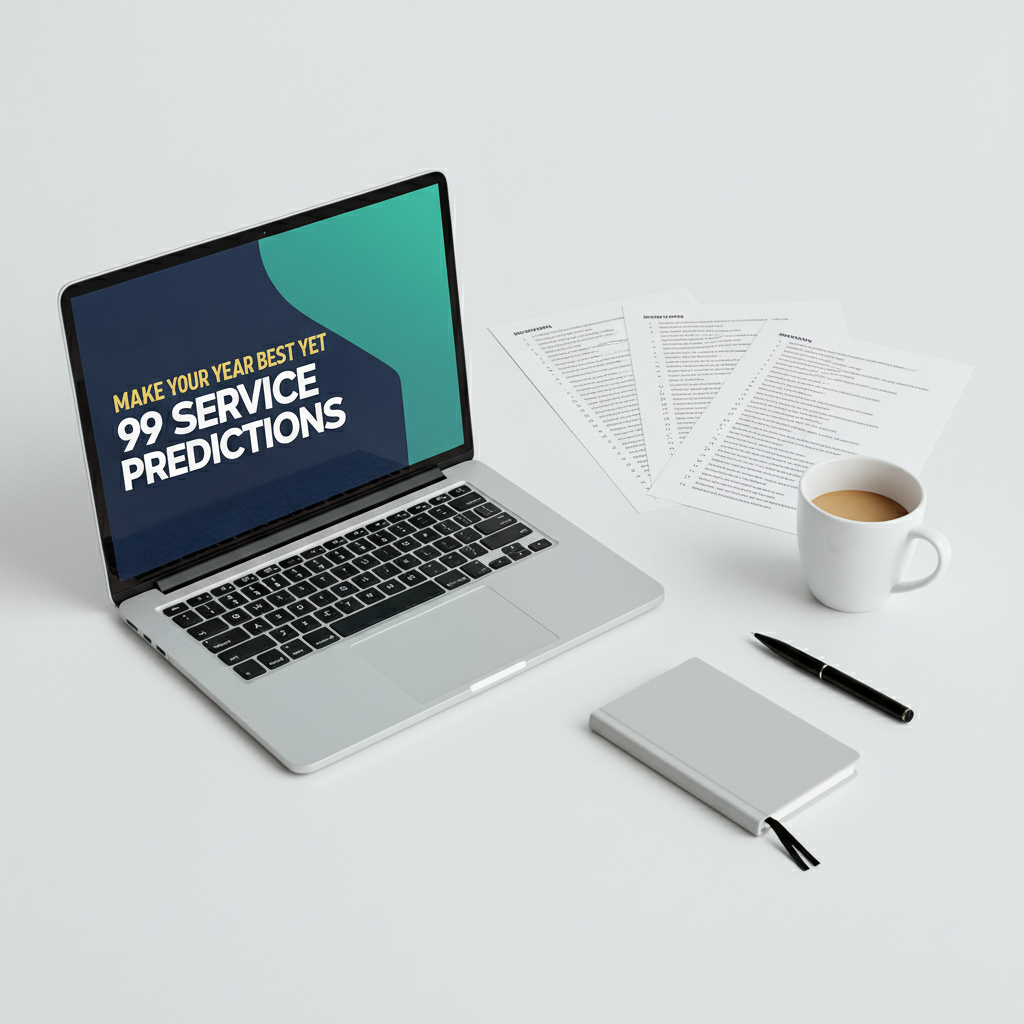
If you want the full Agency Blueprint — including the custom Gem I demoed, the 99 services breakdown, and the complete framework for repositioning your agency in 2026 — check out the link below.
I've done this exact research process for 99 different services that agencies and freelancers can offer. Everything from AI-Ready Data Cleaning to Custom AI Agent Development to Answer Engine Optimization. Each one scored on market demand, revenue potential, and growth trajectory.
Some of these services are showing 500% to 1,000% projected growth over the next two years. A few are showing 5,000% or higher.
Quick question for you — drop it in the comments.
Have you ever made a major business decision that you later realized was based on nothing but a gut feeling or someone else's opinion?
I'm genuinely curious. Because I've done it more times than I want to admit. And it's usually the decisions I was least certain about that cost me the most.
Go do the research. Build the certainty. And stop guessing at your business.
Good luck with your AI research journey — I'd love to hear how it goes.