If you've got a consent banner running on your site right now, you are way closer to server-side Google Tag Manager than you think.
And I don't mean “sort of close.”
I mean, you've already done the part that used to stop everyone. You haven't taken the final step yet, but it's a lot easier than you might expect.
I've been talking about privacy-led marketing since 2020—back when most people were still hoping the cookie situation would sort itself out somehow. I built a full course on this with Usercentrics, one of the top consent platforms out there. So this isn't me catching up to a trend. I've been watching this evolve up close.
And what I want to show you is where it stands right now. Because the barrier that kept you from doing this before? It's mostly gone.
Watch: Server-Side Tracking When You Already Have Consent
In the video above, I walk through the full picture—from why consent management and server-side tracking are really the same problem, to what the setup actually looks like now that the infrastructure barrier is gone.
Below, I've laid out the key concepts, real-world results, and a clear path to getting started—whether you're running paid campaigns or just want your data to be complete.
What You'll Learn in This Post
- If you already have a cookie consent banner, you've completed the compliance foundation that makes server-side GTM dramatically easier
- The old setup required Docker containers, Google Cloud Platform configuration, and backend engineering skills—that's no longer the case
- Consent management and server-side tracking are actually the same problem approached from both ends
- Companies implementing properly see 24% more conversions visible to ad platforms and tracking accuracy jumping from 78% to 97%+
Table of Contents
- What Server-Side Tracking Actually Is (The Post Office Explanation)
- Why Server-Side GTM Used to Be Hard—And What Changed
- The Consent Management Advantage: Your Foundation Is Already Built
- Real Results: What Proper Implementation Delivers
- Who Should Implement Server-Side Tracking Right Now
What Server-Side Tracking Actually Is (The Post Office Explanation)
There's a lot of jargon around server-side tracking that makes it sound more complicated than it needs to be. Here's the plain English version.
With traditional client-side tracking—what most sites are running right now—your visitor's browser is doing all the work. Someone lands on your site, and their browser starts firing tags. Straight from their device to Google, to Meta, to wherever. Direct line.
The problem is that line gets cut constantly:
- Ad blockers cut it
- iOS privacy settings cut it
- Safari's Intelligent Tracking Prevention cuts it
- Browser restrictions cut it
And every time it gets cut, that's a conversion you didn't see. A signal that didn't fire. A campaign making decisions on incomplete information.

Server-side tracking changes who's in the middle.
Instead of your visitor's browser calling Google directly, the request hits YOUR server first. Your server processes it, then passes it along to the platforms. You become the relay point.
And your server doesn't get blocked by Safari. Your server doesn't care about ad blockers. The signal gets through.
The Post Office Metaphor
Here's how I think about it.

With client-side conversion tracking, every visitor's browser tries to mail a separate letter—to Google, to Meta, to your analytics tool—all at once.
- Some letters get intercepted
- Some never make it
- Some arrive with the address smudged
Server-side tracking gives you your own post office. Everything routes through it first. You check it, stamp it, and send it.
The letters arrive. The address is clean. And you decide what gets sent at all.
That's the whole thing—nothing more mysterious than that.
Why Server-Side GTM Used to Be Hard—And What Changed
Here's the thing.
If you heard about server-side Google Tag Manager a couple years ago and decided it wasn't worth your time, that was actually a reasonable call. I'm not going to pretend it was always this accessible.
Because it wasn't.
The original setup involved spinning up a Google Cloud Run container. You were looking at Docker. Google Cloud Platform configuration that had nothing to do with marketing.
It was a backend infrastructure project disguised as a tracking upgrade.
And if you opened one of those setup guides, saw a command line, and closed the tab—I get it. That's not a failure of ambition. That's just a sane response to the wrong tool for your skill set.
Most marketers aren't DevOps engineers. They shouldn't have to become one just to fix their conversion tracking.
But Here's What Changed
The infrastructure problem got solved.
Not by you having to learn a new skill set, but by a whole category of tools that handle the hard part for you.
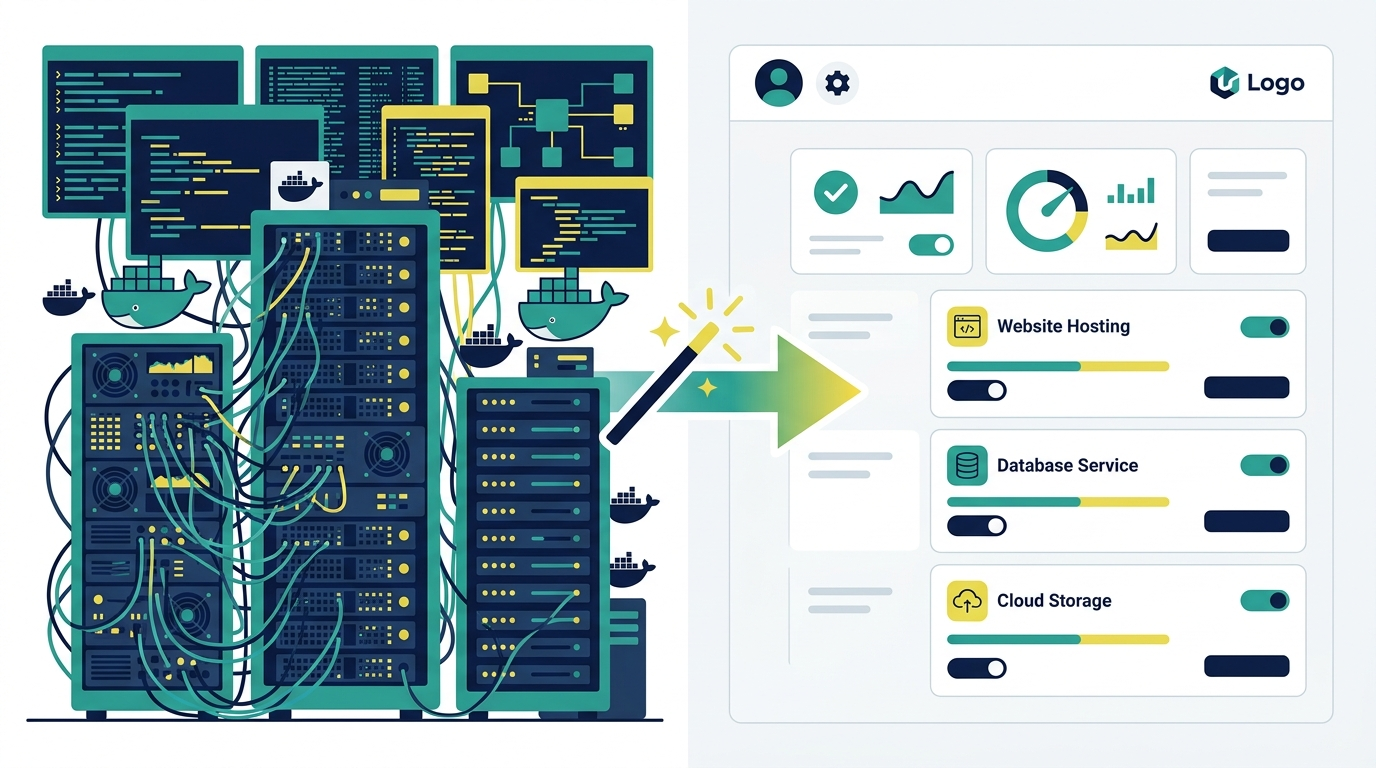
Managed server-side tracking is a real thing now:
- Multiple options at different price points
- Different approaches for different needs
- Setup that used to require a backend engineer is now a few clicks
Stape is one that a lot of people use and like. Taggrs is another. Quite a few others have come up in the last year or two.
If you've already looked into one of those and it genuinely fits, go do it. I'm not here to tell you there's only one answer.
The point is that the infrastructure barrier is gone across the board. You have real choices now, and most of them work.
The Consent Management Advantage: Your Foundation Is Already Built
But there's one option I want to spend more time on—and the reason is specific.
If you already have a cookie consent banner on your site, most people don't realize they're one step away from server-side tracking being fully operational.
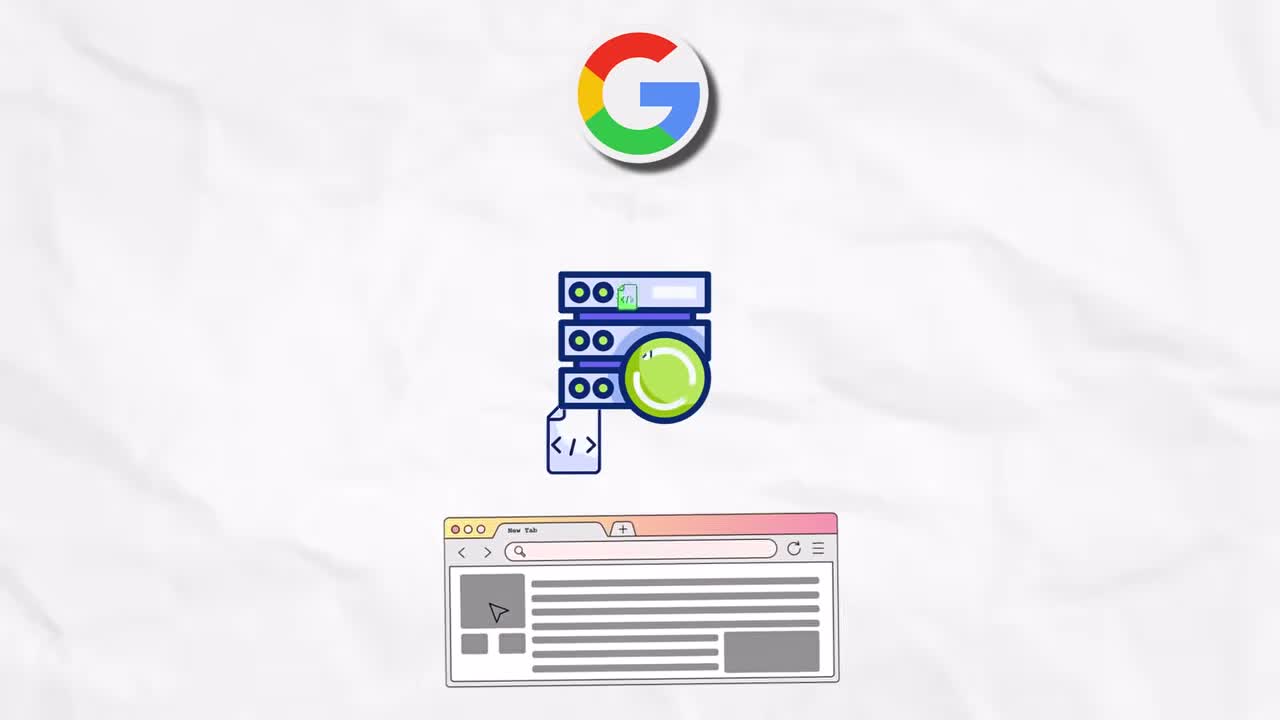
Not “sort of close.” Not “still a project.” One step.
Here's why.
Server-side tracking and consent management used to be two separate problems you solved separately and then connected. But maybe they shouldn't be?
What if you think about them as the same problem approached from both ends?
- One controls what data you collect (consent)
- The other controls how that data travels (server-side)
When those two things are built to work together, you get something that's more reliable AND more compliant at the same time.
That's Where Usercentrics Comes In
They built a consent-first architecture where the consent layer and the tracking layer are designed as one system—not bolted together after the fact.
Here's what that looks like practically:
- Usercentrics hosts the server-side GTM infrastructure for you
- You're not spinning up a cloud container
- You're not configuring anything on the backend
- You connect it to the consent banner you already have running
- The two systems talk to each other natively
When a user consents, the right tags fire. When they don't, they don't.
No manual conditions to set up. No compliance gaps to worry about. The consent signal travels through the same architecture as the tracking signal.

That's actually a harder engineering problem than it sounds. Most setups treat consent and tracking as separate layers. Usercentrics made them the same layer.
You Already Bought the Ingredients
For the people reading this who already invested in a cookie consent banner—you bought the ingredients. You just haven't cooked the meal yet.
The infrastructure is sitting there. The compliance foundation is already in place.
Extending it to server-side tracking isn't starting over. It's finishing what you already started.
And the entry point is lower than most people expect. Usercentrics has a free tier that covers up to 20,000 server-side requests per month. For a lot of smaller sites, that's enough to run a real implementation and see actual results before paying anything.
Real Results: What Proper Implementation Delivers
These aren't hypotheticals. These are controlled results from real implementations.
seoplus+: 24% More Conversions Visible
They ran a proper test. Same campaigns, same budget, same time period. One group with server-side tracking, one without.
The server-side group saw 24% more conversions recorded in Google Ads.
Not 24% more conversions happening on the site—24% more being SEEN by the platform.
That's data that's always been there. It just wasn't making it through before.
Jespers: 78% to 97% Tracking Accuracy
They had a conversion tracking accuracy problem. They were capturing somewhere below 80% of what was actually happening on their site.
After server-side implementation, that number went to 97-98%.
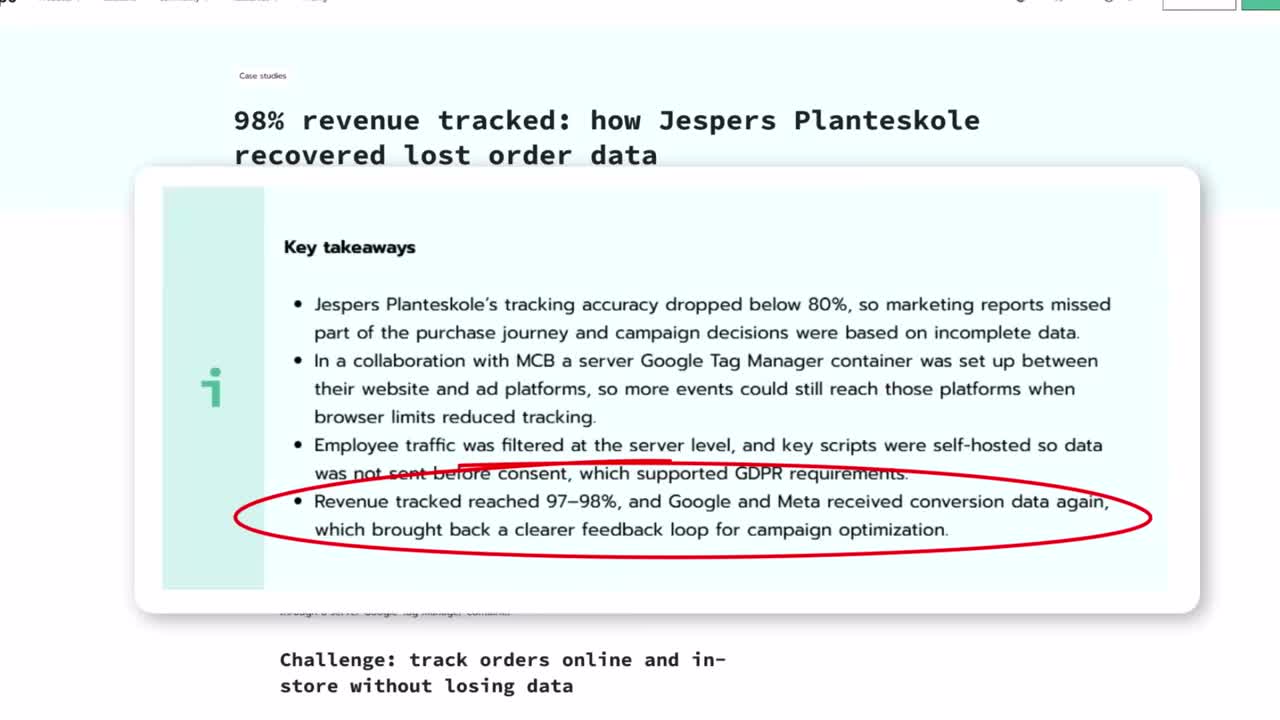
Think about what it means to make campaign decisions on 78% of your data versus 97%. Those are different businesses.
Decathlon Travel: 50% ROAS Improvement
After implementation, they saw a 50% improvement in Return on Ad Spend.
The algorithm finally had enough information to do its job.
Who Should Implement Server-Side Tracking Right Now
Let me be straight with you about who should move on this right now.

High Priority: Running Paid Campaigns + Already Have Cookie Consent
You should do this now. The ROI math is not complicated.
- Better signal means better optimization
- Better optimization means lower cost per acquisition
- Every month you wait is a month your campaigns are working with incomplete information
Medium Priority: Mostly Organic, Not Running Paid
It's still worth doing, but you have more flexibility on timing. The urgency is lower. Put it on the roadmap.
No Financial Barrier: Small Sites Under a Few Thousand Sessions
The free tier covers you completely. There's no financial reason to wait.
Your Next Step
Here's where I'd tell you to start.
Go check out the Usercentrics free tier. 20,000 server-side requests per month, no cost.
If you're already running Cookiebot (which Usercentrics owns), the connection is even more direct—you're working within the same ecosystem.
Set it up, point it at your real traffic, and see what your numbers look like when the data is actually complete.
That's the whole thing. You already did the hard part. You just haven't taken the last step yet.
And if this kind of deep dive into measurement, privacy, and making your data actually work for your campaigns is what you need—MeasureU Pro is where we go deeper. Live workshops, implementation guides, and a community of marketers who care about getting this right.