Tired of chasing one-off projects while watching half your clients' conversion data disappear into the void?
Five years ago, the first-party data services market barely existed. Add up CDPs, tag management, consent infrastructure, and first-party data platforms, and you're looking at a market approaching twenty billion dollars. And it's growing at fourteen percent a year while most agency owners have no idea it's even there.
I'm not talking about the technical implementation stuff—I've done plenty of content on that. I'm talking about the business opportunity. The service stack that's quietly generating five, ten, fifteen thousand dollars a month in recurring revenue for people who figured this out early.
Here's what happened: Apple, Google, Firefox—they all decided privacy was the future. Great for consumers. Absolutely brutal for anyone trying to track what's working in their marketing.
Right now, somewhere between forty and sixty percent of website conversions are invisible to traditional tracking. That's not a rounding error. That's half your data just… gone.
Watch the Full Breakdown
And when CMOs and marketing directors figure this out—and they are figuring it out—they're not looking for a freelancer to install some tags. They're looking for someone to fix the bleeding.
That's the opportunity.
Why I'm Breaking This Down Now
I've spent the last twenty-plus years in analytics and data. Built an agency, had an exit, taught this stuff to thousands of people through MeasureU.
When I started researching service opportunities for my 99 Services framework—scoring every service I could find on market size, margin potential, retention rates—first-party data kept showing up near the top of the list.

I actually built a certification course on this with Usercentrics (you might know them as Cookiebot)—one of the biggest consent management platforms in the world. Over three thousand marketers have gone through it.
So this isn't me theorizing. This is me showing you a stack that actually works.
And if you're someone who's done tracking work before—maybe set up Google Analytics, maybe touched Tag Manager, maybe helped a client with their pixels—you're closer to offering this than you think.
You just need to stop selling it wrong.
Key Takeaways:
- The first-party data ecosystem (CDPs, tag management, consent, data infrastructure) is approaching $20 billion and growing 14% annually—most agencies aren't positioned to capture it
- 40-60% of website conversions are now invisible to traditional tracking, creating urgent demand
- The three-layer stack (Audit → Implementation → Retainer) turns one-off projects into $5K-$15K/month recurring revenue
- You're not selling server-side tracking—you're selling insurance against invisible conversions
What We're Covering
- Why Most People Are Selling This Wrong
- The Three-Layer Service Stack
- What You're Actually Selling (Hint: It's Not Tags)
- Who Should Offer This
- Stacking Stacks: The Expansion Play
- Your Next Steps
Why Most People Are Selling This Wrong
Here's where most people blow it with first-party data services.
They treat it like a project.
Client comes to them, says “hey we need server-side tracking” or “we need to fix our conversion data” and the freelancer or agency goes “great, that'll be eight grand, we'll have it done in three weeks.”
They do the work. Send the invoice. Client pays. Everyone's happy.
Except… three months later that client is calling someone else because something broke. Or Google changed something. Or their dev team pushed an update that wiped out half the tracking.
And now you're doing free support on a project you already closed out. Or worse—you're not, and they're mad at you.
The Even More Common Mistake
But here's what's even more common.
A lot of people don't charge for this at all.
They're an ads agency. Or a marketing consultant. And the client mentions their tracking is broken, so they just… fix it. For free. Because they need the data accuracy to do their actual job.

“Yeah I'll set up your server-side tracking, it'll help me optimize your campaigns better.”
And now you've done five, ten, maybe twenty hours of work that you could have charged five figures for. Just gave it away. Because you didn't see it as a service—you saw it as a prerequisite for the “real” work.
That's the problem.
This IS the real work. This is a standalone, high-value service that businesses will pay serious money for.

But only if you position it that way.
The Fundamental Shift
First-party data isn't a “set it and forget it” thing. It's not like building a website where you hand over the keys and walk away.
It's more like… insurance. Or maintenance.
The value isn't just in setting it up. The value is in keeping it working.
Think about what your clients are actually afraid of here.
They're spending—what—fifty, a hundred, two hundred thousand a month on ads? And they've just found out that half their conversion tracking data is garbage.
That's terrifying.
They don't want someone to install some tags and disappear. They want someone to make sure this never becomes a problem again.
And THAT is what you should be selling.
Not a project. A solution.
Not an implementation. Protection.
The Three-Layer Service Stack
Alright, so let's build this thing out.
If you've watched my other videos you know I'm obsessed with service stacking. It's the framework I wrote the book on—literally.
The idea is simple: instead of selling one-off projects, you structure your services in three layers.
- A low-risk offer that gets you in the door
- An implementation that delivers the big result
- A retainer that keeps the value going month after month
For first-party data, this structure is almost unfairly perfect. Let me show you why.
Layer 1: The Low-Risk Offer (The Audit)
The first layer is your low-risk offer. For this stack, that's a data audit.
Here's how it works.
Client comes to you worried about their tracking. Maybe they've heard about iOS changes. Maybe their Facebook ads guy told them the numbers don't match. Maybe they just have a gut feeling something's off.
You don't pitch them a twenty-thousand dollar implementation right out of the gate. That's too big a commitment for someone who doesn't even know what's broken yet.

Instead you say: “Let me do an audit. I'll look at your current setup, identify exactly what's being lost, and show you where the gaps are. Then you can decide what to do about it.”
Price range: $2,500 – $7,500 depending on complexity and who you're working with.
Why does this work so well?
- Low commitment. The client isn't signing up for some massive engagement. They're just getting clarity on a problem they already suspect they have.
- Positions you as the expert immediately. You're not asking for a shot. You're not begging for work. You're saying “let me diagnose this for you” like a doctor would.
- The audit sells the implementation for you. This is the big one.
Because here's what happens. You do the audit. You come back and show them: “Hey, you're losing forty-seven percent of your conversion data. Here's exactly where it's happening. Here's what it's costing you.”
Now you're not pitching. You're prescribing.
The implementation becomes the obvious next step. They'd be stupid not to do it.
Layer 2: The Implementation
Layer two is the implementation. This is the project work.
You're setting up server-side tracking. You're configuring their consent management. You're connecting their ad platforms to first-party data sources. Whatever needs to happen based on what you found in the audit.
Price range: $5,000 – $25,000 for standard setups. Enterprise clients with multiple properties, custom integrations—you can go even higher.
The key is you're not selling “server-side tracking setup.” That's a commodity.
You're selling the outcome:
- “We're going to recover forty percent of your invisible conversions so you can actually see what's working.”
- “We're going to fix your attribution so you stop wasting money on channels that aren't performing.”
- “We're going to make your data accurate again so you can make decisions with confidence.”
That's what they're paying for. The technical work is just how you deliver it.
Layer 3: The Retainer
Now here's where most people leave money on the table.
They do the audit. They do the implementation. Client's happy. Everyone shakes hands.
And then… nothing. Project's over. On to the next one.
Meanwhile that client's tracking is going to break again in four months. Google's going to change something. Apple's going to announce some new privacy feature. Their dev team is going to push code that wipes out half their tags.

This stuff requires maintenance. That's your retainer.
Layer three is ongoing optimization. Monthly check-ins. Monitoring for issues. Updating configurations when the platforms change. Making sure the data stays clean.
Price range: $1,500 – $5,000/month depending on scope.
And here's what's beautiful about this.
The retainer is the easiest sell of the three.
Because you've already done the audit. You've already done the implementation. The client trusts you. They've seen you deliver.
And now you're saying: “Look, this stuff doesn't stay fixed on its own. I can keep an eye on it for you, make sure nothing breaks, and handle updates when things change. Or you can try to do it yourself.”
Most clients don't want to do it themselves.
That's why they hired you in the first place.
What You're Actually Selling
So now you've got the structure. Audit, implementation, retainer.
But here's the thing—the structure only works if you position it right.
And most people position this completely wrong.
They lead with the technical stuff. “I do server-side tracking. I configure consent management platforms. I set up Google Tag Manager server containers.”
That's not what you're selling.
The Real Value Proposition
You're selling insurance against invisible conversions.

You're selling recovered ad spend.
You're selling the ability to make decisions with data they can actually trust.
Think about your client for a second. They're a marketing director or a CMO. They're spending six figures a month on ads. Maybe more.
They don't care about Tag Manager. They don't care about server containers. They don't even really understand what first-party data means.
What they care about is: “Am I wasting money?”
And right now, a lot of them are. They just don't know it yet.
So when you talk to them, that's the frame:
- “How much are you spending on ads you can't measure?”
- “What would it mean for your business if you could see forty percent more of your conversions?”
- “How confident are you that your attribution data is actually accurate?”
These are the questions that get their attention. Not “do you need server-side tracking.”
The Insurance Frame Changes Everything
When you frame it as insurance, everything changes.
Insurance isn't a one-time purchase. You pay for it every month because the risk is ongoing.
Same thing here.
The privacy landscape isn't stable. Google's constantly changing things. Apple's constantly changing things. Browsers are getting stricter. Regulations are getting tighter.
Your client's conversion tracking is going to break again. It's not a matter of if, it's when.
And when it does, they want someone they trust already on retainer to fix it. Not scrambling to find a freelancer on Upwork.
That's the value of the retainer. It's not just maintenance. It's peace of mind.
Your Real Competition
Here's the other thing people get wrong.
They think they're competing with other freelancers or agencies on price.
“Well, I found someone on Upwork who'll do server-side tracking for fifteen hundred bucks.”
Cool. Let them.
Because that person is selling a commodity. They're selling hours and tags and technical implementation.
You're not competing with them. You're competing with the client's fear of making bad decisions with bad data.
Different game entirely.
When you position this right, you're not the cheapest option. You're the only option that actually solves the problem.
And that's where the money is.
Who Should Offer This
At this point you might be thinking—”this sounds great Jeff, but I'm not a data engineer. I don't know if I can actually do this.”
Let me clear that up.
You're Closer Than You Think
If you've ever set up Google Analytics for a client, you're eighty percent of the way there.
If you've touched Google Tag Manager—even just the basics—you're eighty percent there.
If you've installed a Facebook pixel or helped someone debug why their conversions weren't tracking right, you're eighty percent there.

The technical skills for first-party data services are learnable. We've got a free course with Usercentrics, plus a ton of on-demand training at MeasureU that covers all of this—server-side tagging, consent management, the whole stack.
The technical part is not the hard part.
You know what the hard part is?
Positioning.
It's knowing how to talk about this in a way that makes clients say “yes I need that” instead of “let me think about it.”
It's structuring it as a stack instead of a project so you're not constantly chasing new clients.
It's having the confidence to charge what it's worth instead of giving it away for free because you think of it as “part of the ads work.”
That's the stuff most people get wrong.
This Stack Makes Sense If You're…
- Running an ads agency and you're already fixing tracking issues for clients but not charging for it
- Doing analytics or Tag Manager work and you want to expand into something with higher margins and recurring potential
- A marketing consultant and your clients keep asking you about privacy changes and you don't have a good answer for them
- Doing web development or technical marketing work and you want to specialize in something that's growing instead of getting commoditized
Any of those? This stack makes sense for you.
The market is approaching twenty billion dollars and growing. The problem is real. Businesses are actively looking for help.
The only question is whether you're going to be the one who helps them.
Stacking Stacks: The Expansion Play
Now here's something I want to tease because this is where it gets really interesting.
First-party data and server-side tracking? That's the entry point. That's the low-hanging fruit.
But once you're in—once you've got the audit done, the implementation complete, the retainer running—you're now their data person.
And there's so much more you can do from there.
Consent management is one piece. But what about their data pipeline? What about getting their data into a warehouse—BigQuery, Snowflake, whatever—where they can actually use it?
What about feeding cleaner, richer first-party data back into the ad platforms so Meta and Google can optimize better?
What about building custom audiences from data they actually own instead of relying on third-party cookies that are disappearing?
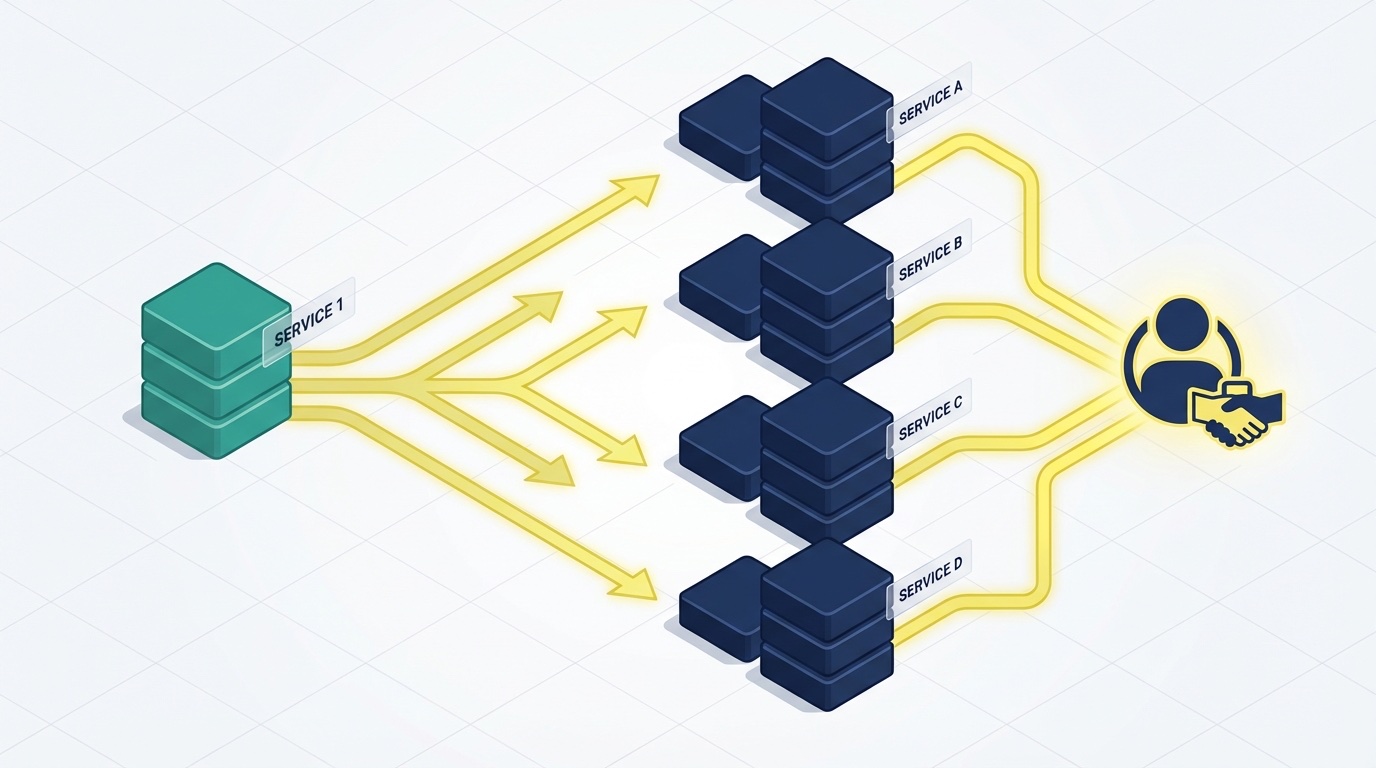
This is where you start stacking stacks.
The first-party data service gets you in the door. Then you expand into data infrastructure. Then attribution modeling. Then advanced analytics.
One client. Multiple service stacks. All of them recurring.
I'm not going to go deep on all of that today—that's a whole other video. But I want you to see the bigger picture here.
This isn't just one service. This is a category.
And if you position yourself as the person who solves data problems—not just “the tracking guy”—you can build something really significant.
Common Questions
Do I need to be a data engineer to offer this?
No. If you've set up Google Analytics or worked with Tag Manager, you have the foundation. The technical skills are learnable—we teach them at MeasureU. The harder part is positioning and packaging, which is what this whole framework addresses.
What if the client's tracking breaks after implementation?
That's exactly why you have the retainer layer. Tracking WILL break—platforms change, dev teams push updates, privacy regulations shift. The retainer isn't just maintenance. It's the answer to “what happens when something goes wrong.”
How do I price the audit if I don't know how complex their setup is?
Start with a discovery call. Ask about their tech stack, how many domains/properties, their ad spend level, and what CRM/marketing tools they're using. Complexity usually correlates with ad spend—someone spending $200K/month on ads has more sophisticated needs than someone spending $20K.
What if they just want the implementation without the audit?
You can do it, but I'd push back. The audit protects both of you. It sets clear scope, identifies exactly what needs fixing, and—critically—it shows them the dollar value of the problem. Without the audit, you're guessing at scope and they don't fully appreciate the value of what you're delivering.
Your Next Steps
Here's what to do with this:
1. Audit your current clients. Who's already getting tracking help from you for free? That's your first opportunity to reframe and potentially upsell into this stack.
2. Build your audit framework. Create a repeatable process for diagnosing tracking gaps. Know what you're looking for, how you'll present findings, and what your deliverable looks like.
3. Script your positioning. Stop saying “I do server-side tracking” and start saying “I help businesses recover the 40-60% of conversion data that's invisible to traditional tracking.”
4. Set your pricing. Use the ranges I gave you as starting points. Audit: $2.5K-$7.5K. Implementation: $5K-$25K. Retainer: $1.5K-$5K/month.
5. Get the technical training if you need it. Our free certification with Usercentrics covers the fundamentals. MeasureU has deeper training on server-side implementation.
Want the Full Service Opportunity Breakdown?
I put together a guide called the 99 Services—it's every service opportunity I've scored for the next twelve months. Market size, margins, how hard it is to learn, retention potential, all of it.
First-party data scores really high on that list, which is why I made this video.
I'd love to hear—are you already doing tracking work for clients? Are you charging for it or giving it away as part of your “real” services? Drop a comment on the YouTube video and let me know where you're at with this.