If you're running Meta ads right now and you've got the Pixel plus Conversions API set up, you probably think you're good.
You're not.
Brands adding Meta's new Signals Gateway to that same setup are seeing 25 to 33 percent lower CPAs. Same ad spend. Same creative. Just better first-party data infrastructure.
And most marketers I talk to have never even heard of it.
Full transparency here—Usercentrics sponsored the video version of this content. But I wouldn't cover this if it wasn't genuinely useful. So let's fix that knowledge gap.
Watch the Full Breakdown
What You'll Learn
- Signals Gateway isn't just a rebrand of Conversions API—it's a completely different infrastructure layer
- The new Signals Gateway Pixel sits on YOUR domain (first-party), not Meta's domain
- Early adopters like Clarks saw 25% lower CPA and 32% higher ROAS
- Self-hosting requires serious DevOps work, but managed solutions exist
Table of Contents
- The Signal Loss Problem You Already Know
- The Four-Stage Evolution of Meta Tracking
- What Makes Signals Gateway Actually Different
- Real Performance Data from Early Adopters
- Implementation Options: Self-Hosted vs. Managed
- Should You Implement This? (Decision Framework)
The Signal Loss Problem You Already Know
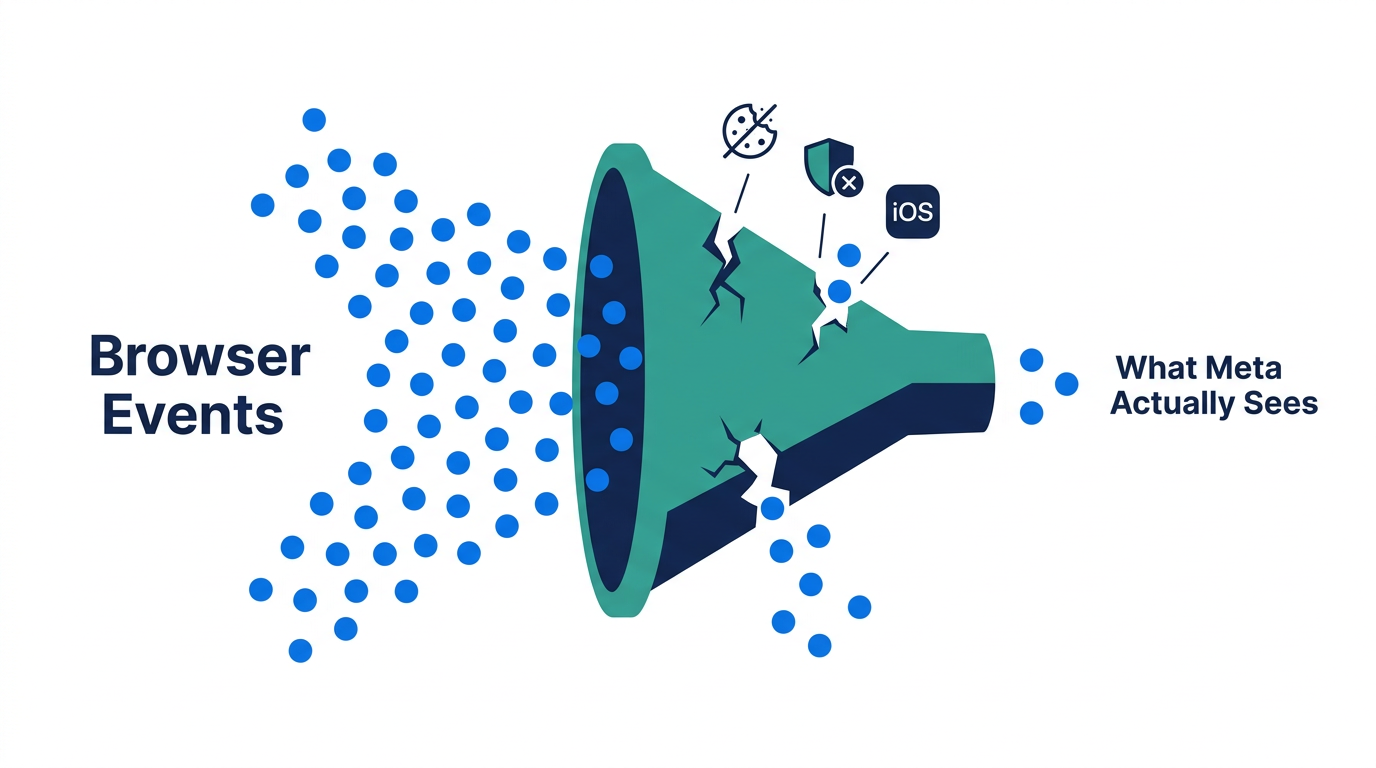
You already know the story. iOS 14 happened. Ad blockers got better. Browsers started killing cookies. I've covered this in like four videos already so I'm not going to rehash all of it.
But here's what matters for this conversation:
Meta's algorithm is only as smart as the data you feed it.
When a conversion happens and Meta doesn't see it, that's bigger than a reporting issue. You've got an optimization problem on your hands.
Meta's machine learning is sitting there going “ok that ad click didn't convert” when the conversion actually happened—you just didn't tell them. So now Meta's optimizing on incomplete information. Which means higher CPAs, worse targeting, and you wondering why performance tanked when nothing else changed.
Most advertisers hit this wall and went “ok I need server-side tracking” and set up Conversions API. Which was the right move. CAPI helped a lot.
But here's the thing—a lot of people stopped there. They checked the box, saw some improvement, and moved on.
What they don't realize is Meta quietly released something that sits on top of CAPI. And the early adopters are seeing double-digit efficiency gains from it.
The Four-Stage Evolution of Meta Tracking
First thing—Signals Gateway isn't just a rebrand of Conversions API. I see people confusing these all the time. They're different things.
Let me break down the evolution real quick.
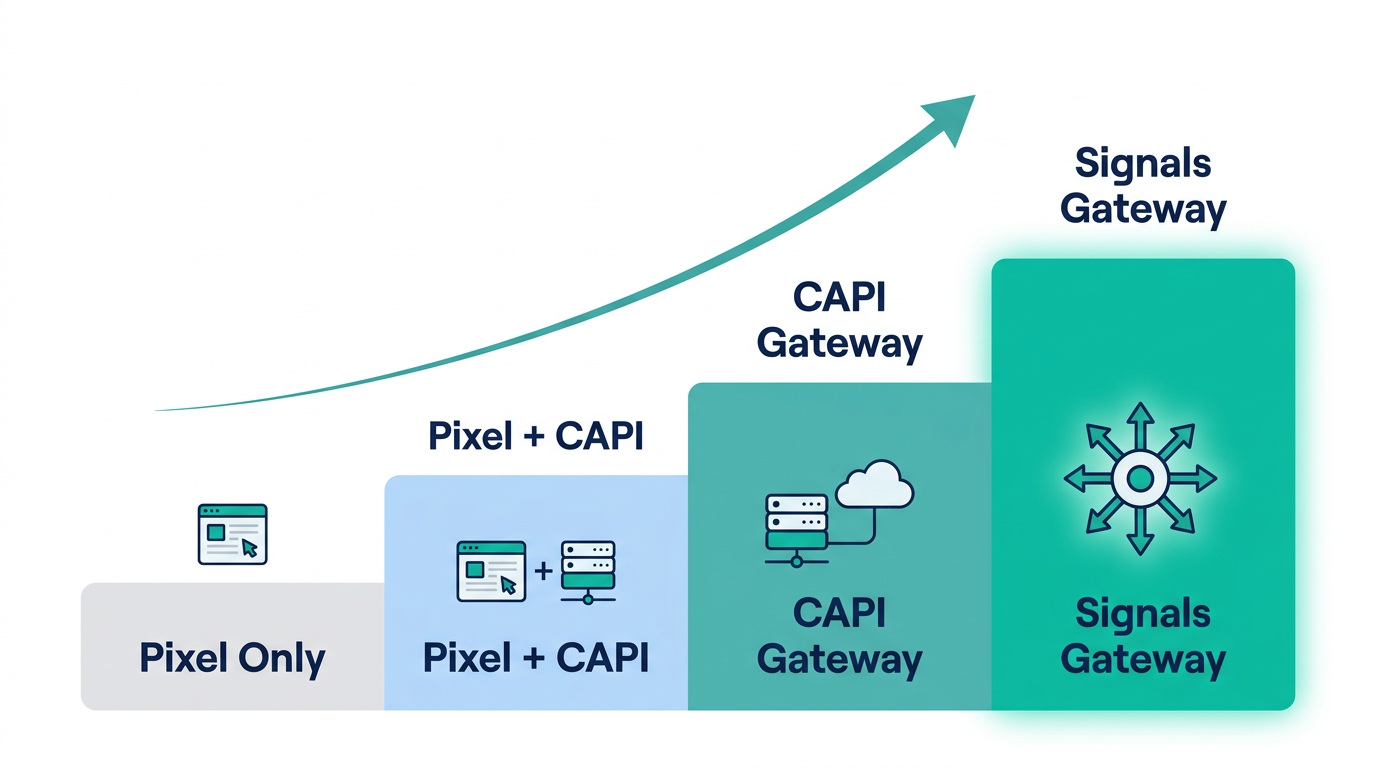
Stage 1: Meta Pixel Tracking Only
JavaScript fires in the browser, sends data to Meta. This worked great until browsers and iOS started blocking stuff. Now you're missing a ton of conversions.
Stage 2: Pixel Plus Conversions API
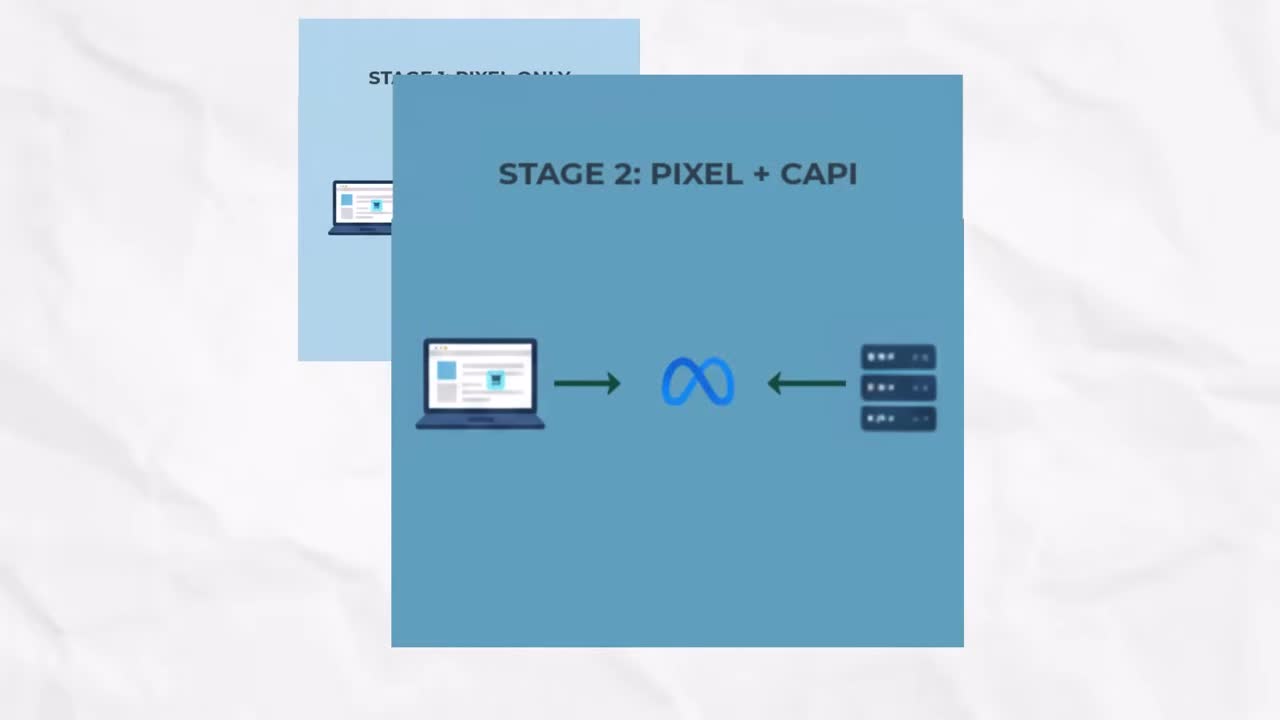
You're still running the pixel, but now you're also sending events server-side. Better coverage. This is where most advertisers are today.
Stage 3: CAPI Gateway
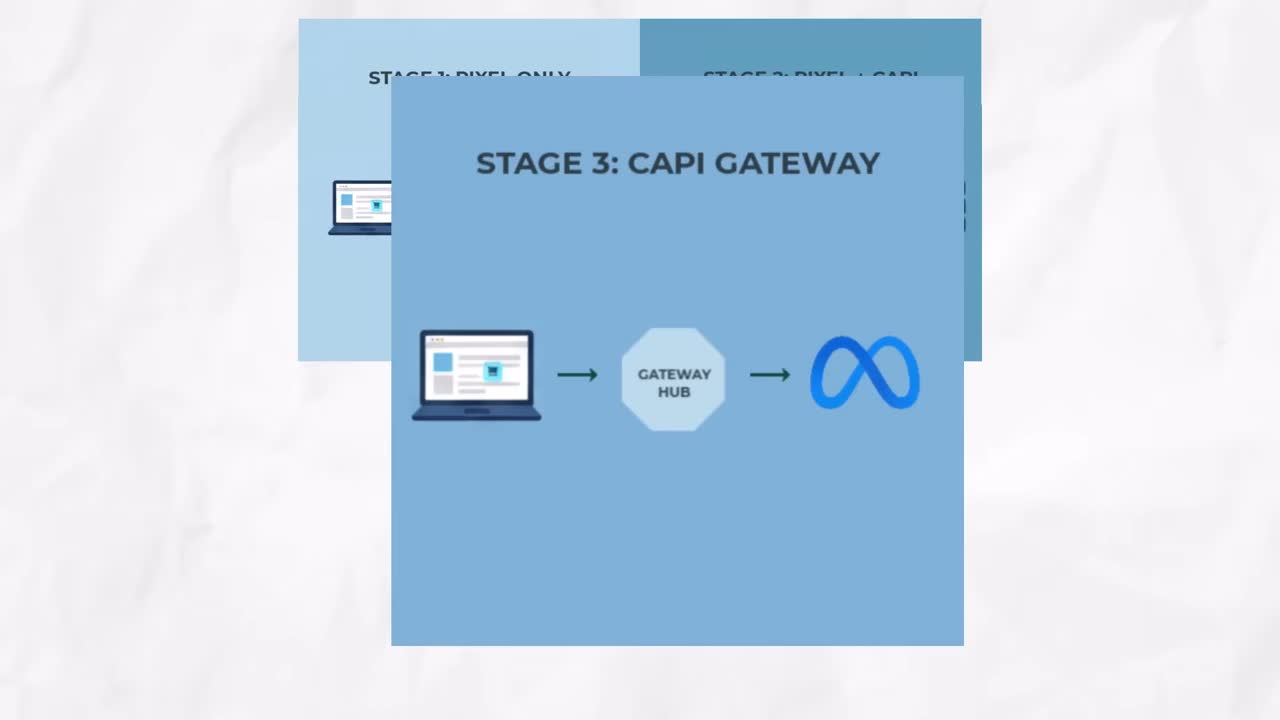
This is Meta's managed endpoint that receives your pixel events and forwards them through CAPI. Easier setup than rolling your own server-side tracking solution. But it only sends data to Meta.
Stage 4: Signals Gateway
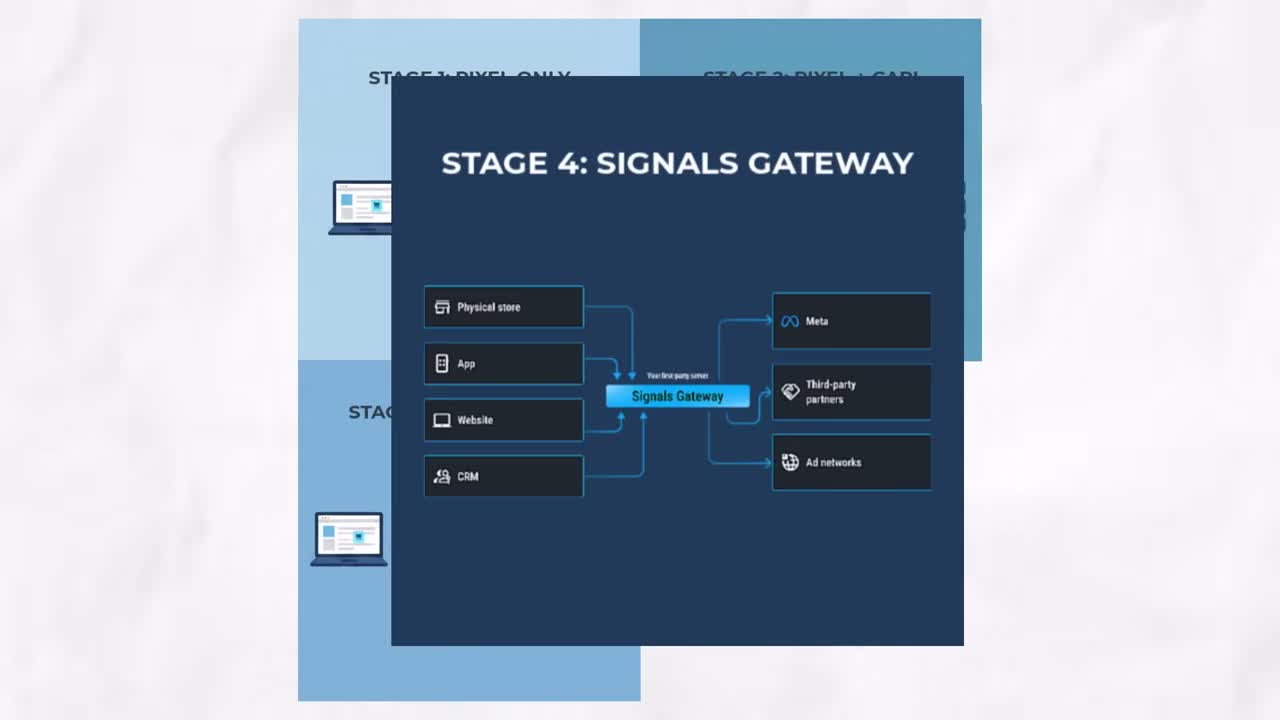
And here's where it gets interesting. (Actually wait, I'm not supposed to say that.)
Signals Gateway isn't just a pipe to Meta. It's a data hub. You can ingest events from your website, your app, your CRM, offline purchases—and then route that data to Meta, but also to BigQuery, to other platforms, wherever you need it.
Building First-Party Data Infrastructure with Signals Gateway
So what actually makes this different from the Conversions API setup you already have?
A few things:
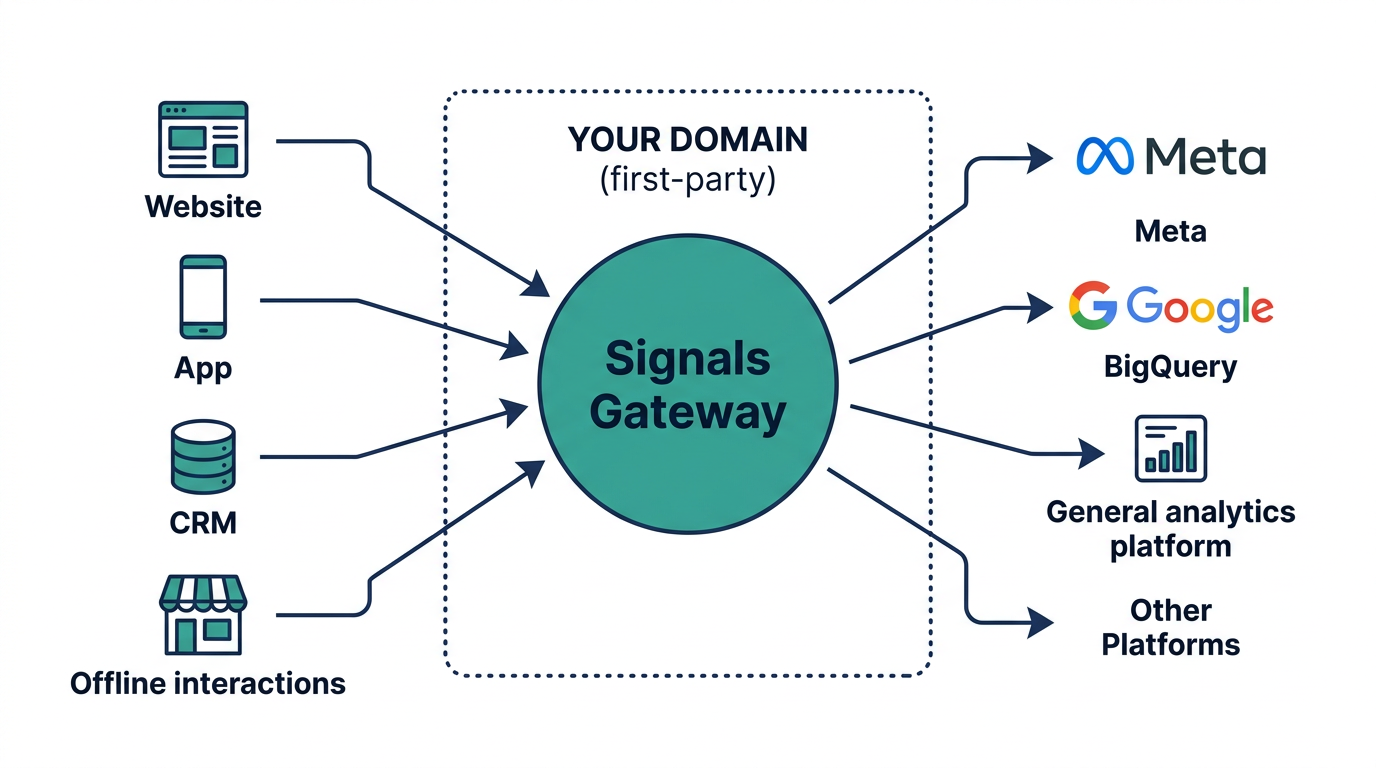
The First-Party Pixel
There's a new pixel that comes with Signals Gateway. Unlike the regular Meta pixel which lives on Meta's domain, this one sits on YOUR domain. First-party. Which means browsers treat it differently. Ad blockers don't catch it the same way.
Multi-Platform Data Routing
Signals Gateway isn't locked to Meta. You can route your conversion data to BigQuery, other ad platforms, your analytics stack—wherever you need it to go.
Built-In Deduplication
If you've ever dealt with the headache of events firing twice—once from the browser, once from the server—and trying to sort that out manually? This handles it automatically.
So think of it less like “better tracking” and more like infrastructure. You're building a first-party data system that happens to connect to Meta.
Real Performance Data from Early Adopters
So does this actually move the needle? Let's look at some numbers.

Clarks (the shoe company):
- 25% lower CPA
- 32% higher ROAS
- 33% more conversions tracked
Terranova (fashion brand):
- 17% lower CPA
- 21% more conversions
Bïrch aggregate data across a bunch of advertisers showed roughly 23% CPA reduction when adding the Signals Gateway Pixel on top of existing Pixel plus CAPI setups.
One advertiser they documented saw 40% more events tracked, 30% drop in CPA, 35% lift in conversions. Within three months.
Now—I have to be real with you here.
These are directional benchmarks, not guarantees. Your results depend on how broken your current tracking actually is.
If you already have a really clean CAPI implementation and you're capturing most of your conversions, the gains will be smaller. Maybe single digits.
But if your tracking is a mess—and honestly, most accounts I audit have gaps they don't even know about—this could be significant.
The bigger the hole in your current data, the bigger the improvement when you plug it.
Implementation Options: Self-Hosted vs. Managed
Ok so here's where we get practical. Because there's a catch with Signals Gateway.
If you want to self-host this thing, you're looking at:
- Spinning up infrastructure on AWS or Google Cloud
- Kubernetes configuration
- DNS setup
- TLS certificates
- Auto-scaling
- Security updates
- Ongoing monitoring
That's not a weekend project. That's weeks of DevOps work and then you own the maintenance forever.
For agencies and freelancers reading this—unless you have a dedicated technical team, self-hosting is probably not the move. And even if you do have the team, you gotta ask yourself if that's really where you want them spending their time.
That's where Usercentrics comes in.

They built a managed Signals Gateway. Hosted solution. You don't touch infrastructure. You don't configure servers. You don't deal with scaling when traffic spikes.
Setup takes minutes, not weeks. Seriously—it's more like configuring a SaaS tool than deploying cloud infrastructure.
The Consent Integration Angle
But here's the thing that actually made me pay attention to them specifically.
Usercentrics comes from the consent management world. Their whole background is privacy and compliance. So their Signals Gateway has native consent integration baked in.
What that means: only consented data gets forwarded to Meta. If someone opts out, that's automatically respected. You're not manually trying to wire up your CMP to your tracking infrastructure and hoping you didn't miss something.
If you're running ads in the EU especially, or you just want to not worry about GDPR and CCPA compliance on the data side, this matters.
Pricing
They have a free tier—20,000 events per month, no credit card required. After that it's usage-based, scales with your volume.
The Agency Opportunity
For agencies watching this—there's actually an interesting angle here. You can offer Signals Gateway implementation as a service. Not just a one-time setup, but ongoing “tracking infrastructure” as a retainer. Monitor event volumes, adjust mappings when client data changes, keep things running clean.
That's recurring revenue attached to something clients genuinely need.
Should You Implement This? (Decision Framework)
Alright let's get real about who actually needs this.
This makes sense if:
- You're spending meaningful budget on Meta and you've watched CPAs creep up over the past year or two while nothing else changed. That's usually a signal loss problem, not a creative problem.
- You've already got Pixel plus Conversions API running and you're hitting a ceiling. You did the work, you're still seeing gaps in your data.
- Compliance is a real concern for you—especially if you're in Europe or dealing with clients who are. Having consent enforcement built into your tracking infrastructure is way cleaner than duct-taping it together yourself.
- You're an agency or freelancer wanting to offer this as a service. Most of your clients have no idea this exists. You can be the one who brings it to them.
You can probably wait if:
- You're spending a few hundred bucks a month on ads and traffic is low. The math might not work yet. The incremental benefit over a simpler CAPI setup probably won't justify the extra complexity, even with managed hosting.
- Your current server-side tracking implementation is already humming and performance is solid. You might not see dramatic gains. Could still be worth testing, but temper expectations.
- You're in a business where most of your conversions happen offline or over really long sales cycles. Tracking infrastructure alone won't solve your measurement problem. You'd need additional modeling on top of this—MMM, incrementality testing, that kind of thing.
So be honest with yourself about where you actually are before you add another tool to the stack.
What To Do Next
- Audit your current Meta Pixel tracking setup—check Events Manager for data quality scores and event match rates
- Decide if self-hosted or managed makes sense for your situation
- If you want to test the Usercentrics solution, start with their free tier (20K events/month)
- Monitor your CPA and conversion volume for 4-6 weeks after implementation to measure actual impact
The Bottom Line
Look—Signals Gateway isn't magic. It's not going to fix bad creative. It's not going to save a broken funnel. If your offer sucks, better tracking just means you'll see more clearly how much your offer sucks.
But if signal loss is your bottleneck—and for a lot of advertisers right now, it is—this is the current best practice infrastructure.
The brands seeing double-digit CPA improvements aren't doing anything crazy. They just have cleaner first-party data going into Meta's algorithm. And Meta rewards that.
For more marketing measurement strategies and tutorials, check out MeasureU Pro.