There's a service you've probably written off as “somebody else's problem.”
Maybe you saw it and thought “that's for lawyers” or “that's IT's job” or “I don't want to deal with compliance stuff.”
And while you were ignoring it, this service quietly became one of the fastest-growing opportunities in the entire analytics industry. I'm talking about privacy—and specifically, consent management platform implementation.
Not privacy as in “ugh, cookies are annoying now.” Privacy as in “this is a six-figure service line that most analytics people are leaving on the table because they don't realize it's theirs to take.”
My Background With Privacy (And Why I'm Talking About This)
I've spent 20 years in the analytics and digital marketing space. Built an agency to the Inc 5000 list, sold it, and now run an education company training thousands of marketers.
But here's why I'm the one talking about privacy specifically: Cookiebot—one of the largest consent management platforms in the world—hired me to create their official marketing measurement course. (You can check out the course here.)
When the biggest players in privacy need someone to teach marketers how this stuff actually works, they call me.
And what I've seen over the past few years is that most analytics people are standing right next to a massive opportunity and they keep walking past it because they think it belongs to someone else.
It doesn't.
Watch the Full Breakdown
What You'll Learn in This Post
- The privacy management market is expected to hit over $25 billion by 2028—and most analytics consultants are watching that money flow to lawyers and compliance officers
- If you can set up Google Analytics, you already have the skills to do privacy audits and consent implementation
- Privacy isn't just about avoiding fines—it's about fixing broken marketing data (that's the conversation clients actually care about)
- Ongoing consent monitoring creates recurring revenue attached to something clients legally need to maintain
Table of Contents
- The Market Opportunity You're Missing
- What Does Consent Management Platform Implementation Actually Look Like?
- It's More Accessible Than You Think
- The Hot Take: Privacy Actually Saved Your Job
- How to Position Privacy Services With Clients
- Your Next Steps
The Market Opportunity You're Missing
Here's a number that should wake you up:
The privacy management market is expected to hit over $25 billion by 2028.
$25 billion.
And right now, most analytics consultants are watching that money flow to lawyers and compliance officers while thinking “well, that's not my thing.”
Meanwhile, somebody with your exact skill set is charging 3x what you charge for GA4 setups because they learned how consent management actually works.
This Isn't Just a Europe Thing Anymore
Before you tune out thinking “this is a GDPR problem”—it's not anymore.
Yeah, GDPR started this whole wave. But now? California, Colorado, Connecticut, Virginia, Texas, Oregon… I could keep going.
Almost every US state either has privacy legislation on the books or is actively working on it.
This isn't “maybe I'll have European clients someday.” This is “your clients in Texas need this right now.”
Every company running Google Ads needs to implement Google Consent Mode correctly or their campaigns start underperforming. That's just how the platform works now.
Every company that wants accurate analytics in 2026 and beyond needs someone who understands how privacy regulations affect data collection.
And here's what's wild—87% of consumers say they won't do business with a company if they don't trust its privacy practices. That's McKinsey data, not some random blog.
So we've got legal requirements, platform requirements, and consumer expectations all pointing in the same direction.
And the supply of people who actually understand this stuff? Tiny. I mean embarrassingly small relative to the demand.
You know what happens when demand is massive and supply is tiny?
Prices go up. A lot.

I've seen privacy audits go for five figures. Consent implementation projects that used to be “throw a banner on there” are now comprehensive engagements worth tens of thousands.
And the people getting those contracts aren't lawyers. They're not developers.
They're marketers and analytics people who bothered to learn how this works.
What Does Consent Management Platform Implementation Actually Look Like?
“Privacy services” sounds vague. Let me make it concrete.
There are three main buckets of work here.

Bucket 1: Privacy Audits
This is where you look at a client's current setup and answer a simple question—are they collecting data in a way that's actually compliant with the laws that apply to them?
You're mapping out:
- What tags are firing
- What data is being collected
- Where it's going
- Whether proper consent is being captured first
Most companies have no idea what's actually happening on their site. They installed a cookie banner two years ago and assumed they were good.
They're not.
A privacy audit tells them exactly where the gaps are. And it positions you as the person who can fix them.
Bucket 2: Consent Implementation (Including Google Consent Mode)
This is the technical work.
Setting up the consent management platform. Configuring Google Consent Mode so it actually talks to Google Analytics and Google Ads correctly. Making sure tags only fire when they're supposed to fire.
If you've ever done a Google Tag Manager audit or fixed somebody's broken tracking setup, this is the same skillset.
Different context. Same muscles.
Bucket 3: Ongoing Consent Monitoring
This is the retainer goldmine.
Because privacy isn't a one-and-done project.
Laws change. Platforms update their requirements. New tags get added by developers who don't know any better. Consent banners break.
Someone needs to keep an eye on this stuff.
That someone can be you.
Monthly check-ins. Quarterly audits. Annual compliance reviews.
This is recurring revenue attached to something your clients legally need to maintain.
Good luck finding a better retainer justification than “you might get sued if we don't do this.”
It's More Accessible Than You Think
You want to know the biggest lie in privacy?
That you need to be a lawyer or a developer to actually do this work.
You don't.
I get why people think that. You hear “GDPR compliance” and your brain immediately goes to legal documents and courtrooms and stuff you'd need a law degree to understand.
Or you hear “implement Consent Mode V2” and you think that's some deep technical thing that only developers can touch.
But here's the reality:
Privacy implementation is a series of steps. That's it. It's a process. A checklist. A sequence of things you do in a specific order.
And if you've ever set up Google Analytics for a client… if you've ever configured a tag in Google Tag Manager… if you've ever walked someone through a tracking audit…
You already have the skills.
You just haven't applied your focus here yet.
The Technical Piece Isn't Harder Than What You're Already Doing
Configuring a consent banner is not more complicated than setting up enhanced ecommerce. It's actually easier.
Understanding which tags need consent signals is not more complex than debugging a data layer. You've done worse.
What About the Legal Stuff?
Let me be clear here.
You don't need to BE a lawyer. But you do need to work with legal professionals to check your work and validate your steps.
Which, by the way, your client should be doing anyway.

Here's what's cool though:
When you steer them in the right direction—when you come to the table with the technical implementation already mapped out and the questions already framed…
You actually reduce the overall legal fees.
Because now the attorney isn't doing all the research from scratch. They're reviewing work that's already done.
Lawyers bill by the hour. You just saved your client a bunch of hours.
That makes you look really good.
And honestly? Most of your clients don't have a legal team proactively thinking about this stuff anyway.
They have you.
Which means if you understand even the basics of how consent management works, you become the most valuable person in the room.
Because you're the one who can actually make it work.
The Hot Take: Privacy Actually Saved Your Job
I'm about to say something that might make you uncomfortable.
Privacy is the only reason mediocre analytics work hasn't been exposed yet.
Let me explain.
Most people in our industry see privacy as a barrier. They think: “My results for clients used to be better. The easy things I used to do are harder now. Tracking is broken. Attribution is a mess. Privacy ruined everything.”
And I get it. That's how it feels.
But here's what nobody wants to admit:
The easy wins were already disappearing.
Third-party cookies were getting less reliable every year. Cross-device tracking was falling apart. The “full picture” you thought you had in Universal Analytics? It was already full of holes.
Privacy regulations just exposed what was already happening.

The Uncomfortable Part
Privacy actually gave you cover.
Think about it.
When your client's results started declining, what did you say?
“Well, you know, privacy changes… iOS 14.5… it's harder to track now… nobody can do what we used to do…”
And the client nodded. Because they've heard that from everyone.
But what if the privacy-inspired performance decline hadn't happened? What if tracking had stayed exactly the same and your results still declined?
Then there's no excuse. Then it's just you.
Privacy became this giant shared excuse that the entire industry hides behind.
The Reality Check
I'm not saying you're bad at your job.
I'm saying that if you're still doing things the same way you did in 2019 and just blaming privacy for why it's not working…
Your clients are eventually going to figure that out.
The agencies and consultants who are thriving right now? They're not the ones complaining about privacy.
They're the ones who learned how to work within the new rules.
They adapted their measurement approach. They figured out consent-driven data collection. They built new frameworks.
And they're winning the clients who are tired of hearing excuses.
Privacy isn't the thing that broke your old playbook.
It's the thing that's been protecting you while you figure out the new one.
And that protection? It's running out.
How to Position Privacy Services With Clients
Here's where most analytics people screw this up.
When they finally stop avoiding privacy, they try to sell it as a compliance thing.
“You need this because it's the law.”
And yeah, that's true. But it's also boring. And it makes you sound like every other vendor they're ignoring.

The Better Angle
Privacy isn't just about avoiding fines. It's about fixing your marketing.
That's the conversation clients actually care about.
See, when consent isn't implemented correctly, it doesn't just create legal risk. It breaks your data.
- Google Ads can't optimize properly because it's not getting the signals it needs
- Your analytics numbers are wrong because you're either over-counting people who didn't consent or under-counting people who did
- Attribution becomes a mess because half your tracking is firing when it shouldn't and the other half isn't firing when it should
So when you walk into that client conversation, you don't lead with compliance.
You lead with this:
“Your marketing performance issues might not be a traffic problem. They might be a consent implementation problem. Let me take a look.”
Now you're not the compliance person.
You're the person who can make their marketing work again.
Totally different conversation.
The Trust Angle
And here's the beautiful part:
Once you're in there fixing consent issues, you're touching everything.
Google Tag Manager. Google Analytics. Their ad platforms. Their CRM integrations.
You become embedded in their whole measurement stack.
That's not a project. That's a relationship.
The other positioning trick that works? Connect privacy to trust.
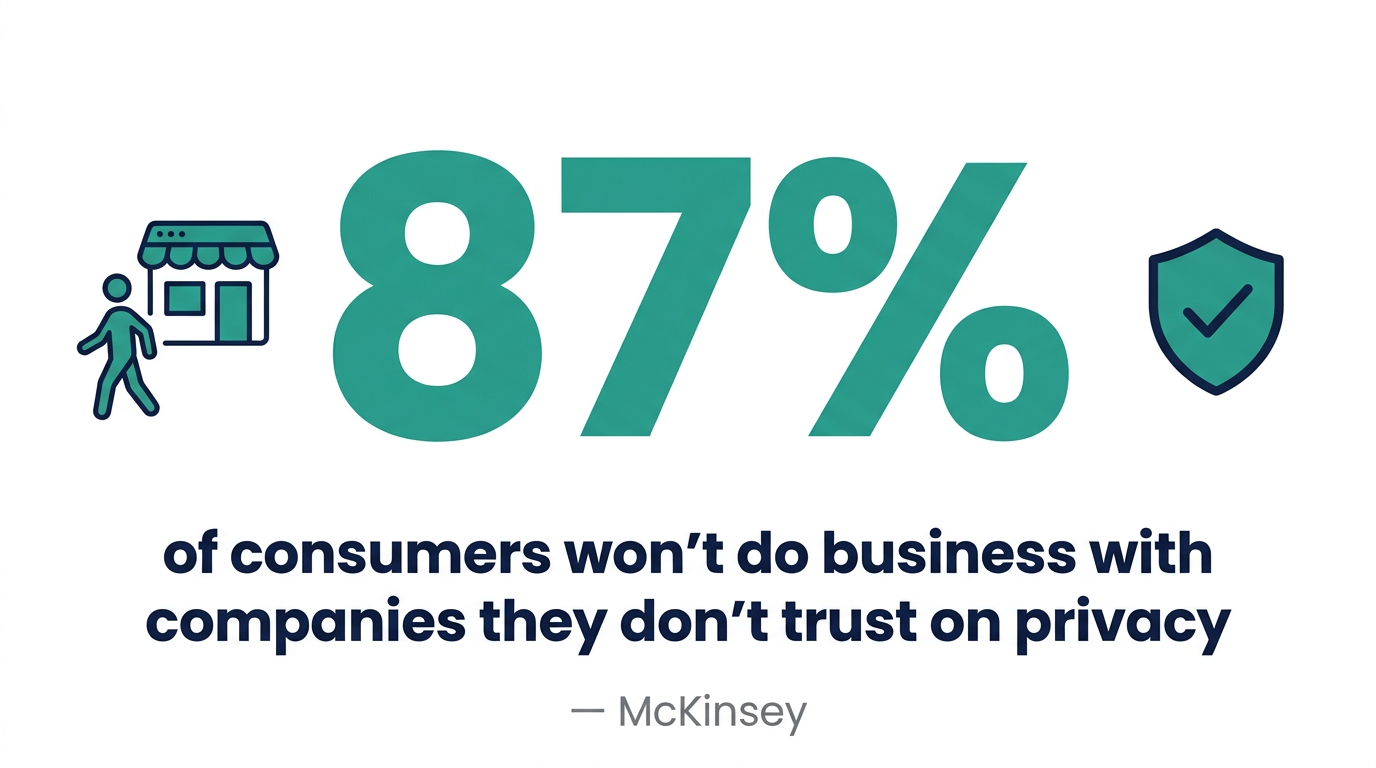
Remember that McKinsey stat—87% of consumers won't do business with companies they don't trust on privacy.
That's not a compliance stat. That's a revenue stat.
When you help a client get privacy right, you're not just keeping them out of legal trouble.
You're helping them not lose customers.
That's a much easier thing to sell than “here's how we'll avoid a fine you don't believe you'll ever actually get.”
Your Next Steps
So let me bring this all together.
Privacy is not a barrier. It's not a headache. It's not “somebody else's problem.”
It's a massive, growing service opportunity that most analytics people are walking right past because they've convinced themselves they're not qualified.
You are qualified.
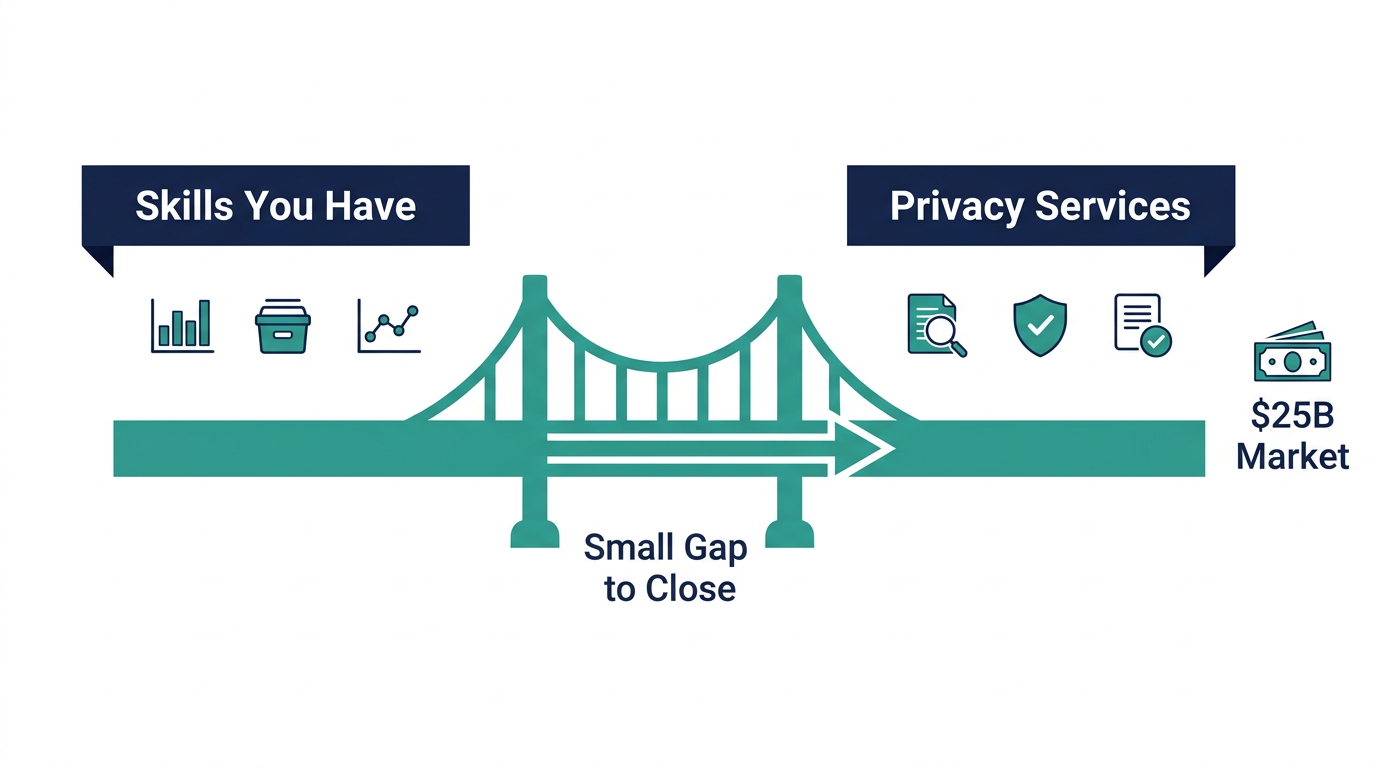
If you can set up Google Analytics, you can do a privacy audit.
If you can configure Google Tag Manager, you can implement consent management.
If you can explain data to a client, you can help them understand why this matters for their business.
The $25 billion privacy market isn't going to lawyers and developers because they're smarter than you.
It's going to them because they showed up.
You can show up too.
And when you do, you're not just adding another service to your list.
You're becoming the person who understands how marketing actually works in 2026. The person who can fix problems other consultants don't even know exist. The person clients can't afford to lose.
That's the real opportunity here.
Ready to Build These Skills?
If you want to actually learn how to do this stuff—the consent implementation, privacy audits, and the whole technical side of making this work—that's where MeasureU can help.
Our community has resources and live coaching to talk through exactly these kinds of projects. We've got a whole group of analytics people figuring this stuff out together.
And if you want the bigger picture, I've put together a list of 99 services that are going to dominate the next few years of our industry. Privacy is just one of them.
Drop a comment below with “services” and I'll send it your way.
I'd love to hear—have you started offering privacy services yet? What's holding you back? Let me know in the comments.