A few years back, I paid a lawyer $1,500 for one hour.
At the end of that hour, he said something I wasn't expecting: “I know the legal side cold, but I'm out of my element with the technical implementation of privacy. We should team up.”
That single conversation about a Google Analytics audit and compliance work changed how I think about agency services entirely.
Here's the math that came out of it:
- Pay one expert once to validate your process
- Use that validated work across 20 clients
- Charge $5K to $10K per engagement
One $1,500 hour. Twenty clients. You can do that multiplication yourself.
Watch the Full Breakdown
This post breaks down the framework from the video above. If you want the full walkthrough with examples, watch it there. If you want the key concepts you can reference and act on, keep reading.
What You'll Learn in This Post
- Why the compliance market is wide open for analytics agencies
- The scorecard-to-audit-to-retainer framework that converts one-time work into recurring revenue
- Why your cheapest clients are actually your most expensive ones
- How expert validation compounds across your entire client roster
Table of Contents
- What Makes a Google Analytics Audit Actually Valuable
- The Agency Retainer Model Hidden Inside Every Audit
- Why Your Measurement Strategy Becomes Your Retainer Foundation
- The Compliance Market Most Agencies Are Ignoring
- Why Your Cheapest Clients Cost You the Most
- Your Next Steps
What Makes a Google Analytics Audit Actually Valuable
Most agencies treat audits like a one-time deliverable. Client pays, you run through a checklist, you hand over a PDF, done.
That's leaving money on the table.
The real value of a Google Analytics audit isn't the document itself. It's the validated process you build to create that document.
When I worked with that lawyer, we weren't just solving one client's problem. We were building a repeatable system:
- His legal expertise validated the compliance approach
- My technical implementation made it actionable
- Together, we had something neither of us could sell alone
That's where the scorecard comes in. Instead of starting from scratch with every client, you're deploying a proven methodology.

The Agency Retainer Model Hidden Inside Every Audit
Let's be honest about agency economics for a second.
If you're selling audits as standalone products, you're working harder than you need to. Every new client means rebuilding trust, re-explaining your process, starting the sales cycle over.
But an audit that reveals ongoing measurement needs? That's a different conversation entirely.
The audit becomes your entry point. You show them what's broken. You show them you know how to fix it. And then you're the obvious choice for the ongoing work.
This is the agency retainer model that most analytics shops miss completely:
- The Audit – Gets you in the door, establishes credibility, reveals scope
- The Fix – Implementation work based on audit findings
- The Retainer – Ongoing measurement and optimization
Each phase sets up the next. The client doesn't feel sold to because each step delivers genuine value.

Why Your Measurement Strategy Becomes Your Retainer Foundation
Here's the thing about measurement strategy work: it's never actually done.
Businesses change. Platforms update. Privacy regulations shift. What worked six months ago might be collecting garbage data today.
That ongoing need is exactly what makes a solid measurement strategy the foundation for retainer relationships. You're not inventing work to justify your invoice. The work genuinely needs doing.
And because you did the initial Google Analytics audit, you understand their setup better than anyone. Switching to another agency means starting over. That's expensive and risky.
So they stay.

The Compliance Market Most Agencies Are Ignoring
Remember that lawyer conversation? He knew something most analytics agencies don't want to admit.
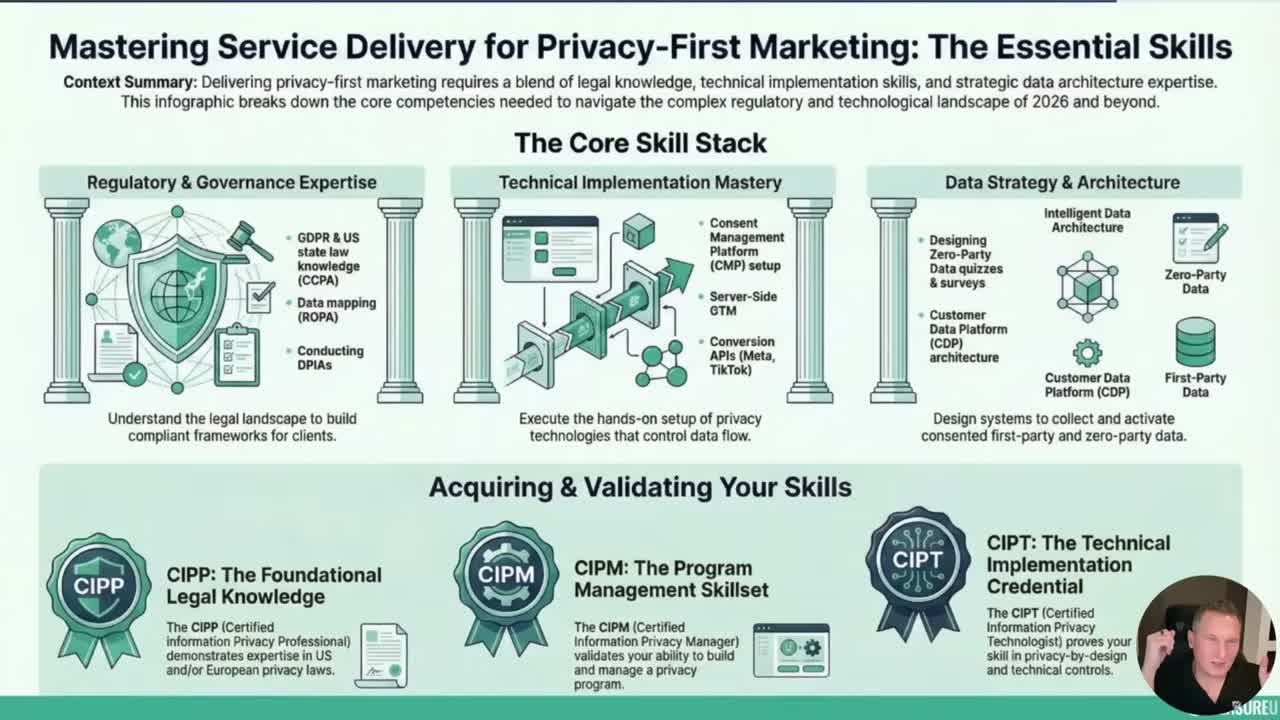
The compliance side of measurement (privacy implementation, consent management, data handling) is a market most technical people avoid. It feels like legal territory. Too risky. Too boring.
But here's what the lawyer understood: businesses NEED this solved. They're scared of getting it wrong. And they'll pay premium prices for someone who can handle both the technical and compliance sides.
Most agencies are competing on dashboards and reports. The compliance angle has way less competition.
Why Your Cheapest Clients Cost You the Most
One more insight from the workshop that's worth calling out specifically.
Your cheapest clients are always your most expensive ones.
Think about it:
- They negotiate hardest on price
- They question every line item
- They need the most hand-holding
- They're slowest to pay
- They refer other cheap clients
When you position around audits and compliance work (when you're solving expensive problems) you attract clients who value expertise over cost.
The audit framework isn't just about the deliverable. It's a filter for client quality.

Your Next Steps
Everything I walked through here comes from a larger framework I've been developing around emerging agency services.
The audit-to-retainer model is just one of the service opportunities that most analytics agencies are leaving on the table. There are dozens more, from consent management to AI-powered measurement, that fit the same pattern: high demand, low competition, premium pricing.
If you want to see the complete list, check out the full list of 99 emerging agency service predictions. It covers the service stacking system, from how you price the first audit to how you build a retainer that clients don't want to cancel.
I'd love to hear how you're currently positioning your audit services. What's working? What's not?