AI agents are like teenage sex.
Everybody's talking about it. Everybody wants it. But nobody actually knows what they're doing.
That's not my line. Avinash Kaushik said it about social media back in 2009, and it was dead on. Right now, AI agents are in that exact same phase.
So you're sitting with a client and you say “I'm going to build you an AI agent,” and they light up. They're excited. They've heard the buzzword. But then you can see the wheels turning, and the questions start coming.
“Wait, so are you still working with me? Or is everything getting handed off to a robot? Is this thing actually going to be any good? What does it even DO?”
They want the result. They just have no idea what they're buying.
And that confusion (not disinterest, confusion) is where every deal gets stuck.
The people who figure out how to sell through that confusion are going to clean up. Most of the advice out there right now is about how to BUILD agents. Nobody's talking about how to actually sell them to someone who doesn't know what they are.
I'm Jeff Sauer. Twenty-plus years in marketing, an 8-figure agency exit, and for the past year I've been building AI agents that actually run the backbone of how my six-person team operates every single day. I've felt that same mixture of excitement and disappointment. I've felt the deals slipping away while I'm still mid-sentence. I've closed these deals, and I've blown them. I know exactly which words kill the room and which ones open the wallet.
That's what this piece is about. Not how to build agents. How to sell them to the people who desperately need them and can't afford not to work with you.
Watch the Full Breakdown
Below, I've broken down the exact framework from the video: how to talk about agents, how to structure your offer, and the two questions that set up every sale.
What You'll Learn in This Post
- Why your clients don't care what an AI agent is, only what it does for them
- How to stop defending AI technology and start giving clients a choice between service tiers
- How AI agents solve the “junior handoff” problem that burns client relationships
- The two-question framework that sets up every successful AI agent sale
Table of Contents
- Stop Explaining How AI Agents Work (Your Clients Don't Care)
- Give Clients a Menu, Not a Defense
- How AI Agents Solve the Junior Handoff Problem
- The Truth About AI Readiness (You're Not That Good Either)
- The Two Questions That Set Up Every AI Agent Sale
Stop Explaining How AI Agents Work (Your Clients Don't Care)
Here's something nobody admits when they're excited about their new agent workflow:
Your client does not know what an AI agent is. And more important, they don't care what it is.
When you say “AI agent,” they hear blockchain. They hear the metaverse. They hear “technical thing that smart people are excited about that has no obvious meaning for my business.” You might as well be speaking a different language.
Because you are.
And the mistake most people make is that they try to fix that by explaining how the agent works. The architecture. The tools it connects to. The models powering it. Every word of that explanation kills your deal a little bit more, because you're answering a question they never asked.
Your client isn't buying an AI agent. They're buying relief from a problem they've had for a long time.
The technology needs to appear invisible to them, and honestly, it should be. You don't explain how the dishwasher works when someone hires you to clean their kitchen. You talk about how clean the dishes are and the length of the warranty.
So the first shift is this: stop leading with capability. Lead with outcome.
Not “I built an agent that monitors your ad campaigns,” that's a capability statement and it means nothing.
Try: “Your campaigns get checked every day instead of once a week, and you don't pay extra for it.” That's an outcome. That lands.
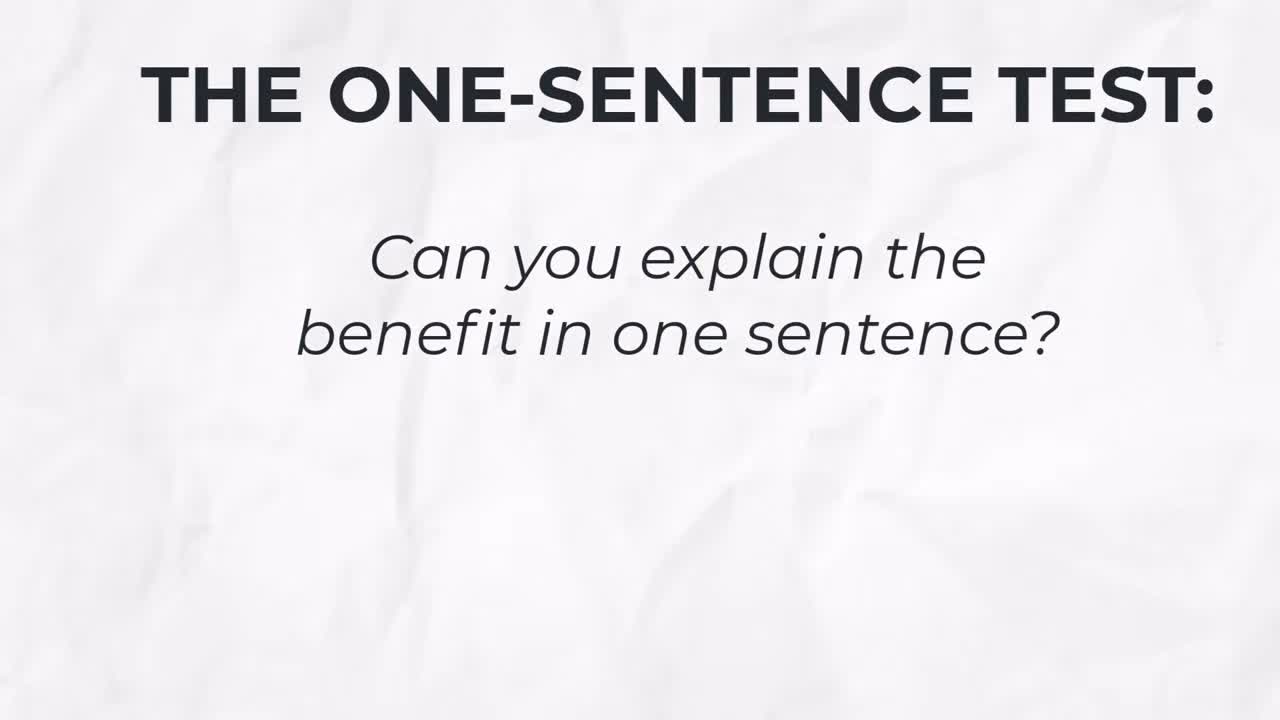
The test I use is simple: can you explain the benefit in one sentence, with no jargon and no tech terms? If you can't, you're still selling the technology instead of the result.
Give Clients a Menu, Not a Defense (The Two-Tier Model)
Here's the thing that changed how I sell this work, and it's almost embarrassingly simple once you see it.
Stop defending AI. Give them a menu.
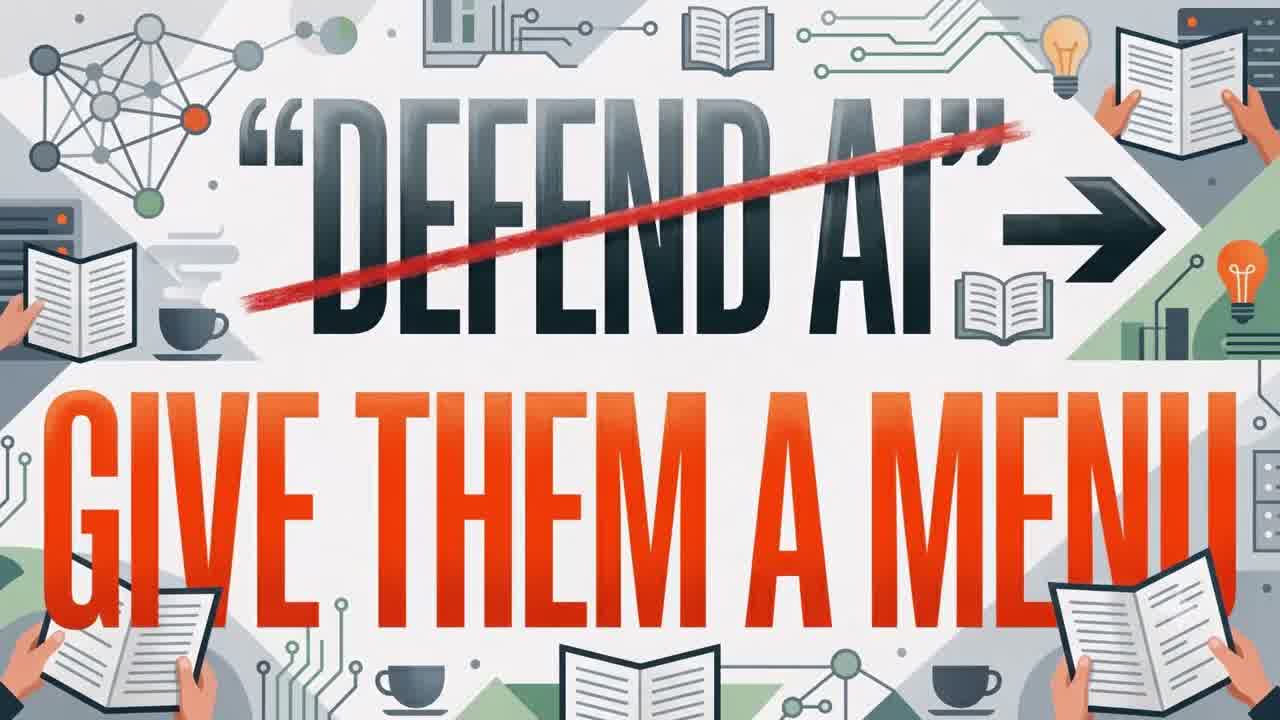
When clients push back (“is it accurate enough?”, “what if it makes a mistake?”, “I want a human involved”), most people get defensive. They start explaining error rates and training improvements and model updates, and the client gets more skeptical, not less. You're arguing on the wrong terrain.
Stop defending AI. Give them a menu.
That's where the two-tier model comes in. The move I make instead is to give them two service levels: an AI tier and a human tier.
And then I ask them one question that reframes the entire conversation: “Do you want the work to be 100% human-involved and pay a premium, or do you want the most cost-effective result?”
| What you get | AI Tier | Human Tier |
|---|---|---|
| Service | Passive monitoring & optimization | Active management with human review |
| Frequency | Runs daily, automatically | Hands-on, human-paced |
| Positioning | Included in what they already pay | Premium service level |
| Cost | Most cost-effective result | They pay more for it |
That's the whole frame. And honestly? It's always worked for me, well before AI, back before offshore resources became a thing and Upwork established the bottom of the market.
Real example: for 20+ years, I've had prospective clients tell me they can't afford to have us optimizing their ad account every day through marketing automation, even though they expect that level of service. The cost is too high for their budget. Fair objection. I've heard it a hundred times.
With an agent, I can optimize that account every day. Passively. Without billing additional hours. So I come back and say: “What if instead of weekly, you got daily optimization, for the same price you're already paying?”
Their eyes light up. We can do that with the new AI technique we've developed, no additional charge. But when they hear AI, they might say they don't trust it, or they require a human to review every change.
You tell them: “If you want a human reviewing and approving every change, we have that option. That's our premium tier. But the question is, do you actually need a human? Or do you need the result?”
Half the time, they'll choose the cheaper tier. And it's not just because they're cheap. It's because it matches their budget. The best part? Now you can help them realize they're getting the best of both worlds, performance and budget, in a way that was never possible in the past.
Fast, cheap, and good? Your client can have all three when your agency uses AI agents for marketing automation. The other half can still have their human-focused results, where you charge a premium and generate more profit.
Why AI Agents Aren't Like Selling Software
You may also think of AI agents like selling software. But I want to push back on that.
AI agents are not really the same as software. Software sits in a walled garden. It stores data, provides an interface, and helps you execute functionality and features. But it never acted on that information, that was the job of your client or their agency.
An agent actually does things. It pulls the data, makes a decision, executes that decision, and logs what happened, with or without a human in the loop. That's a fundamentally different business model.
How AI Agents Solve the Junior Handoff Problem
There's an objection I hear constantly from clients who've been burned by agencies before: “I'm paying your rates, but I keep getting handed off to someone junior.”

Every agency owner knows this. You close the deal, the client loves you, and three weeks in, they're asking why you're not on every call anymore. It's one of the oldest friction points in the service business, and most agencies never actually fix it.
Here's how agents fix it, and how to frame it when you're selling. Agents absorb the junior work. The routine pulls. The weekly reports. The dashboards that should be real-time but are always a few days behind because someone has to manually update them. The account checks that should happen daily but happen whenever there's bandwidth.
When that work moves to agents, something interesting happens to your team.

Your senior people aren't doing rework anymore. They're not in the weeds of manual execution. They're doing actual thinking: the strategy, the client relationships, the judgment calls that require experience. The work they're genuinely good at and that your clients are actually paying for.
So when you're pitching this, you don't say “we're using AI to handle the monitoring.” You say: “Our senior team spends their time on your strategy, not on things that should be automated.” And we do it for half the price we used to charge.
That's the upgrade they've been asking for. Most clients will pay a premium for that once you frame it correctly.
The Truth About AI Readiness (You're Not That Good Either)
Alright. Here's the part some people aren't going to like.
When a client tells you “AI isn't ready” or “it's not as good as a person,” the honest answer is: you're not that good either.
Maybe don't say it exactly like that. But you need to believe it before you can handle the objection well.

Every time you scaled by hiring, those people weren't perfect. The junior who got handed off to clients, not perfect. The senior who was supposed to be doing strategy but was stuck in spreadsheets, not perfect. The onboarding that took six months before someone was genuinely useful, definitely not perfect. Nothing ever lived up to what you imagined when you pictured the hire working out.
So why are we suddenly holding AI to an impossible standard we've never actually applied to humans? Even mediocre AI, the kind that makes mistakes sometimes, the kind that needs supervision, the kind you're skeptical about, is still operating at a level that beats the average hire on a lot of dimensions:
- It doesn't complain
- It doesn't job-hop six months in
- It doesn't have bad weeks
- It doesn't need three months of onboarding to understand your systems
- It doesn't go dark right before a major campaign launch
And here's the part I want you to sit with:
Right now, this is the worst AI you are ever going to work with.
What exists right now, today, is the floor. Every model update, every improvement in reasoning and execution, every new capability between now and next year makes what you're using today look primitive in comparison. The difference between current AI and where it's going is massive.
So if imperfect-right-now AI is already changing how your team operates (and it is, I've lived it for a year), then the question isn't “is AI good enough?” The question is whether you're going to be ahead of this or behind it.
You're not that good. AI's not that good. But together, you are significantly better than either one alone.
That's the result your clients actually want.
The Two Questions That Set Up Every AI Agent Sale
Let me put this into a sequence you can actually use on your next call. Two questions to ask before AI ever comes up in the conversation:

Question 1: Identify the Manual Pain
“What's currently happening manually in your business that should probably be happening automatically?”
Don't lead with solutions. Lead with their pain. Let them describe the thing eating their team's time. The weekly reporting. The account checks. The data pulls that happen on a delay because someone has to physically run them. Get them talking about the problem in their words.
Question 2: Paint the Better Future
“If that was happening every day instead of once a week, or in real time instead of monthly, how does that change things for you?”
Let them answer. Because now they're not thinking about AI. They're thinking about relief. About what their team could do with those hours back. About what it would mean for their clients to have real-time data instead of last month's export.
Now You Introduce the Agent
Not as “here's this technical thing we built,” but as “the solution to that thing you just described. That's what I can set up for you.”
And when they push back on accuracy or readiness of AI? “Here's how I think about it. You've hired agencies and employees before who weren't perfect either. What we're doing is giving your best people better tools so the errors go down and the output goes up. The technology handles the routine. Your team handles the judgment. That combination is better than either one working alone.”
Outcome first, choice structure second, team-multiplier framing if you need it.
Stop Apologizing for Imperfection
I'm done apologizing for AI not being perfect. Nothing is.
Your hires have never been perfect. Your processes aren't perfect. The clients pushing back on AI readiness are not running flawless operations themselves. Nobody is. The standard AI is being held to doesn't exist anywhere else in business.
You don't need AI to be better than some imaginary benchmark. You need it to be better than what your client had before. And in almost every case, it is.
Give clients a choice instead of a defense. Show them how it makes your results better, not replaceable. And when the “it's not ready” objection comes up about using AI to achieve that result? You know what to say now.
Your Next Steps
- Rewrite your current AI pitch using outcome language instead of capability language. Test it on your next call.
- Build out your two-tier pricing model with clear AI vs human service distinctions.
- Practice the two-question framework until it feels natural: problem identification, then impact visualization.
Want to put real numbers behind your two-tier model? Grab the free Pricing for Profit Calculator, plug in your costs and margins, and set defensible rates for your AI and human tiers in a few minutes.