This post is based on a webinar we ran with Tracklution, a MeasureU partner.
Know that feeling when you've got 15 clients, tracking setups that all look different, and one person on your team who “handles all the tracking stuff”?
And then that person takes a vacation. Or worse, leaves the company.
Suddenly you're staring at Google Tag Manager containers you don't recognize, conversion tracking that may or may not be working, and clients asking why their lead numbers look weird.
I've been there. Back when I ran ads for businesses, tracking implementation was always the bottleneck. Not because it was impossible, but because we never built systems around it. We just did it. Differently. Every time.
That's where this framework comes in. It's based on insights from Anni, CEO and co-founder of Tracklution, who shared what separates agencies that successfully scale tracking across hundreds of clients from those that constantly struggle with it.
Watch the Full Breakdown
In this webinar recording, Anni walks through the complete framework with live examples and a Q&A session covering real implementation questions:
What You'll Learn in This Post
- Tracking is not technical plumbing. It is a direct input to your clients' ad performance
- The agencies that scale successfully solve three layers, in this order: Strategic, Operational, Technical
- You don't need one tracking expert. You need every consultant to own the basics for their clients
- A Client Measurement Blueprint document changes everything about consistency
Table of Contents
- Why tracking is more than technical setup
- The 3-layer framework for scalable agency tracking
- Layer 1: Strategic, what do we track and why?
- Layer 2: Operational, how do we manage it consistently?
- Layer 3: Technical, how do we actually deliver it?
- The Client Measurement Blueprint (template)
- Common questions about scaling agency tracking
- Why this matters for client retention
Why Tracking Is More Than Technical Setup
Here's the thing most agencies get wrong: they treat tracking as something that “has to exist” but sits completely separate from the actual PPC work.
That's backwards.
Advertising is increasingly algorithm-driven. Google, Meta, LinkedIn, TikTok. They all optimize based on the conversion signals you feed them. You send data to the algorithm, the algorithm brings you results.
So if you're giving the algorithm poor signals? It's making decisions based on bad information.
Anni put it this way: “If we're only telling Meta that somebody filled out a form, they will for sure find more people who fill forms. But maybe only 10% of those form fills are actually qualified.”
The difference between telling Meta “someone submitted a form” versus “this specific lead became a paying customer” is massive. One trains the algorithm to find form-fillers. The other trains it to find buyers.
Conversion tracking isn't just about reports anymore. It's crucial input for how campaigns optimize. And for you as an agency, it's how you deliver actual results instead of just activity metrics.
The 3-Layer Framework for Scalable Agency Tracking
Here's what separates agencies managing tracking across hundreds of clients from those constantly struggling:
They don't jump straight to the technical stuff.
Most agencies start with “what tools do we use?” or “how do we set up server side tracking?” But that's layer three. And if you start there, you're building on sand.

The framework has three layers, and you need to solve them in order:
- Strategic Layer: What do we track and why? (Per-client decision)
- Operational Layer: How do we manage it consistently? (Agency process)
- Technical Layer: How do we deliver it? (Tools and execution)
Let me break each one down.
Layer 1: Strategic, What Do We Track and Why?
Start with the business. Not with “what do we normally track.”
For every client, you need to answer: what is this client actually trying to achieve? Then work backwards to the signals that indicate progress toward that goal.
The B2B Lead Generation Example
Take a typical B2B company generating leads. They don't want form submissions, they want customers. So map out the actual customer journey:
- Website visit (obvious starting point)
- High-intent page views (pricing page, product details, these visitors are more qualified)
- Form submission / Demo request (where most agencies stop tracking)
- Lead qualified in CRM (this is where it gets interesting)
- Offer calculated
- Sale closed

See that line after “form submission”? That's where 90% of agencies stop. Because it's easy. It's a form on the website, straightforward to track.
But the most important signals happen after that. In the CRM. When the lead gets qualified. When the offer goes out. When the sale actually closes.
If you can send those signals back to your ad platforms? You're giving the algorithm a completely different picture of success.
The Client Measurement Blueprint
The agencies that scale this? They have a documented process. Not just tribal knowledge, an actual document they fill out with every client and store in the client record.
Anni shared an example blueprint that includes:
- Business objective (what the client actually wants to achieve)
- Customer journey map (all the stages from first touch to closed deal)
- Tracking plan (what events to track, where the data lives)
- Event naming conventions (so everything stays consistent)
- Data source documentation (where each action happens, how to collect it)
When you have this for every client, you can always go back to the beginning. What did we agree to track? Why? What were the KPIs?
This also protects you. When a client asks “what value are you bringing?” you've got documented proof tied directly to their business goals.
After completing this layer, you can answer: What do we track for this client, and why does it matter to their business?
Layer 2: Operational, How Do We Manage It Consistently?
Now we're talking about internal agency processes. And this is where I see most agencies completely fall apart.
The Bob Problem
You know Bob. Every agency has a Bob.
Bob is the one person who “knows everything about tracking.” Bob handles all the tracking implementation. Bob knows where everything is, how it's configured, and what the weird edge cases are.
Bob is also a single point of failure.

What happens when Bob goes on vacation? What happens when Bob gets too busy to onboard new clients? What happens when, and this is the scary one, Bob leaves?
Anni was blunt about this: “You as a founder should be developing your business, taking your agency forward and not struggling with tracking setups every day.”
The solution isn't hiring another Bob. It's building processes that don't depend on any single person.
Who Should Own Client Tracking?
Here's what surprised me from the agencies successfully managing tracking at scale: the consultant who does the client work also owns the tracking.
Not a dedicated tracking specialist. The same person running the campaigns.
I know, I know, you're thinking “but my consultants aren't technical enough.” And look, they don't all need to become tracking implementation experts. But they need to understand the basics:
- How data flows from website to ad platforms
- How to set up standard events in Google Tag Manager (or whatever tool you use)
- How to verify tracking is working
- Where to look when something breaks
One agency Anni mentioned manages roughly 400 clients, every single one with server side tracking. And each consultant owns tracking for their own clients.
How? They invested in training. They created step-by-step documentation for common scenarios (lead gen clients, e-commerce clients). They did working sessions where everyone implemented a client together with someone walking around helping.
The result? No bottleneck. No single point of failure. And consultants who actually understand the data foundation they're optimizing against.
What Your Operational Layer Needs
Based on what's working at scale:
Clear (but distributed) ownership:
- Consultants own tracking for their clients
- Senior technical people available as backup for complex cases
- No single person who knows everything
Repeatable implementation process:
- Documented step-by-step guides for common scenarios
- Internal case examples (what did we do for this type of client?)
- Quality assurance checklist before going live
Ongoing monitoring guidelines:
- What to check regularly
- How to spot when something breaks
- Who to contact when you get stuck
Troubleshooting documentation:
- Common issues and how to fix them
- Escalation path for tricky problems
Training program:
- Onboarding for new employees
- Quarterly sessions on what's changing
- Review of new learnings and cases
After completing this layer, you can answer: How do we manage tracking consistently across all clients, without depending on any single person?
Layer 3: Technical, How Do We Actually Deliver It?
Now we get to the tools and technical decisions. Not before.
If you want tracking setups that capture real business outcomes, not just website actions but CRM events, closed sales, actual revenue, things get technical fast.
You're moving beyond browser-based pixels into server side tracking. You're importing data from CRMs, payment systems, and booking platforms. You're enriching that data and sending it back to ad platforms.
The Build vs. Partner Decision
You've got two paths:
| Build in-house | Use a partner | |
|---|---|---|
| Technical work | Hire technical specialists | Technical layer handled for you |
| Infrastructure | Build it for managing multiple client setups | Provided, along with tools for tracking implementation |
| Documentation | Create your own technical docs and processes | You own strategy and operations, they document the plumbing |
| Maintenance | Yours, including when APIs change | Infrastructure, API updates and maintenance are their problem |
Anni was honest about the trade-offs, and she runs a partner solution herself, so she has seen both sides:
Some agencies prefer building in-house because they want to keep the billable hours. Tracking implementation projects cost money. Maintenance means ongoing revenue. When something breaks, clients come to you.
That's a legitimate business model.
But other agencies look at it differently. They'd rather spend their time on strategy and client relationships than server configuration. They want tracking to be scalable without building a technical team.
There's no wrong answer, but you need to make a deliberate choice.

Where Google Tag Manager Fits
GTM is one tool in the technical layer. For agencies that train consultants on basics, it's often the place they learn to set up tracking tags and events.
But GTM alone doesn't solve everything. Especially when you need:
- Server side tracking implementation
- CRM data flowing back to ad platforms
- Visibility into what's actually being sent
- Easy-to-use connectors for multiple platforms
That's where purpose-built tools (whether you build them or use a partner) come in.
What to Look for in Technical Solutions
Whatever path you choose, you want:
- Visibility into data flows (can you see what events are being collected?)
- Easy platform connections (Meta, Google Ads, LinkedIn, without building each API yourself)
- Troubleshooting capabilities (when something breaks, can you find it fast?)
- Compliance documentation (can you prove to clients what data you're sending?)
After completing this layer, you can answer: How do we technically deliver tracking to our clients, in-house, with a partner, or some combination?
The Client Measurement Blueprint (Template)
Let me make this practical. Here's what a Client Measurement Blueprint should include:
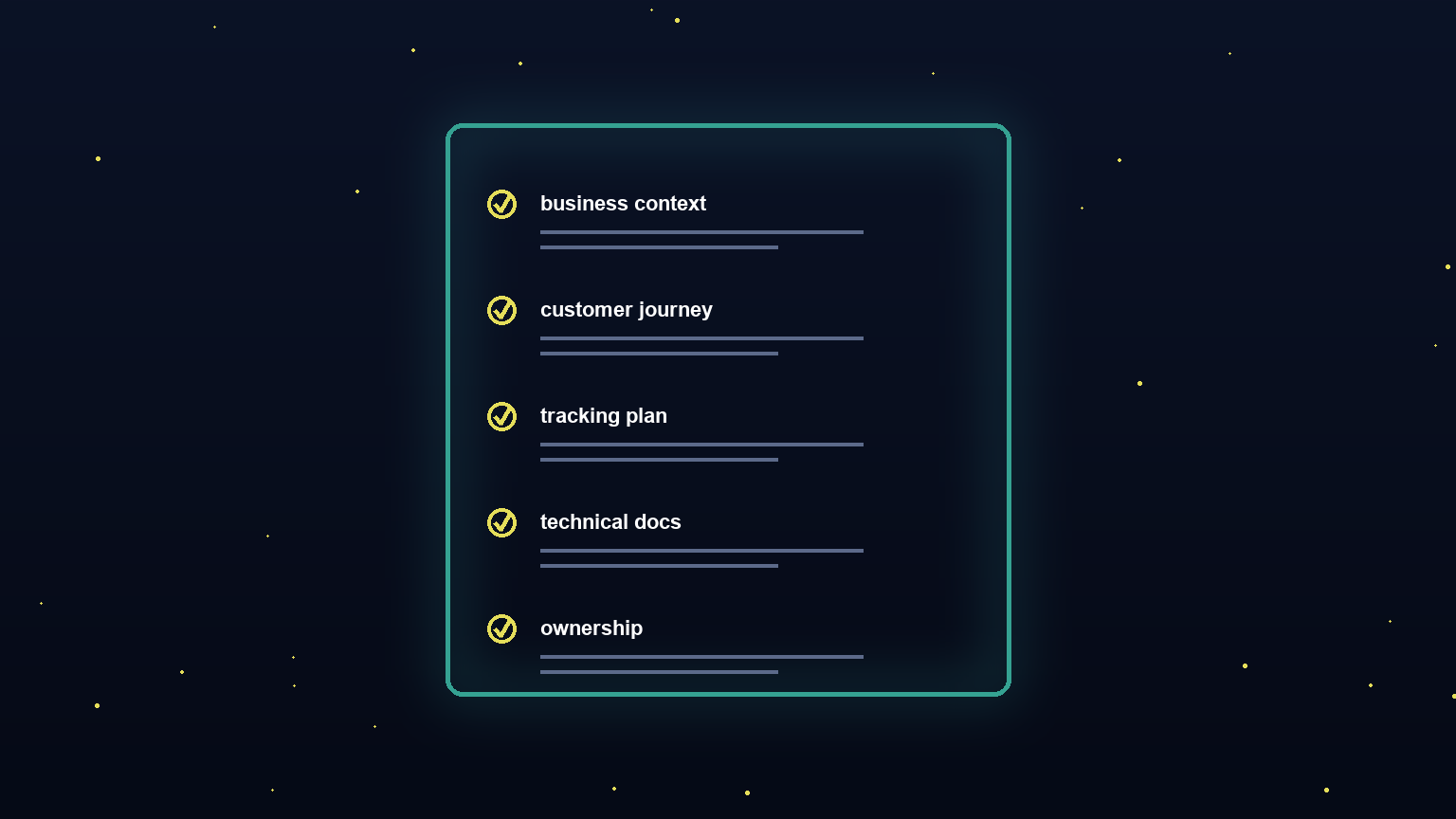
Section 1: Business Context
- Client name and industry
- Primary business objective (what does success look like?)
- Key performance indicators they care about
- Revenue model (how do they make money?)
Section 2: Customer Journey Mapping
- All stages from first touch to final outcome
- Where each stage happens (website, CRM, payment system, and so on)
- Which stages indicate progress toward the business goal
Section 3: Tracking Plan
- Events to track at each stage
- Event naming conventions (be specific, no “lead_event_1”)
- Data enrichment requirements (what additional info is needed?)
- Platforms to send signals to
Section 4: Technical Documentation
- Data sources and collection methods
- Integration requirements
- Consent and compliance notes
- Testing and QA checklist
Section 5: Ownership and Maintenance
- Who owns this tracking setup
- Monitoring schedule
- Escalation contacts for issues
Fill this out during client onboarding. Store it in the client record. Come back to it when questions arise.
Common Questions About Scaling Agency Tracking
“What counts as basic knowledge for consultants?”
From an agency managing 400 clients: consultants need to understand data flows, set up standard events in GTM, and follow documented implementation steps for common scenarios (lead gen, e-commerce). They did hands-on training where everyone implemented a client together. The goal isn't making everyone a tracking specialist, it's making sure nobody is completely dependent on one expert.
“What about profit tracking vs. ROAS?”
It depends on the business goal (strategic layer). If the client wants to grow revenue, use revenue as the target. If they want to maximize profitability, use profit margin. The answer always starts with what the client is actually trying to achieve.
“How do we handle GA4 data discrepancies?”
GA4 is heavily browser-dependent. If something blocks GA4 in the browser, you'll see data loss, and there's limited control over that. Server side tracking can help reduce dependencies on browser-side execution. But be realistic: GA4 will never be 100% accurate because of how it's built.
Why This Matters for Client Retention
Let me connect this back to something painful: the 90-day cycle.
You know it. Sign the client, get stuff set up, hit that 90-day mark, and sometimes they leave.
Here's what good tracking changes:

Better ad performance: When you feed algorithms quality conversion signals, not just form fills but qualified leads and closed deals, campaign performance improves. That's not magic, that's just how the algorithms work.
Confident reporting: When you know exactly what's being tracked and why, you can demonstrate value clearly. “Here's what we agreed to measure. Here's how we're doing against those goals.”
Compliance peace of mind: Especially in regulated industries or GDPR-heavy markets, being able to prove what data you're sending (and what you're not) builds trust.
Defensible value: When you can show tracking tied to actual business outcomes, you're not just an ad manager. You're driving measurable business results.
Good luck with your tracking journey. And if you want to dig deeper into measurement strategy, take a look at MeasureU Pro, where we run regular sessions on exactly this kind of implementation work.