This post is sponsored by Cookiebot.
Most website owners think they handled privacy two or three years ago. They put up a cookie banner, checked the box, and moved on.
And I'm going to show you today why that assumption is quietly becoming one of the most expensive mistakes a marketer can make in 2026.
Here's the thing about cookie consent management: the landscape has shifted so dramatically since you last looked at it that what was “compliant” in 2023 may be generating legal exposure right now. Not future risk. Active exposure happening today.
By the end of this post, you'll know exactly how the privacy landscape has shifted, what the real risk actually is, and where to go to find out how ready your own site is, in about two minutes, for free.
Watch the Full Breakdown
The video covers the full picture in about six minutes. Below, I break down each piece and what to do about it.
What You'll Learn in This Post
- Privacy laws have multiplied across 20+ US states with different rules, thresholds, and definitions. This isn't a “Europe thing” anymore
- Having a consent management platform installed and having it configured correctly are two completely different things
- Over 4,000 wiretapping lawsuits have been filed since 2025 related to cookies and website tracking
- Only 15% of consent setups are even minimally compliant according to academic research
Table of Contents
- The Two Dangerous Assumptions About Privacy
- What Is a Consent Management Platform (And Why Having One Isn't Enough)
- The Rules Keep Multiplying
- Cookie Consent Management Requires Active Enforcement
- The Hidden Cost: What Broken Consent Does to Your Data
- How to Check Your Privacy Readiness Right Now
- Next Steps for Cookie Consent Management
- Frequently Asked Questions
The Two Dangerous Assumptions About Privacy
There are two things I hear constantly when I talk to website owners about privacy.
The first one: “That's a Europe thing.”
The second one: “We have a banner, so we're covered.”
Both of those were understandable three or four years ago. Neither of them is true anymore. And the distance between what people believe and what's actually happening? That's where the exposure lives.
Let me be direct about this: I've spent over twenty years helping companies get their marketing data right, from tracking setups to analytics to the infrastructure underneath it all. And right now, there's a very specific reason that data is at risk for a lot of sites, and most owners have no idea it's happened.
What Is a Consent Management Platform (And Why Having One Isn't Enough)
A consent management platform (CMP) is software that controls what data your website collects, when it collects it, and based on whose permission. It powers the cookie banner visitors see, records their consent choices, and (this is the critical part) enforces those choices across all tracking technologies on your site.
But here's the thing: having a consent management platform installed and having it configured correctly are two completely different situations.
I run into this constantly with clients. They have a CMP, the banner shows up, done. They believe that means they're compliant.
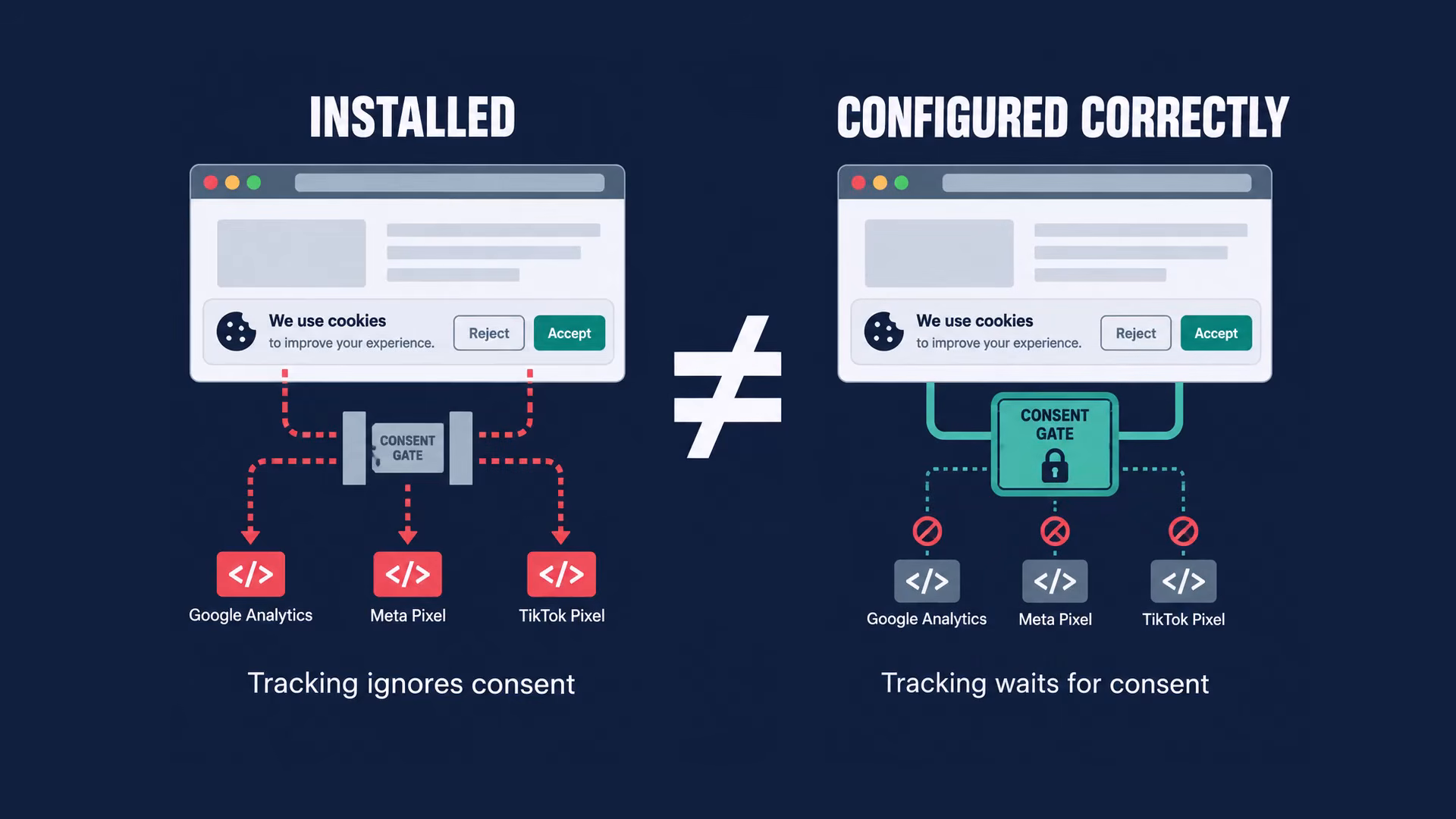
In almost every audit I run (and an audit here means a structured review of what the site is actually collecting and sending versus what the consent records say it should be doing), there's a disconnect:
- Tags fire before consent is recorded
- Third-party scripts load regardless of what the visitor chose
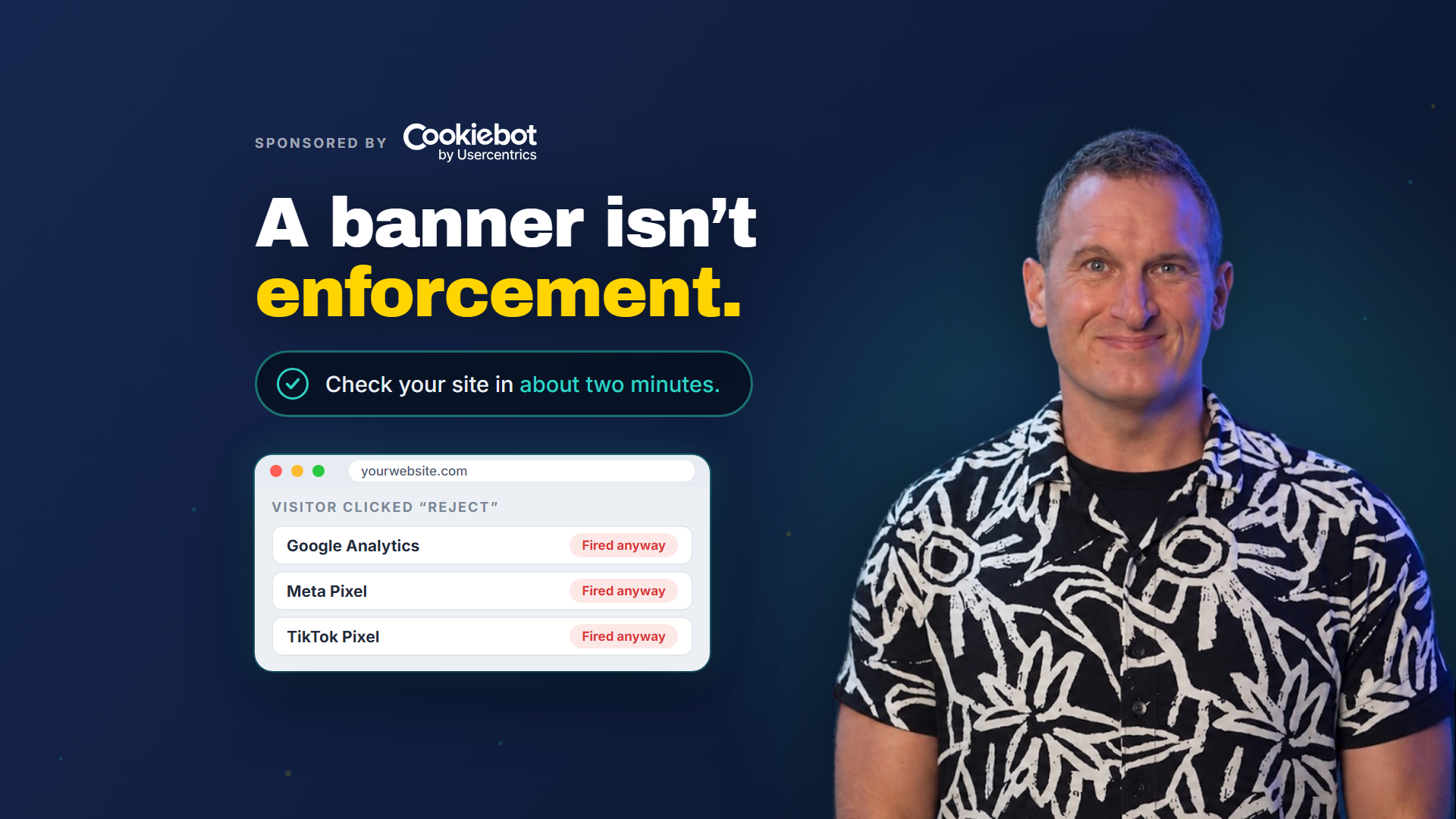
- The banner exists, but the enforcement behind it is broken
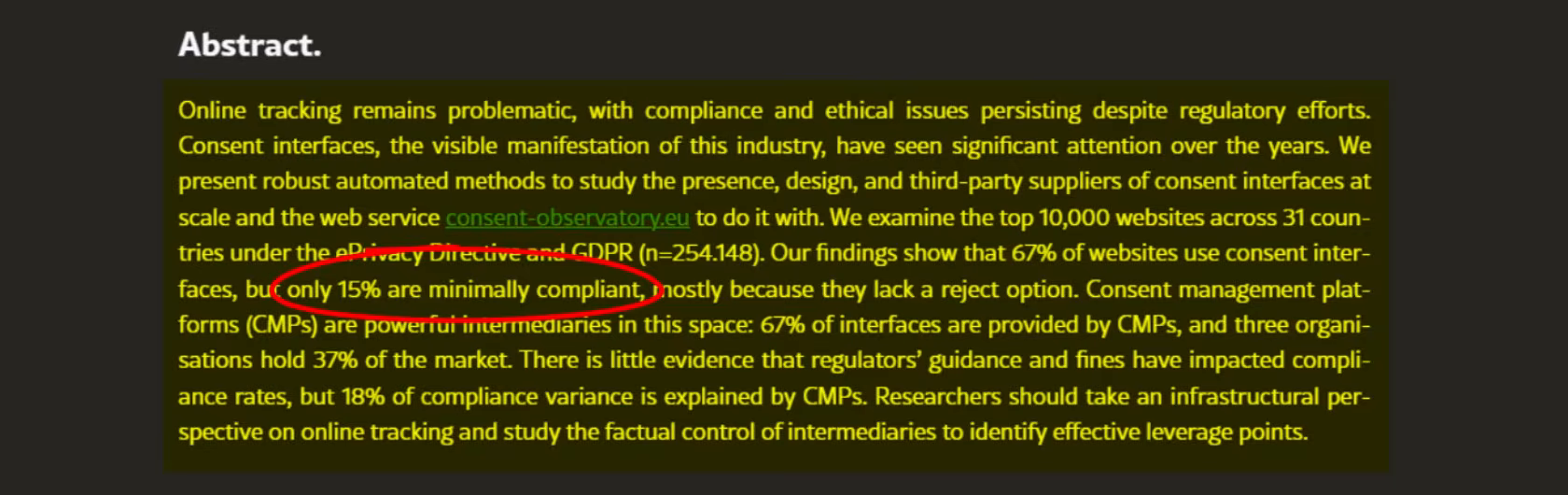
An Aarhus University study in Denmark found that just 15% of consent setups are minimally compliant. And that's in Europe, where this has been law for years.
So if you think of a cookie banner as the front door to tracking, a lot of companies are leaving the entire house unlocked.
The Rules Keep Multiplying
The “Europe thing” framing made sense when GDPR was the only law anyone was talking about. That's not the world we're operating in anymore.
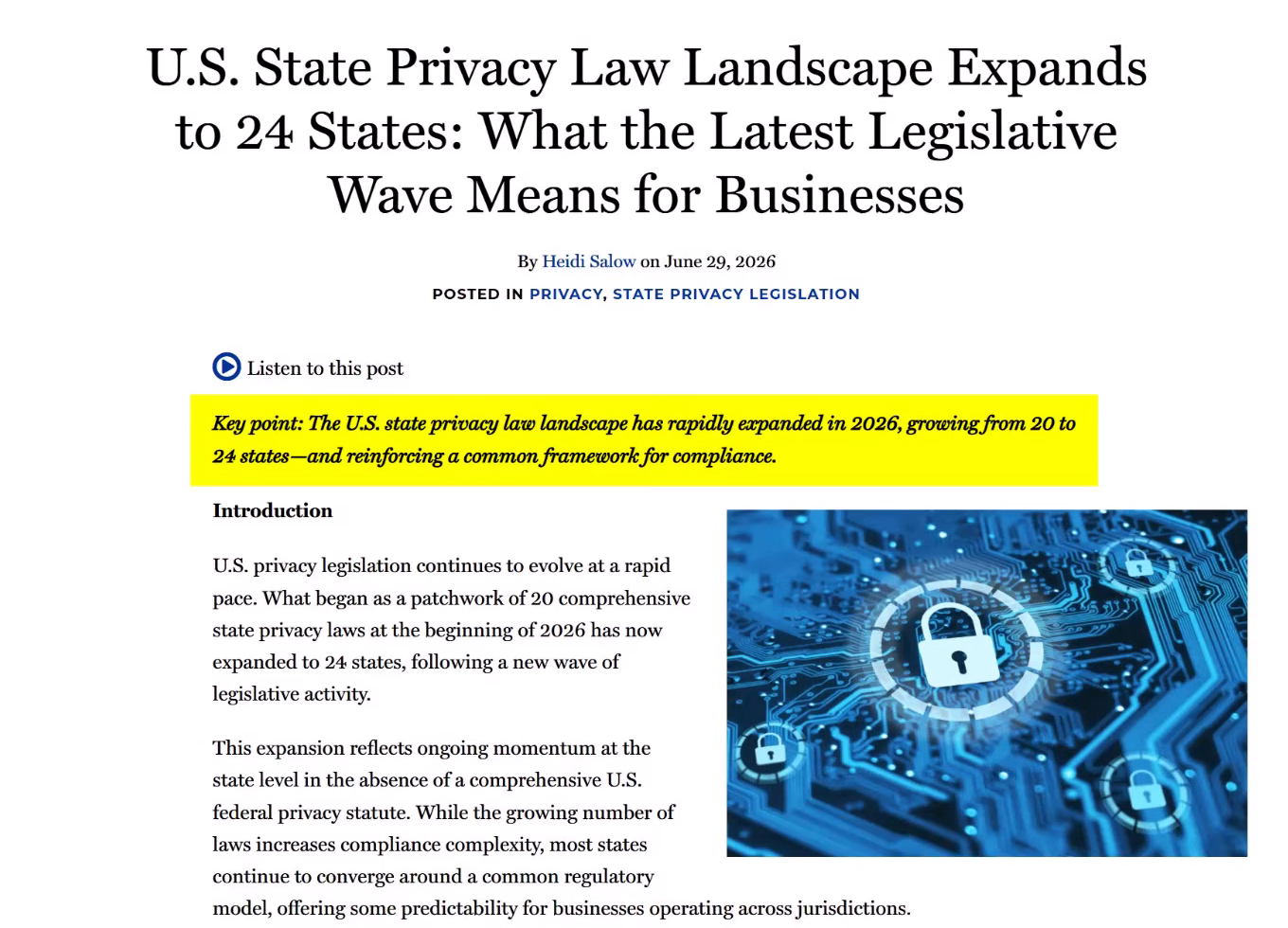
More than 20 US states now have their own active privacy laws. And these aren't copies of each other:
- Different rules
- Different thresholds
- Different definitions of what counts as a covered business
There's still no single federal standard that resolves all of that. So if your site has visitors from multiple states (which every site does), you're not dealing with one rulebook. You're dealing with a patchwork.
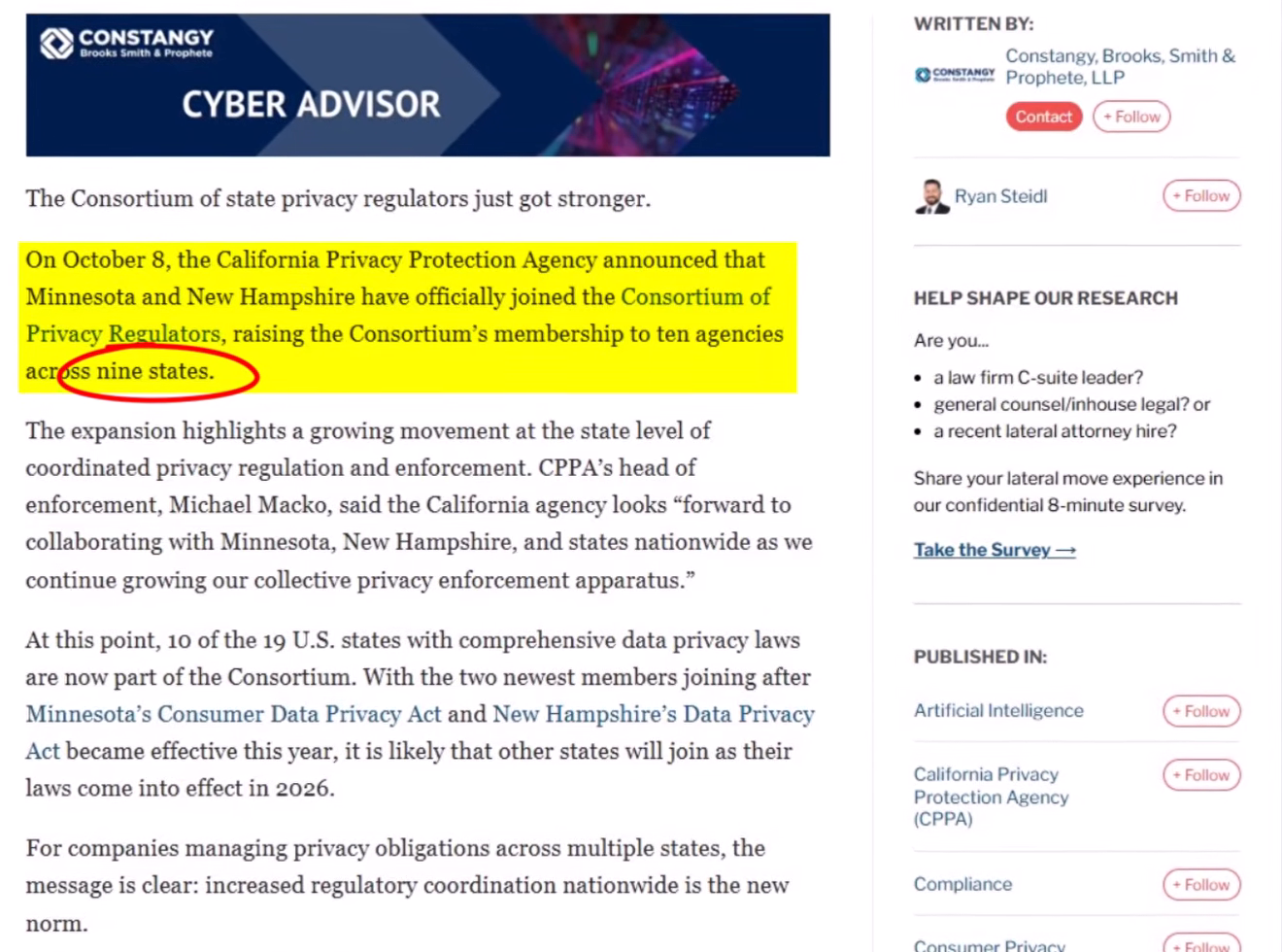
California alone has built out a consortium of privacy regulators that now spans 9 states coordinating on enforcement. CalPrivacy has over 100 active CCPA investigations open at any given time, and many of those weren't triggered by consumer complaints.
They were opened by automated scans.
Regulators aren't waiting for someone to report you. They're running their own discovery.
Cookie Consent Management Requires Active Enforcement
And then there's a category of legal exposure that almost nobody in marketing is thinking about: wiretapping statutes.
These are laws that have existed for decades, written long before anyone imagined tracking pixels or session replay tools. Courts are now applying them to exactly those technologies.
Since 2025, more than 4,000 lawsuits have been filed under wiretapping claims related to cookies and website tracking.
Four thousand.
We're not talking about a future risk. It's already in motion.
So here's a question worth sitting with: when did you last actually look at what's running on your site? Not what you installed. What's running right now.
The Hidden Cost: What Broken Consent Does to Your Data
Now I want to talk about something that doesn't show up in a legal brief but shows up in your numbers.
Consumer trust in how brands use data is at some of its lowest levels on record. And AI-powered personalization (the kind that follows you from one site to another and seems to know things you didn't tell anyone) has made that worse, not better.
A majority of consumers now describe that kind of personalization as intrusive rather than helpful.
That shift matters for your business in a very direct way:
- Fewer people are accepting all cookies. The pool of consented, trackable visitors you're building your attribution and audience models on is shrinking. Quietly. Steadily. Without a single error message.
- Discovery is moving to channels your consent layer can't see. Social feeds, AI assistants, word of mouth inside closed platforms: none of that passes through your site's consent layer.
- Your first-party data is thinning out. Most site owners don't notice this until the numbers stop making sense. The traffic looks fine, the sessions are there, but the signal is weaker than it used to be and nobody can explain why.
This is often why.
How to Check Your Privacy Readiness Right Now
I'm not telling you any of this to scare you. I'm telling you because the fix isn't complicated, and most people aren't doing it simply because they don't know the landscape has moved.
The question you need to answer is: How ready am I to deal with these regulations and changes, right now?
Not how ready were you when you set this up. Not what your platform says it's doing. How does your actual site behave, in 2026, against the rules that exist today?
Good news is you don't have to guess at it.
That's where Cookiebot comes in.
Cookiebot is a consent management platform: the software layer that controls what your site collects, when, and with whose permission. They've built a privacy readiness assessment that answers exactly the question I just asked: how ready is your site, right now?
It's free to start. You put in your URL, it tells you where you stand.
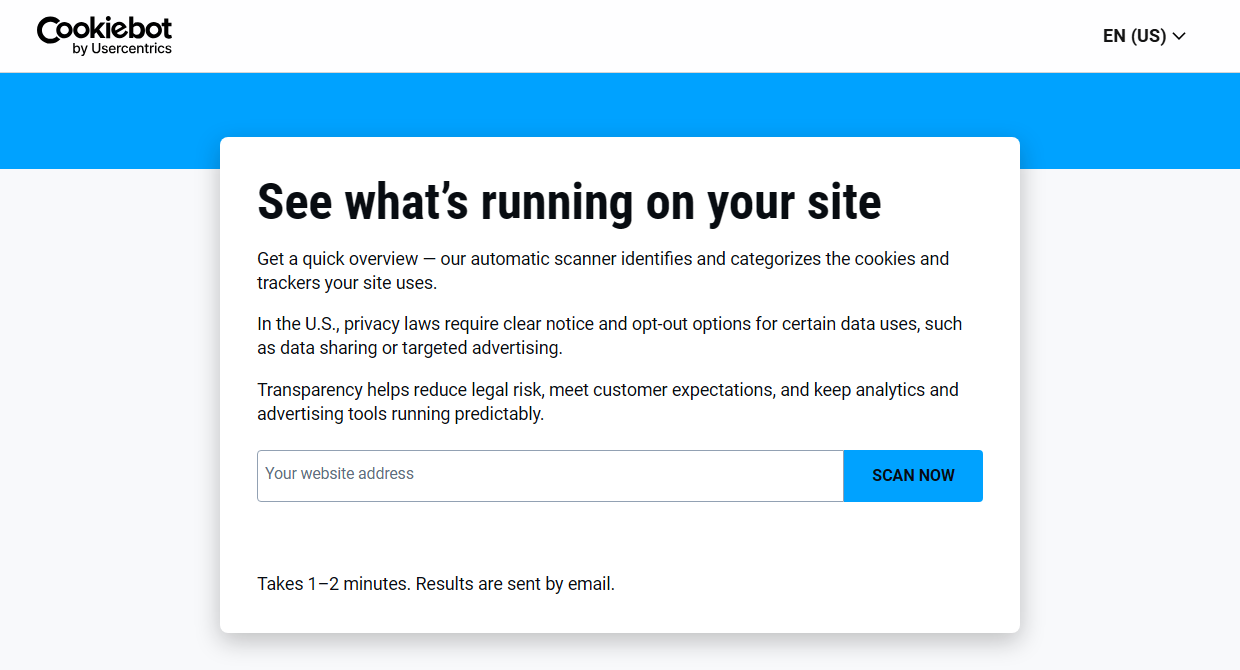
If you haven't looked at your consent setup since you first installed it, this is the right moment to actually check. The landscape has changed enough that what was fine two years ago may not be fine today, and the only way to know is to look.
Next Steps for Cookie Consent Management
Here's what I want you to take away from this:
Privacy is not a Europe problem. It's not solved by having a banner. It's an active, evolving situation that's generating real legal exposure and quietly degrading the data quality that your marketing decisions depend on.
The good news is that finding out where you stand takes about two minutes and costs nothing to start.
Your Action Plan
- Run the readiness assessment. Use Cookiebot's free tool to see where your site actually stands, not where you think it stands.
- Review what's actually firing on your site. Compare what your consent records say versus what your browser's developer tools show loading.
- Audit your CMP configuration. Just because it's installed doesn't mean it's enforcing. Check that scripts are actually blocked until consent is granted.
- Document your compliance posture. With enforcement increasing, having records of your compliance efforts matters.
Access Cookiebot's Free Privacy Readiness Assessment
If you want to go deeper on what clean, trustworthy marketing data actually looks like at the infrastructure level, that's exactly what we built MeasureU Pro to help you with.
Good luck with your privacy compliance.
Frequently Asked Questions
What is cookie consent management?
Cookie consent management is the process of controlling what tracking technologies run on your website based on visitor consent. It involves displaying a consent interface (the banner), recording choices, and, critically, enforcing those choices by blocking or allowing scripts based on what the visitor agreed to.
Do I need a consent management platform if I already have a cookie banner?
A cookie banner is just the user interface. A consent management platform is the enforcement engine behind it. You need both working together, and working correctly. Many sites have a banner that displays but doesn't actually prevent non-consented tracking from occurring.
How do I check if my consent management platform is working correctly?
The fastest way is to run a readiness assessment like the one Cookiebot offers. For a manual check, decline all cookies on your site, then use your browser's developer tools to see what scripts are still loading. If tracking scripts fire anyway, your enforcement is broken.