Tired of that weird feeling where you're doing better work faster than ever… but your business somehow feels more fragile?
You're compressing a week of work into an afternoon. You've automated deliverables you used to bill by the hour. And quietly, that efficiency is eating the pricing model your entire business was built on.
Here's the thing: your clients are going to notice how little time those outcomes take now. They'll pay for speed and accuracy, but not for effort. Not anymore.
That's where the AI consultant role comes in. And if you've spent the last year experimenting with AI to do your job faster, you're closer to filling that role than you think.
I'm going to walk you through how to take the exact capability you've built, the stuff that makes you feel almost superhuman, and sell it as a retained role inside your clients' companies. Not as another project. As ongoing accountability.
Watch the Full Breakdown
In this video, I walk through why AI productivity gains quietly break the hourly model, the arbitrage window between big companies and small businesses, and the difference between the AI consultant buyers search for and the fractional AI officer role you actually sell them into.
What You'll Learn in This Post
- AI hasn't made you obsolete, it's made your old business model obsolete
- The gap between AI experimenters and everyone else is your arbitrage window
- “AI consultant” is what clients search for; “fractional AI officer” is the retained role you sell them into
- Start inside the expertise you already have (email marketer to fractional AI officer for email)
Table of Contents
- What's Actually Happening to Knowledge Work
- Why Your AI Productivity Gains Are Breaking Your Business Model
- The Small Business AI Arbitrage Window
- What Is an AI Consultant? (And Why Companies Are Searching)
- AI Consultant vs. Fractional AI Officer: The Retainer Model
- Real AI Implementation Examples Clients Will Pay For
- How to Position Yourself as an AI Consultant This Week
- Your Action Plan
- The Bottom Line
What's Actually Happening to Knowledge Work
Let me give you some context that might feel uncomfortable.
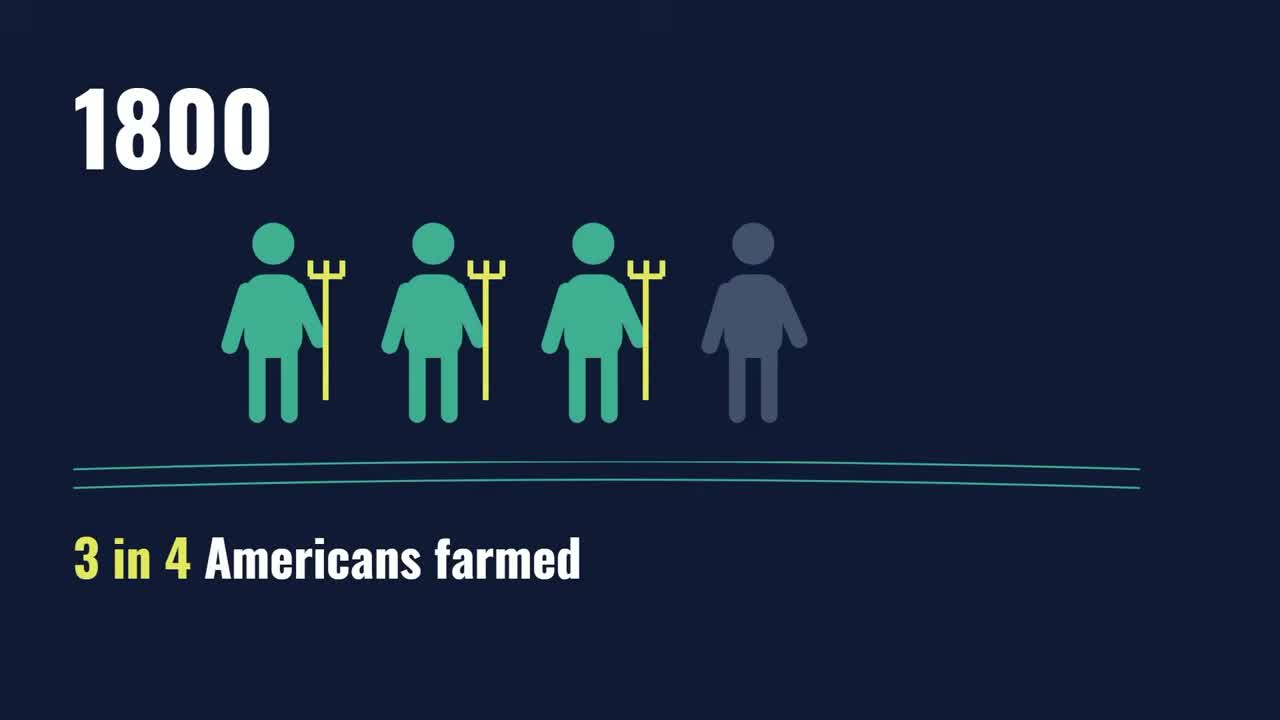
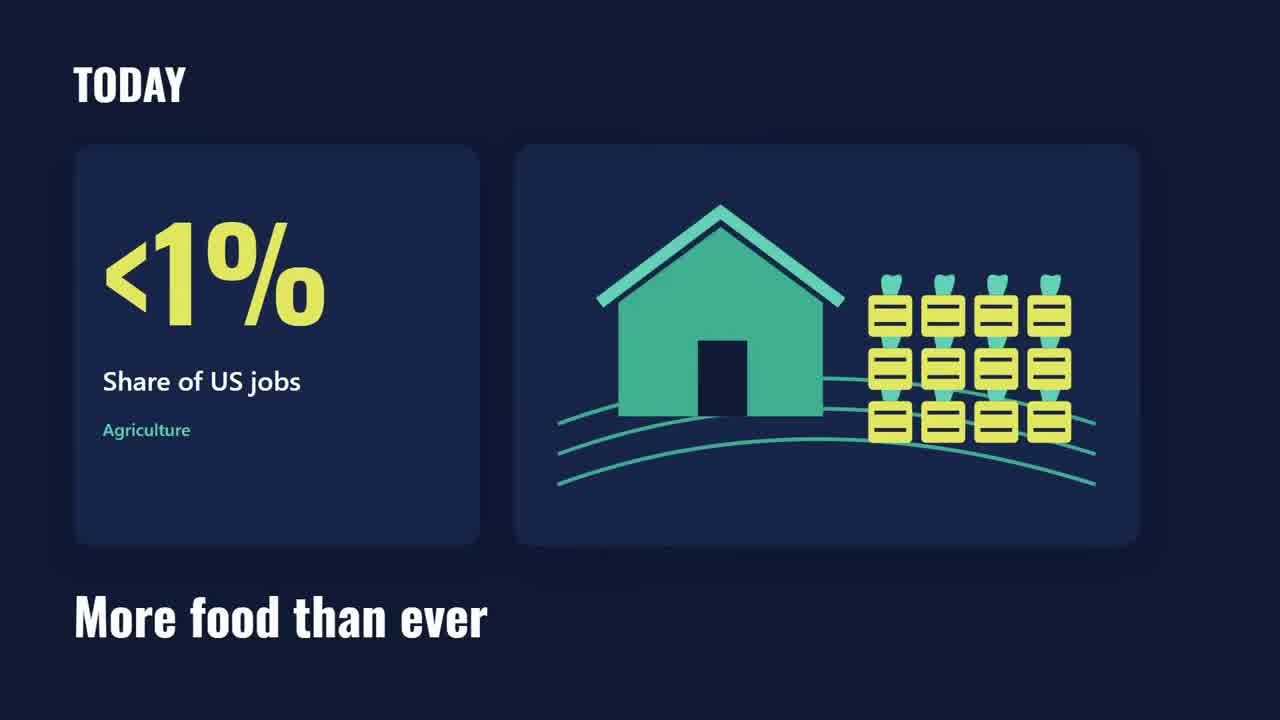
In 1800, three in four Americans farmed. Today agriculture is less than 1% of US jobs, and we produce more food than ever.
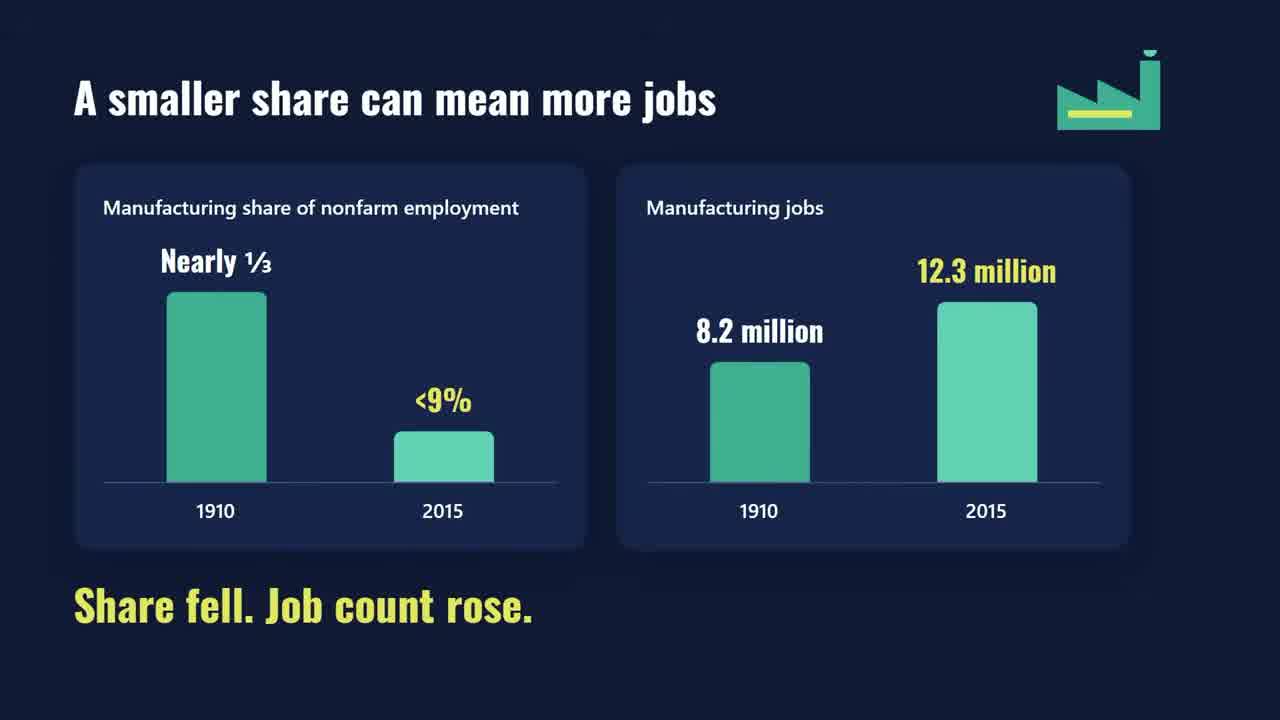
In 1910, nearly a third of nonfarm workers were in manufacturing. By 2015 that share was under 9%, even though the actual number of manufacturing jobs went up from 8.2 million to 12.3 million.
The information economy is next.
But here's what's different: improved farming took generations to see the major gains. Manufacturing took decades. The information economy is changing within a few years.
If you charge by the hour for what you know, you're the farmer in 1850 who just heard about the steam engine.
“In the information economy, we were paid to know things. Moving forward, we will be paid to verify the results.”
Why Your AI Productivity Gains Are Breaking Your Business Model
If you've spent the last year using AI to do your job faster, this is already happening to you.
My honest read? In about two years, many of us will have used AI to work ourselves out of our old business model, where we charged for the effort behind our expertise.
The problem isn't that you're less valuable. The problem is that the old pricing structure was based on hours, and hours just got compressed by 5x or 10x.
So what do you sell instead?
You sell the outcome. On a retainer.
The experimenting you've done, the tools you've tested, the workflows you've built, the failures you've learned from, that's exactly what most of your clients haven't done and don't know how to do.
The tools you know inside out? They've never heard of them. Because they've been running a business while you've been running experiments.

That's the arbitrage.
The Small Business AI Arbitrage Window
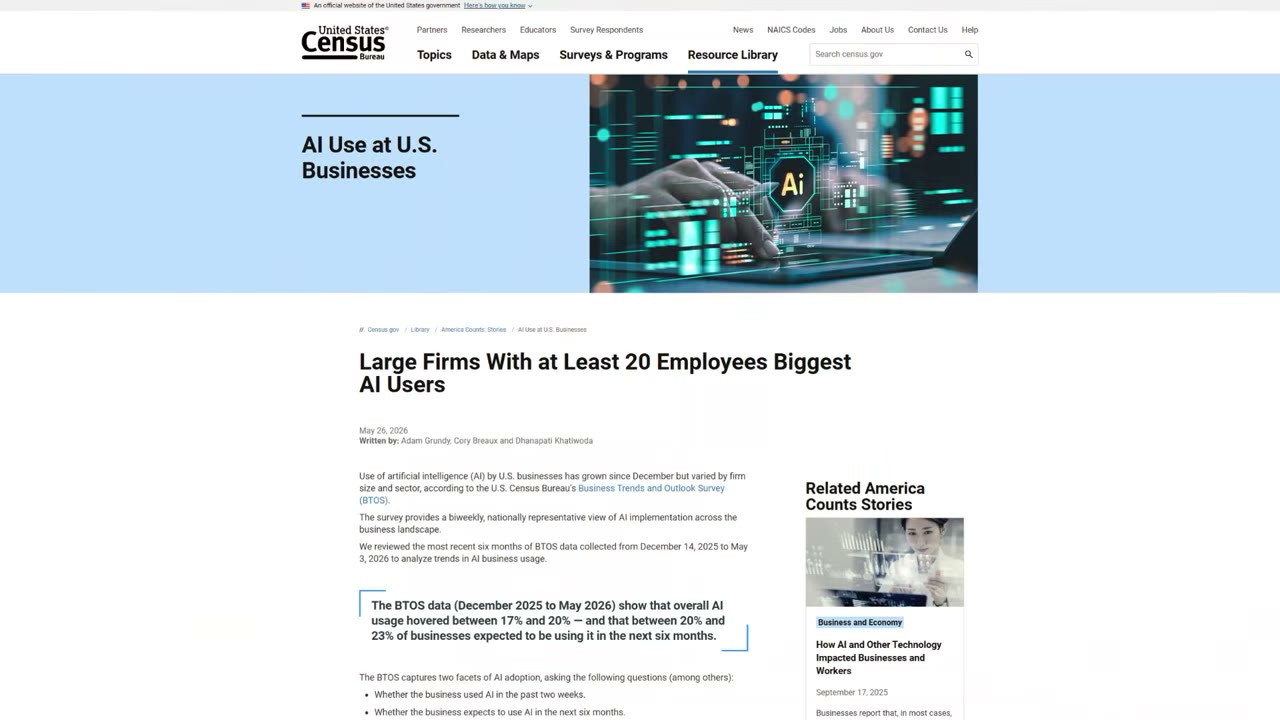
Census Bureau data shows 37% of firms with 250+ employees are using AI, while fewer than 20% of firms with four or fewer employees have adopted it.
Big companies are moving. Small businesses are watching.
And that gap is your window.
The small business owner has seen the headlines. Maybe played with ChatGPT once or twice. But they have no idea how to connect it to how their business actually runs.
You do.
I create a lot of content for my business. You know what subject gets the highest show-up rates and response rates? AI. Every time.
The market wants this. They just don't have the words for what they need yet.
The Arbitrage Window in Numbers:
- 37% of large companies (250+ employees) using AI
- Less than 20% of small businesses (4 or fewer employees) using AI
- Timeline: This gap is closing in years, not decades
What Is an AI Consultant? (And Why Companies Are Searching)
Here's terminology that matters more than you'd think.
“AI consultant” is what people search for. It's how buyers describe the problem they're trying to solve: they have no internal AI expertise, and they need someone who does.
When companies search for an AI consultant, they're looking for someone accountable for keeping them up to date with everything AI. Someone who knows:
- Which tools hold up on a real deadline (and which ones fall apart)
- How to connect AI capabilities to actual business operations
- What's worth implementing now vs. what's still too immature
- How to avoid the common traps and wasted money
The knowledge that feels common to you, because everyone around you is deep in it too, is completely foreign to most business owners.
With hindsight, I underestimated how much of a gap there was. The tools I've studied inside out, the ones where I can recommend benefits and drawbacks intuitively? The client has never heard of them.
That gap is the value you're selling.
AI Consultant vs. Fractional AI Officer: The Retainer Model
Now let me make a distinction that changes how you structure your offer.
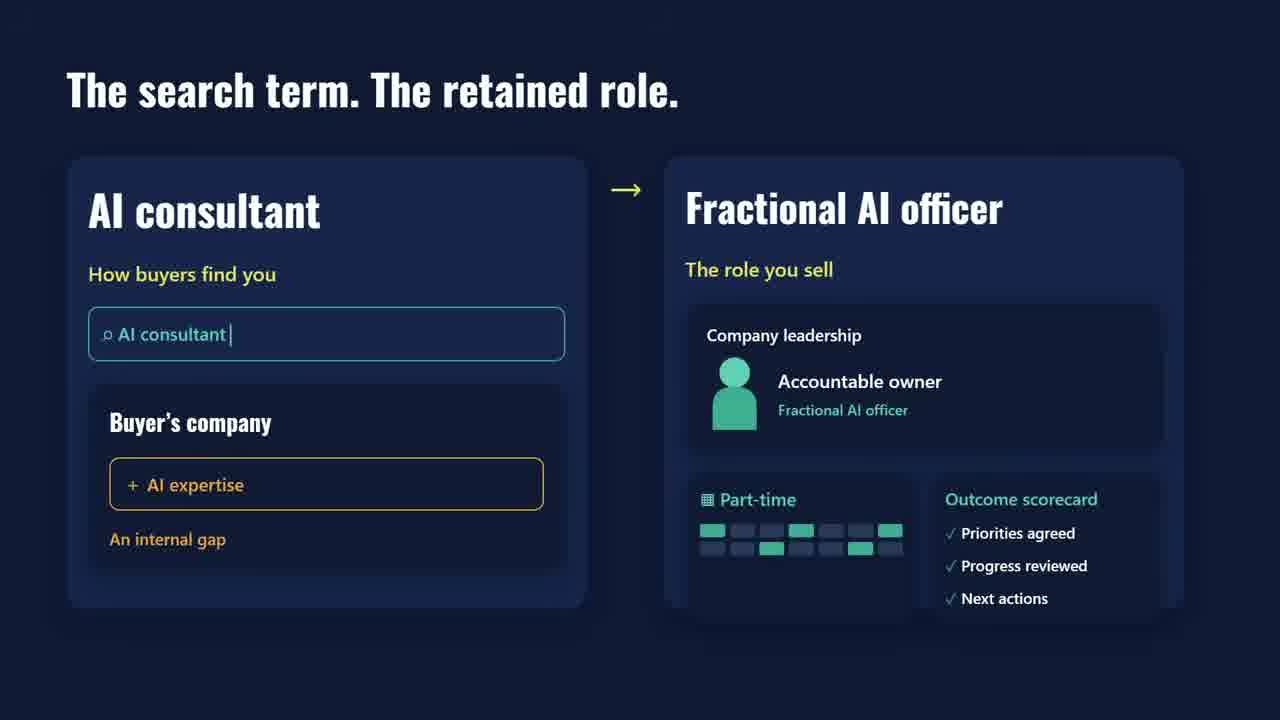
“AI consultant” is the searchable term, how people find you.
“Fractional AI officer” is the retained role you sell them into. A part-time executive accountable for the company's AI outcomes.
Why does this matter?
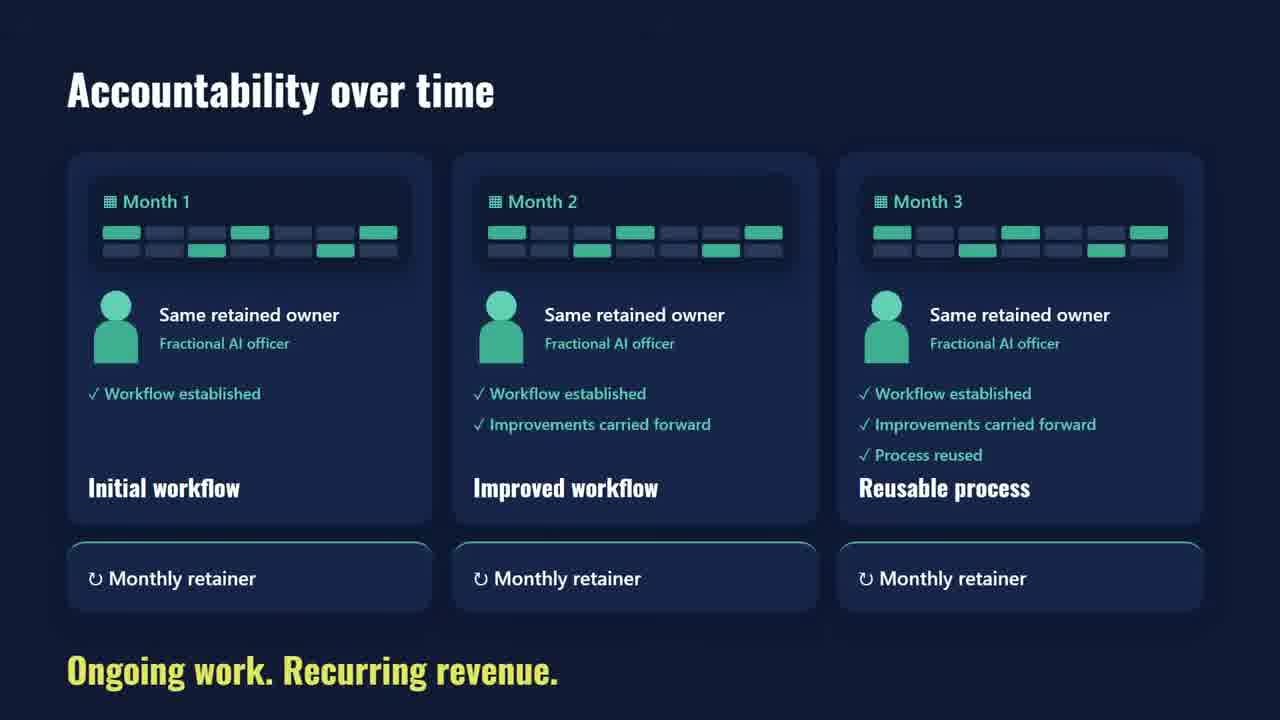
- A project ends and you're chasing the next client
- A retainer means you own results over time
- The work compounds
- Your revenue gets predictable
The pitch goes something like this:
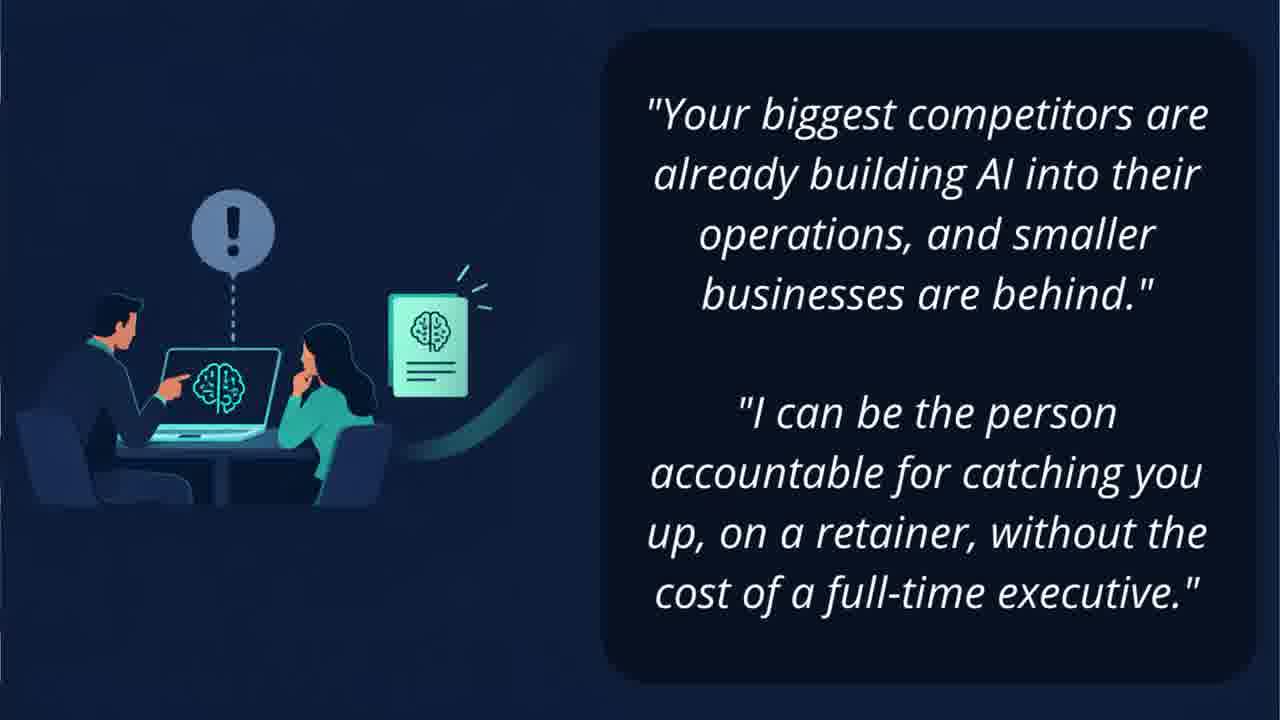
“Your bigger competitors are already building AI into their operations. Smaller businesses are behind. I can be the person accountable for catching you up, on a retainer, without the cost of a full-time executive.”
That moves the conversation from “how many hours does this take” to “what outcomes are you after and how do I deliver them.”
If you run an agency: You're closer than you think. Your team already does marketing with AI built in. You're already the bridge between what the technology can do and what your clients need. This just modernizes your business model and puts you on retainer for accountability you were probably carrying anyway.
If you're solo: Same logic. Package the expertise and experiments into a retained engagement where you own a client's AI outcomes in your specific area.
Real AI Implementation Examples Clients Will Pay For
Let me get specific about what this looks like in practice.
As an AI consultant, I've done projects like:
CRM Implementation with AI Automation
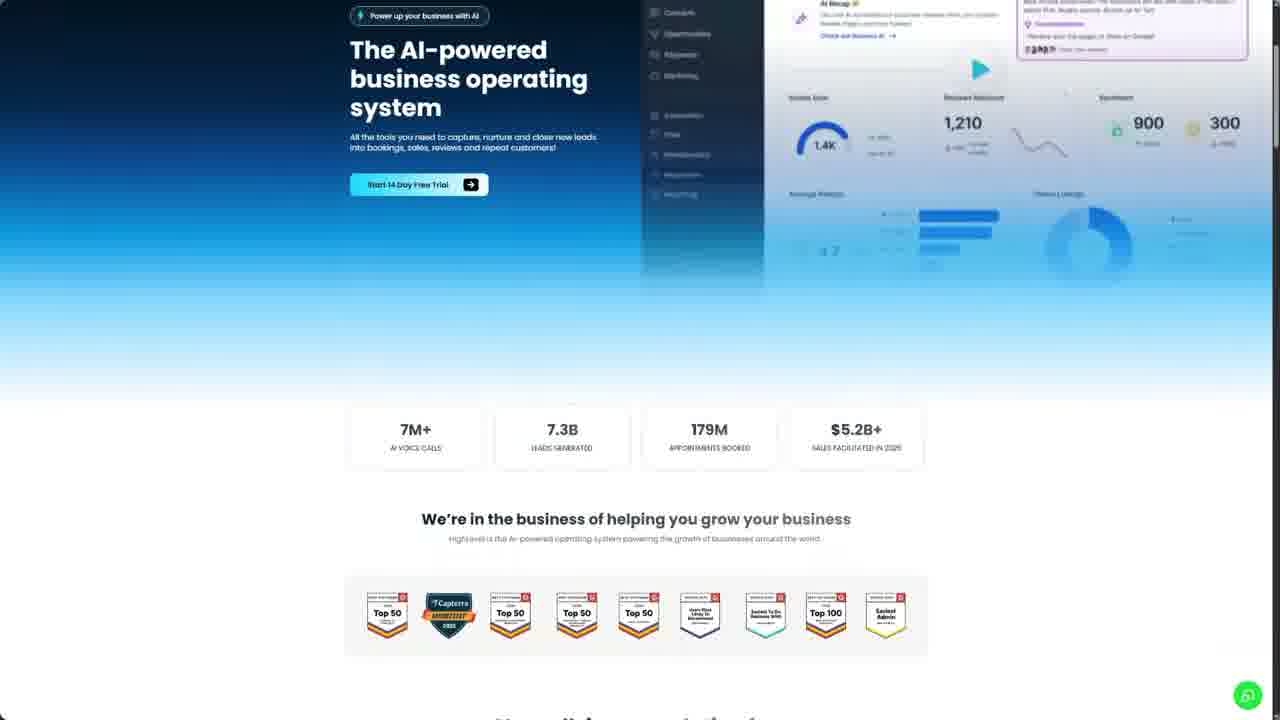
- Implemented GoHighLevel for a company, a CRM that manages customer relationships and automates follow-up
- This kind of project runs somewhere around $5,000 to $10,000
- The client couldn't have done this themselves in a year of trying
Company-Wide Dashboards
- Built dashboards so leadership can see what's working without waiting for a monthly report
- Connected data sources they didn't even know could talk to each other
- Real-time visibility instead of guessing
API Integrations
- Connected APIs to inventory systems
- Automated data flows between tools that were being managed manually with spreadsheets
Front-End Development
- Built websites that used to need a designer
- Used AI tools to handle what would have taken weeks and multiple vendors
None of that is magic. It comes from knowing what these tools can do today that they couldn't do six months ago.
Your clients haven't put in those hours. They need someone who has.
How to Position Yourself as an AI Consultant This Week
My advice is to move on this sooner rather than later, inside the expertise you already have.
Start with your existing domain:
- If you've spent 10 years in email marketing, become the fractional AI officer for email
- If you're a paid media person, own how AI changes the way their ad dollars perform
- If you do SEO, position around AI-powered content and search optimization
You're taking what you already know about your field and selling the AI version of it as a retained role instead of a project.
Brand yourself now:
The people who'll be hiring a fractional AI officer next year already feel the problem today, they just don't have the words for it yet.
When they do, you want to be the name that comes up.
Being early matters. Before the term gets crowded and expensive to stand out in.
Your Action Plan
Ready to start repositioning? Here's what to do this week:
- Audit your AI toolkit: List every tool, workflow, and automation you've built over the past year. This is your inventory.
- Identify your domain: What's your 10-year expertise? That's where you position your fractional AI offer.
- Draft your pitch: Use the template: “Your competitors are building AI into [your domain]. I can be accountable for catching you up, on a retainer, without full-time executive cost.”
- Update your positioning: LinkedIn headline, website copy, email signature. Start showing up as an AI consultant in your specific area.
- Reach out to three existing clients: They already trust you. Ask if they'd be interested in a retained AI accountability role.
The Bottom Line
Being someone who knows things was great for the information economy.
But that's getting compressed the same way farming and manufacturing did. Just on a much tighter timeline.
Superintelligence is available to everyone now. Yet the judgment about how to use it is still rare.
The new economy isn't about providing information, it's about verifying and implementing it. And the people who move now will have the head start.
If you want help building and pricing this offer for the clients you already have, that's the work we do together inside MeasureU Pro, alongside other agency owners and consultants making the same shift.
Good luck with your AI consulting positioning. I'd love to hear how it goes for you.