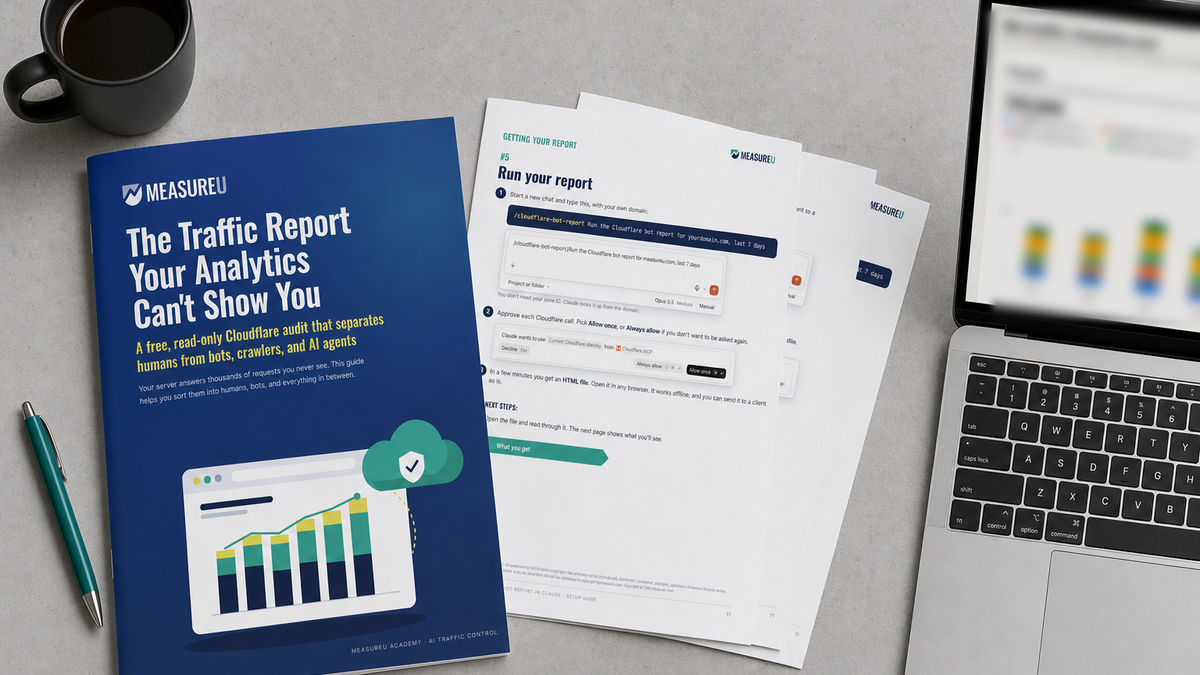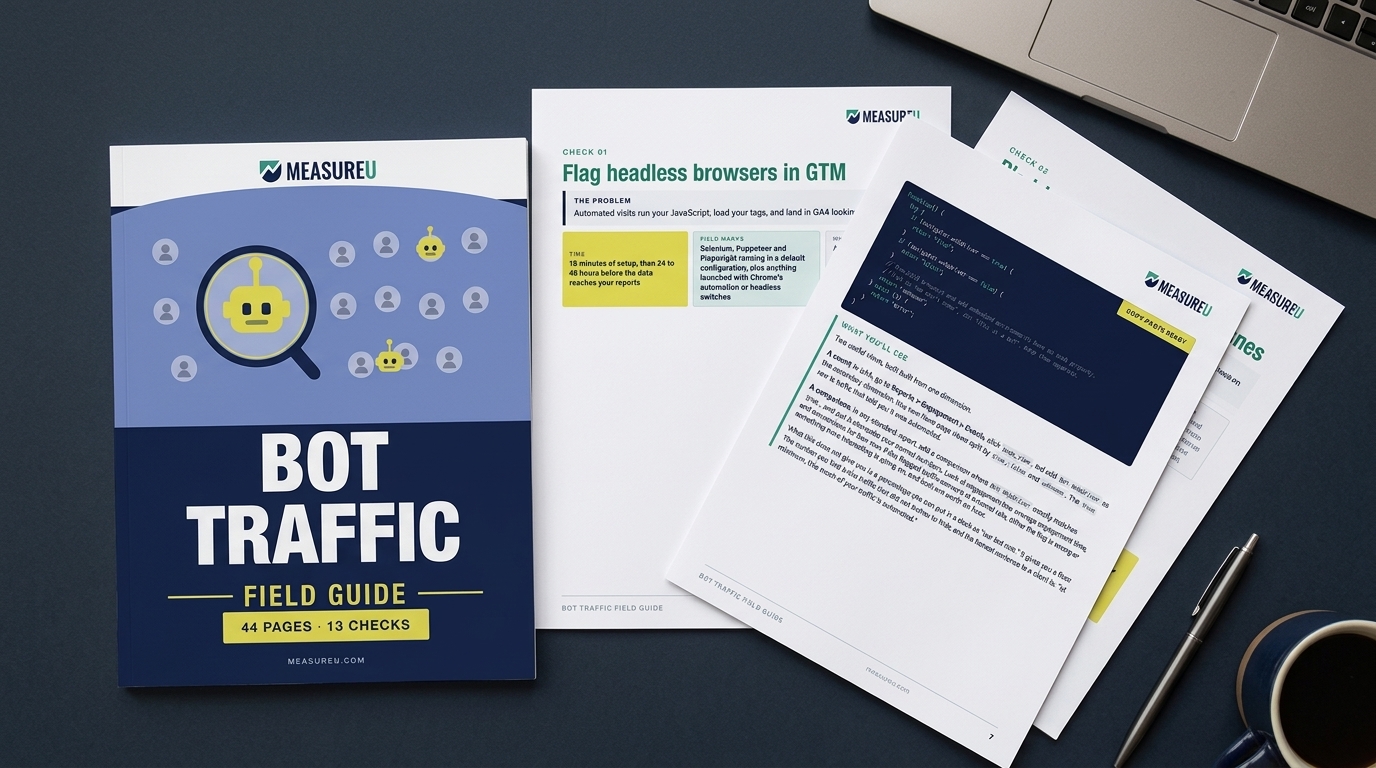
When I measured how much of the traffic on MeasureU’s site was automated in Google Analytics, at least twenty percent came back as bots or AI crawlers.
I expected maybe two percent.
Know that feeling when you check something assuming it’ll confirm what you already believe, and then the number makes you do a double-take? That was me staring at my own data.
And here’s the thing: if that number surprises you, your clients are sitting on the same problem. They just don’t know it yet.
That gap between what clients think is happening and what’s actually happening? That’s where a new service opportunity comes in. Not some theoretical “maybe someday” thing. A real, billable service you can start offering this month.
Watch the Full Breakdown
I recently taught a live two-hour workshop called AI Traffic Control that covers exactly how to turn this knowledge into revenue. The video above is the section focused on the service and pricing side.
Everything below follows the same order, including the price ranges from the slides, so you can read it as the written version of that session.
What You’ll Learn in This Post
- Why at least 20% of website traffic may be bots or AI crawlers when most clients assume it is around 2%
- How to package the work as a three step service stack: audit, setup, then a monthly report
- The Profit Pillars method for pricing each step, and the suggested ranges from the workshop
- The conversation starter and the one objection you will hear every time
- What you need on hand to actually deliver the service
Table of Contents
- Why Google Analytics Bot Traffic Is Suddenly Everyone’s Problem
- The Service Packaging Framework
- Pricing Your AI Traffic Audit Service
- How to Position This to Clients
- What You Need to Deliver This Service
- Your Next Steps
Why Google Analytics Bot Traffic Is Suddenly Everyone’s Problem
So why does this matter now more than last year or the year before?
AI crawlers have exploded. ChatGPT, Claude, Gemini, Perplexity, they’re all sending bots to scrape content. And unlike traditional search engine crawlers that most analytics tools filter by default, these newer AI crawlers often slip through undetected.
The result is inflated traffic numbers. Which means inflated conversion rate calculations. Which means your clients are making decisions based on data that’s fundamentally skewed.
Let me be direct: if 20% of traffic is automated, every metric downstream is wrong by at least that much. Bounce rate? Wrong. Time on page? Inflated by bots that don’t bounce. Conversion rate? Looks worse than it actually is because the denominator includes visitors who were never human in the first place.
And most clients? They’re completely blind to this. They’re looking at dashboards assuming every session represents a person who might buy something.
The Service Packaging Framework
Here’s how to structure this as a service offering, starting small and building into ongoing work.
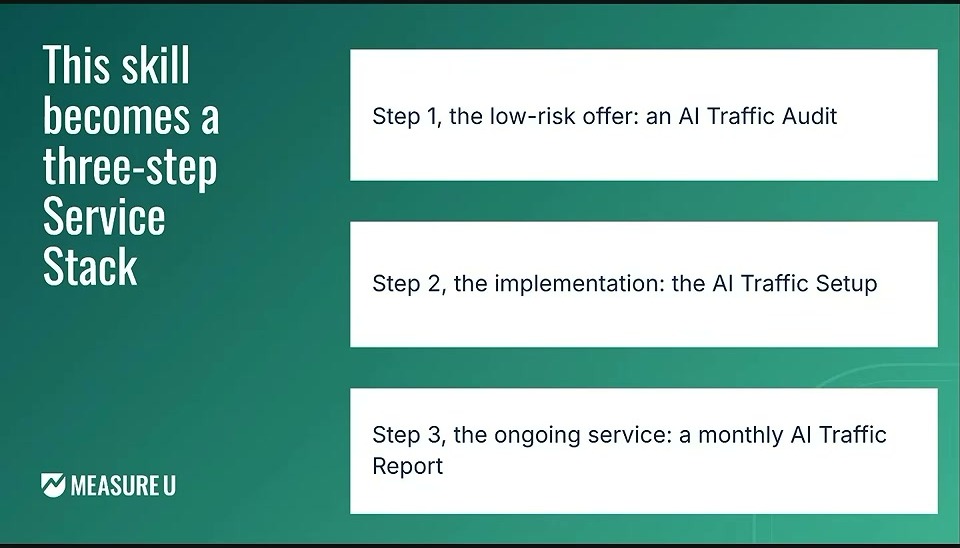
Big all-or-nothing proposals get ghosted. Give the client something small they can approve today, make each step profitable on its own, and let each step show them the next one.
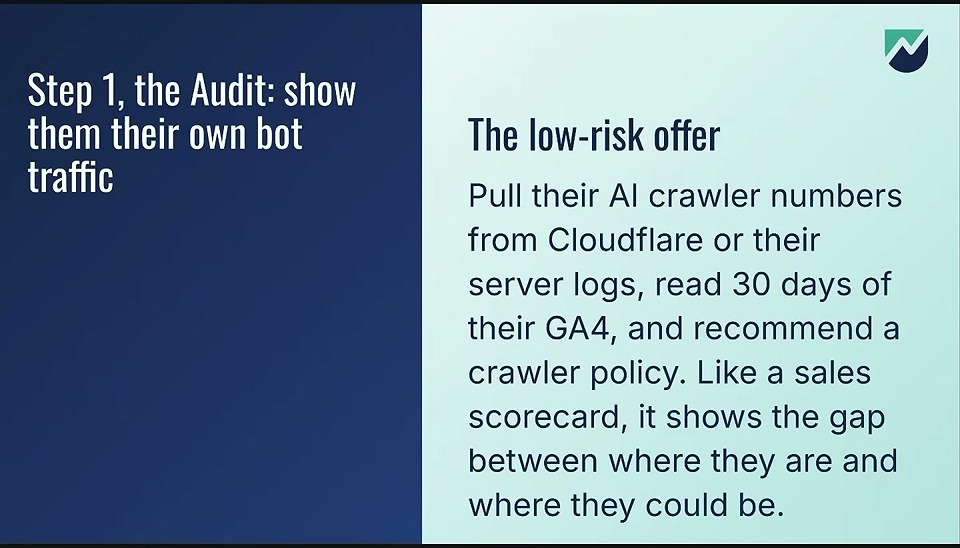
Tier 1: The Initial Audit
This is your entry point. Low commitment for the client, high insight value.
What you’re delivering:
- Measurement of current bot and AI traffic percentage
- Identification of which AI crawlers are hitting their site
- Snapshot report showing the gap between perceived and actual human traffic
- Recommendations for next steps
Why it works as a starting point:
- Quick to deliver once you know the process
- Creates an immediate “aha moment” for the client
- Naturally leads to the “so what do we do about this?” conversation
Tier 2: The Comprehensive Implementation
Once they see the problem, they’ll want it fixed. That’s where this tier comes in.
What you’re delivering:
- Google Tag Manager configuration to label bot and AI traffic
- GA4 setup to surface this traffic separately so it doesn’t pollute their main reports
- Documentation of which AI crawlers are accessing their site
- Recommendations on which crawlers to block and which to allow, which is more nuanced than it sounds, because some AI traffic you actually want
Tier 3: Ongoing Monitoring
Bot traffic isn’t a one-time problem. New AI crawlers emerge constantly. Existing ones change their behavior. Sites get discovered by scrapers that weren’t hitting them before.
What you’re delivering:
- Monthly reporting on bot and AI traffic trends
- Alerts when new crawler patterns emerge
- Quarterly reviews of block and allow decisions
- Ongoing optimization of their data quality
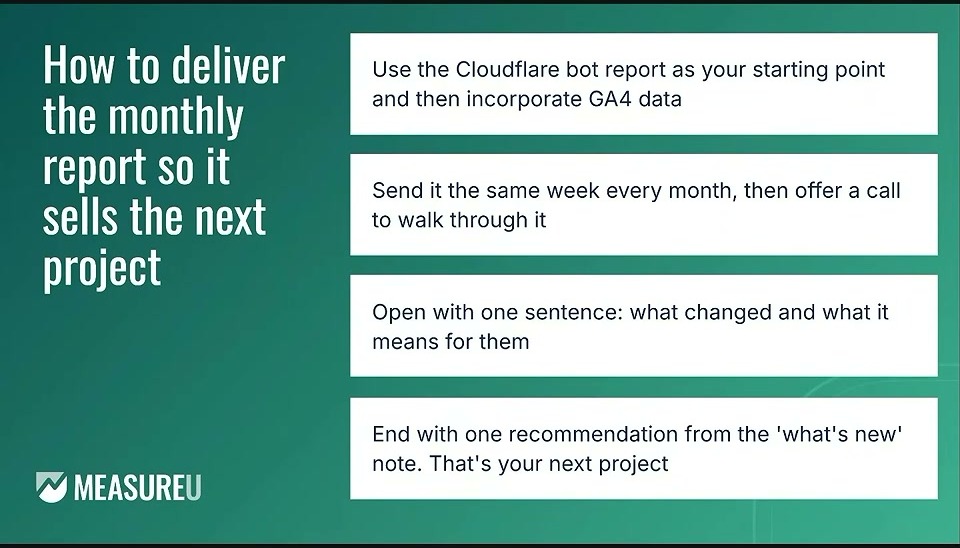
This tier is where the recurring revenue lives. Send it the same week every month, then offer a call to walk through it. Open with one sentence on what changed and what it means for them, and close with a single recommendation from the “what’s new” note.
Pricing Your AI Traffic Audit Service
Pricing is where most people freeze. The workshop uses a repeatable method rather than a gut feel, so you can quote the same way every time.
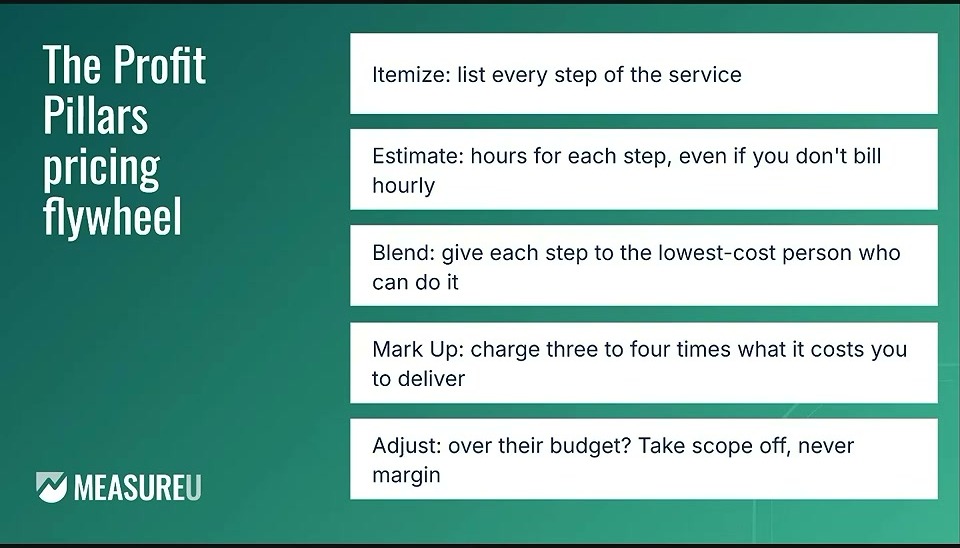
Work through it in order:
- Itemize: list every step of the service
- Estimate: hours for each step, even if you don’t bill hourly
- Blend: give each step to the lowest-cost person who can do it
- Mark up: charge three to four times what it costs you to deliver
- Adjust: if they’re over budget, take scope off, never margin
On margins specifically: double your hourly rate, then double it again. Labor should be about a quarter to a third of the amount you charge. The rest pays for overhead, sales time, and profit.
Suggested Price Ranges
Here’s where the workshop lands, and the note on the slide is worth repeating: charge more if you can.
| Deliverable | Billing | Suggested range |
|---|---|---|
| AI Traffic Audit | One time | $500 to $1,000 |
| AI Traffic Setup | One time | $1,000 to $2,000 |
| AI Traffic Report | Monthly | $250 to $500 per month |
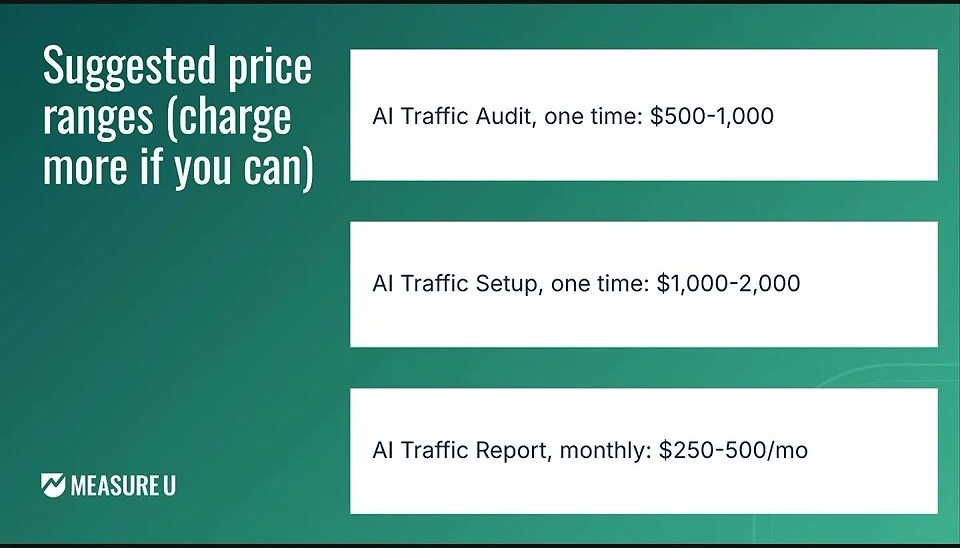
Where you land inside each range depends on the usual things: site complexity across properties and subdomains, how urgent it is, whether they’re an existing account, how messy their current GTM and GA4 setup is, and how much analysis they expect in the monthly report.
Credit the Audit Toward the Setup
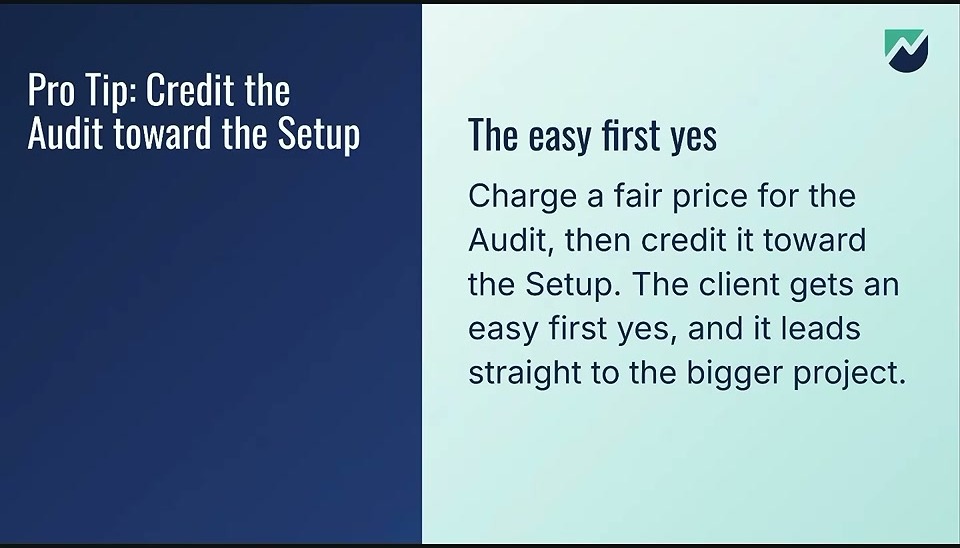
Charge a fair price for the audit, then credit it toward the setup. The client gets an easy first yes, and it leads straight to the bigger project. You get paid for the audit either way, and the credit removes the main reason they’d hesitate.
How to Position This to Clients
You’re not selling “bot detection.” You’re selling data quality. You’re selling better decisions. You’re selling the confidence that when they look at their analytics, they’re seeing real people.
The conversation starter:
“When’s the last time you audited what percentage of your site traffic is actually human? Because when I checked my own company’s site, I expected about 2% bots. The actual number was over 20%. And that means every conversion rate, every engagement metric, all of it was off by at least that much.”
That usually gets attention.
The objection you’ll hear: “Doesn’t Google Analytics already filter bots?”
Short answer: it filters known bots and spiders. But the AI crawler landscape is evolving faster than those filters update. Plus, not all bot traffic is “bad.” Some AI crawlers you might actually want indexing your content for AI search results. The question isn’t just “filter or don’t filter.” It’s “which traffic goes where, and how do we make decisions with accurate data?”
Offer It First to Clients Who Already Pay You
The hardest sale is the first one, and existing clients already trust you. Start with your analytics clients: their GA4 reports are the ones bots are bending right now.
What You Need to Deliver This Service
You don’t need to build everything from scratch. The AI Traffic Control workshop provides:
- The GTM container that handles the labeling, which you import and customize for the client
- Pitch deck for selling the service
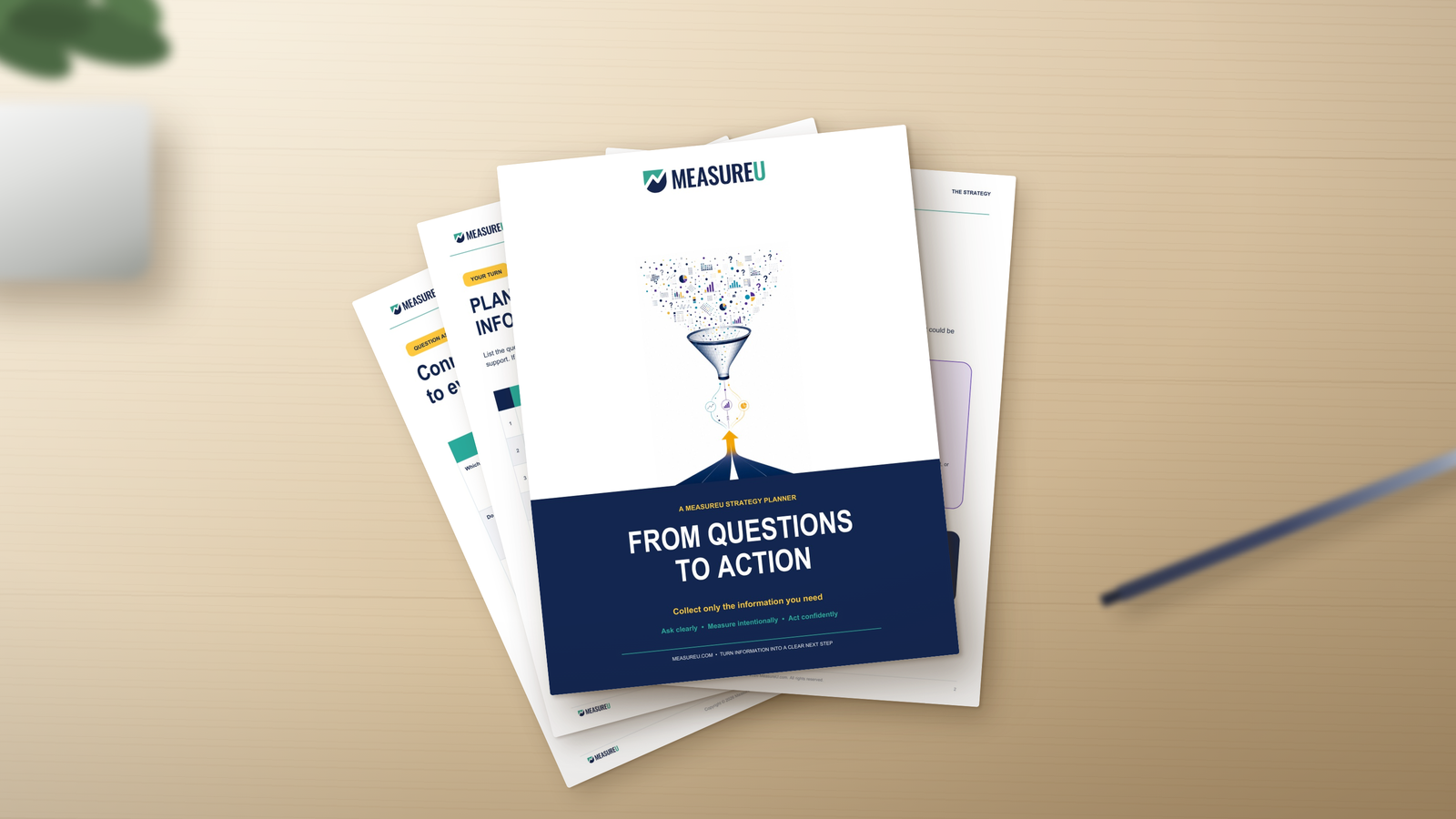
- Proposal template so you’re not writing from blank every time
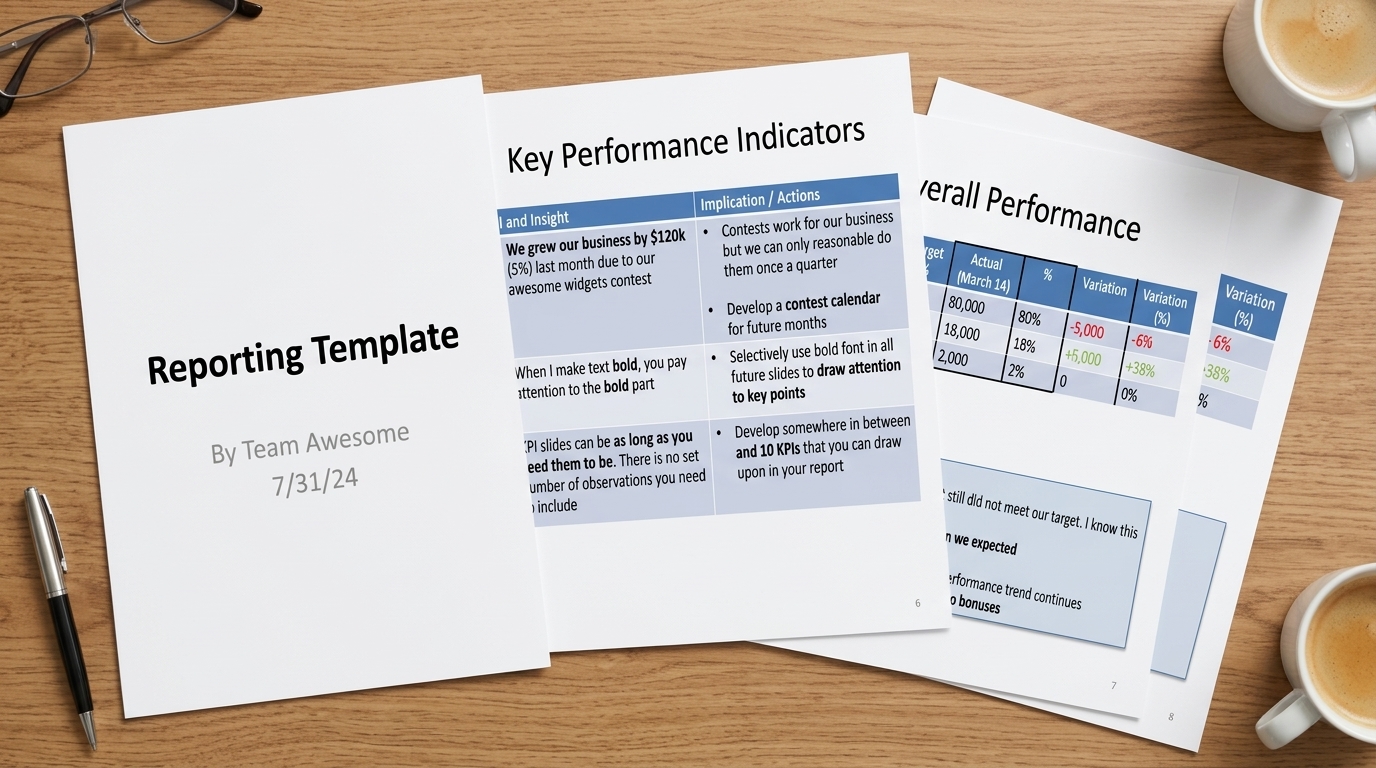
- Monthly report template for ongoing clients
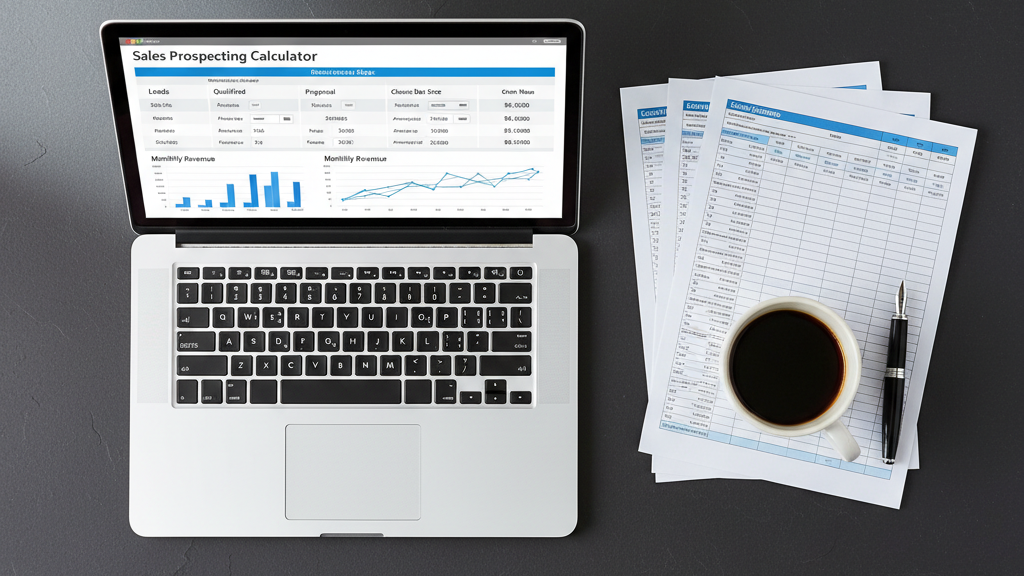
- Pricing calculator to figure out what to charge based on scope
The technical sections of the workshop cover why bot and AI traffic is a problem worth solving, how to label it inside Google Tag Manager, how to surface it in Google Analytics 4, and how to decide which AI crawlers get access and which get blocked.
Your Next Steps
- Check your own site first. Before you pitch this to anyone, run the audit on your own analytics. Get that number. Feel the shock of it being way higher than you expected. Or maybe yours is actually low, but you won’t know until you check.
- Pick one client to pitch. Start with someone who’s data-driven, who actually looks at their analytics, who would care about this kind of data quality issue.
- Start with the audit tier. Low risk for them, fast win for you, and it opens the door to the bigger implementation work.
The gap between what your clients think their traffic is and what it actually is will only get wider. The agency that measures it first gets to name the price.
Get the Workshop
The full AI Traffic Control workshop is on demand now. You get the GTM container, the pitch deck, the proposal and monthly report templates, the pricing calculator, and the complete technical training.
Get the AI Traffic Control workshop and start quoting this service.
MeasureU Pro members already have access at no additional cost.