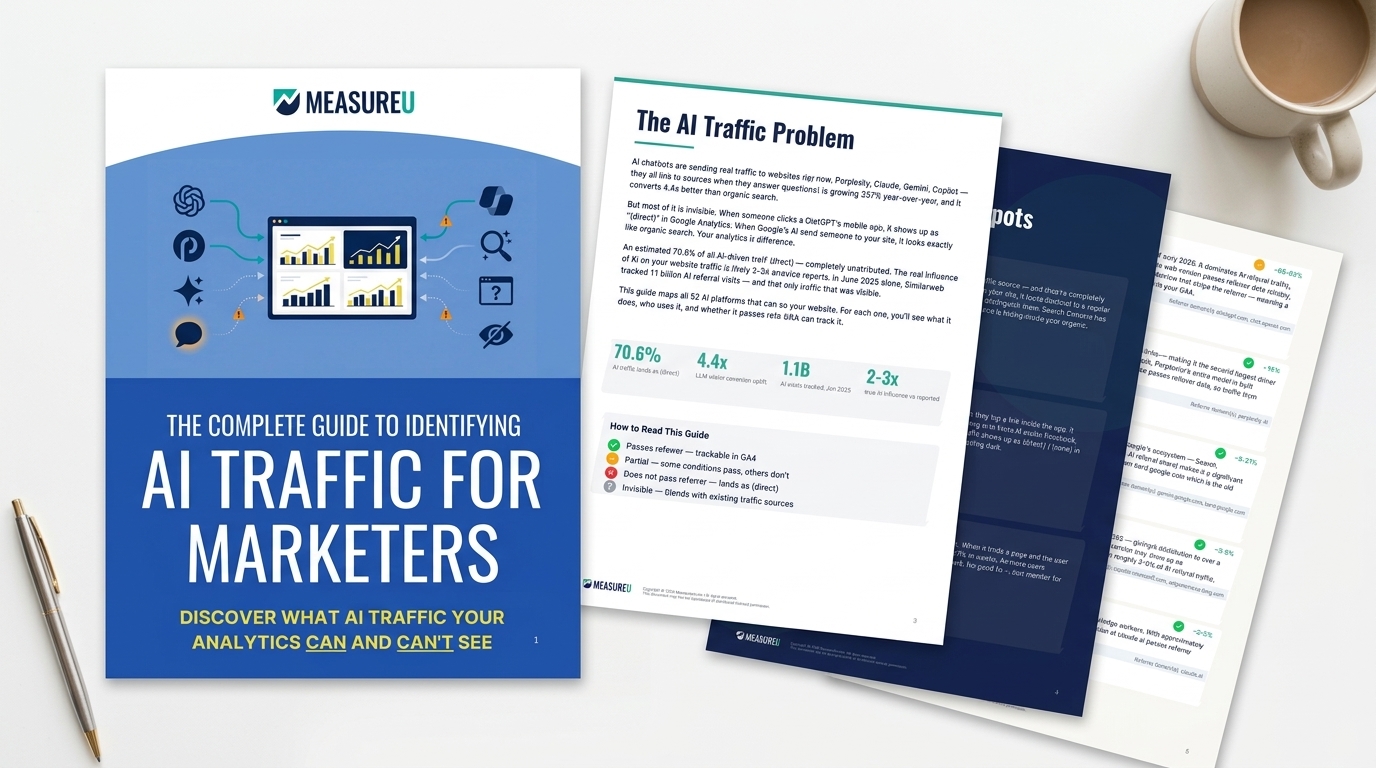
Tired of feeling like the only way to grow your agency is to hire? For years, that was the truth. You hit a ceiling, posted a job, hired someone, and hoped they didn't quit in six months.
That's not the reality anymore.
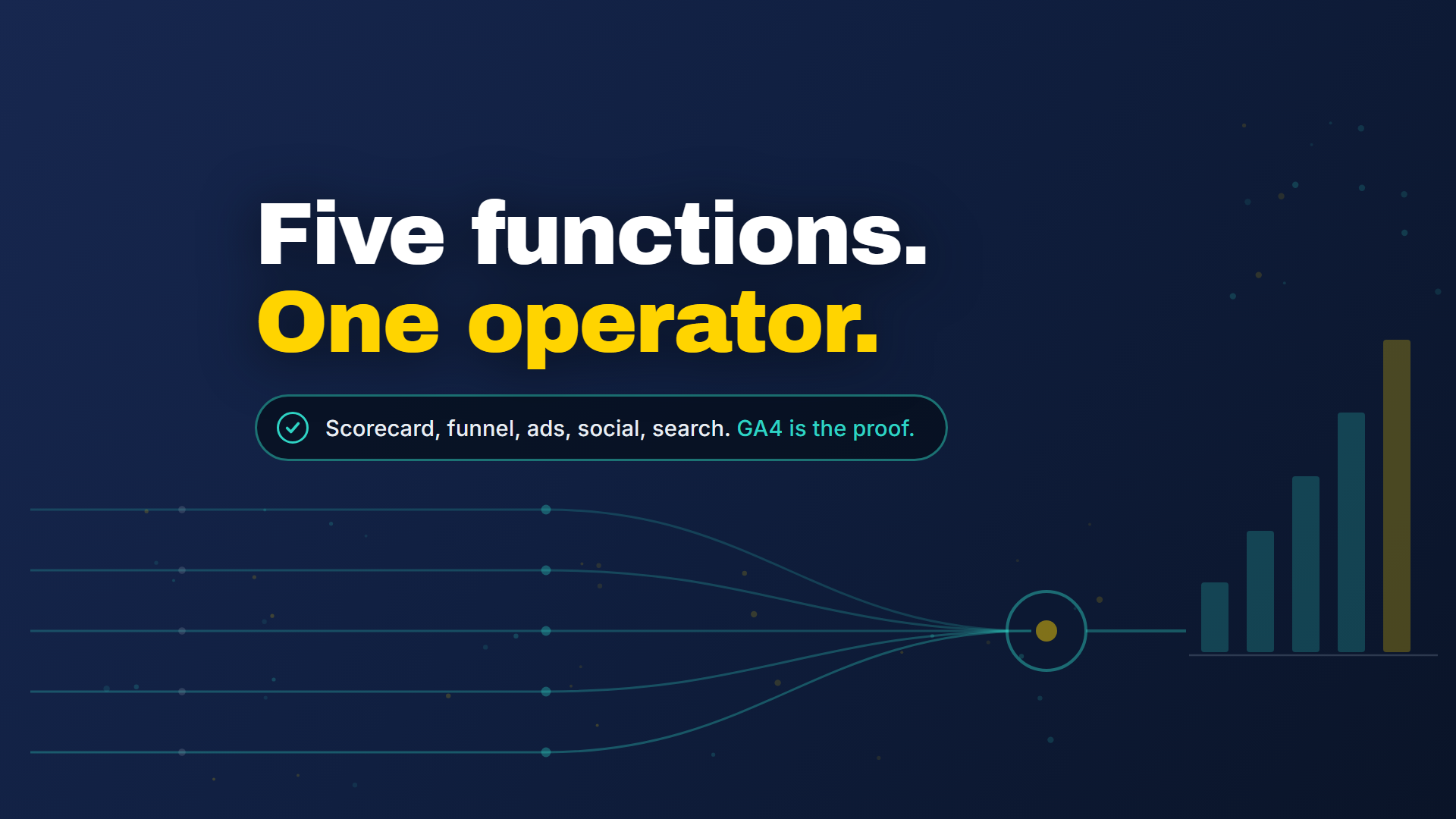
One person with the right AI marketing automation stack can now run a client's entire marketing department: the scorecard, the funnel, the ads, the content, the search traffic, and track it all with Google Analytics GA4. What used to take five specialists and a project manager? I run four of those functions myself now, with a tiny team and AI.
Here's the thing: I'm not theorizing about what AI might do someday. I've already built every piece of this. And I'm going to show you exactly how to do the same thing for your business or your clients' businesses.
Who Am I to Tell You This?
I'm Jeff Sauer. I spent twenty years building marketing agencies, grew one to eight figures and exited it, and now I run my entire marketing operation with AI instead of a big team.
The scorecard, the funnel, the ad creative, the content system. Each one is a full how-to video I've already published. I run four separate marketing functions myself, with a tiny team and AI, not a thirty-person agency.
So what I'm walking you through today is the stack I actually run, not a prediction about what's coming.
If you're a solo operator, a freelancer, or a small agency owner wondering how you compete against bigger shops, this is the answer.
Watch the Full Breakdown
In the walkthrough above I go through the complete AI marketing stack from prospecting to search traffic capture, using the same tools and the same accounts I run every day.
What You'll Learn in This Post
- The traditional agency retainer model is dying, but a new type of retainer is taking its place
- One person can now deliver across five distinct marketing functions that used to require a full team
- Each component of this stack compounds, giving you a reason to stay in front of clients month after month
- Proper Google Analytics GA4 tracking is what turns this from busy work into provable ROI
Table of Contents
- Why the traditional agency retainer died
- The AI scorecard that lands clients
- Building client funnels in 30 minutes
- AI-generated ad creative at scale
- One client call = 30 days of social content
- Capturing AI search traffic
- How to track the stack in Google Analytics GA4
- The compound effect: why this stack changes everything
- Your next steps
Why the Traditional Agency Retainer Died
Let's face it, most people blame the wrong thing when retainers dry up.
They blame the market. They blame clients getting cheap. They say budgets disappeared.
That's part of it. But the real reason retainers are dying is this: clients don't see most services as needing constant human care when AI can probably do a better job in a few years. And honestly? They're not wrong.
Think about it:
- Marketing campaigns? One-time.
- Technical fixes? One-time.
- Strategy presentations? One-time.
None of that justifies a recurring monthly invoice once the initial work is done.
Sure, ad management might be the exception, because you're touching live spend every week. But even that's getting disrupted. Savvy business owners are firing their agencies and taking over ads themselves with AI tools.
But here's what most people miss: This isn't a death sentence. It's an opportunity.
That's where the new retainer model comes in. Now you always have something new to bring to the table, across more areas of a client's business than you could have touched before. And you can deliver it faster than any five-person team could.
The AI Scorecard That Lands Clients
The first challenge with any new client relationship? Proving there's a problem worth paying you to fix.
That used to mean hours of manual auditing. Poking around their ad accounts, their analytics, their website, all before you'd earned a single dollar.
Now an AI agent does that for you. You give it a goal, it figures out the steps, and it runs them without you clicking through each one manually.
What I've built is an AI agent that produces a client scorecard, a structured report that shows exactly what's broken across a client's marketing setup, scored and prioritized so they can see the damage at a glance.

The scorecard becomes your pitch.
You walk in with a document that shows them their own problems, backed by data, before they've agreed to anything. That's a completely different conversation than “here's what I can do for you.”
It's “here's what's already costing you money.”
Pro tip: Once you deliver scorecards, track how prospects engage with them using Google Analytics GA4 event tracking. You'll know exactly which sections they spent time on before the sales call.
I made a full walkthrough of how to build and run this scorecard system in This AI Agent Built My Client Scorecard.
Building Client Funnels in 30 Minutes
Once a client sees the scorecard and says yes, the next question is always: where are we sending people?
A funnel is the path a stranger takes from first seeing your client's brand to becoming a paying customer. And a landing page is the specific web page where that journey starts, designed to capture attention and convert visitors into leads or buyers.
Building a landing page used to mean:
- A designer
- A copywriter
- A developer for integrations
- At least two weeks of back-and-forth
With AI marketing automation, I can build a client's landing page and funnel structure in about thirty minutes.

I'm using AI to:
- Outline the page structure
- Improve the copy
- Structure the offer
- Map the conversion flow
And the output is something a client can look at and react to the same day you have the conversation about what they need.
That speed changes the relationship. You're not asking them to wait and trust you. You're showing them something real before they've had a chance to get cold feet.

Of course, you still need the human element. You need to produce high quality work that people actually want to interact with. The best part? You don't have to spend weeks to produce something and get feedback. You can do it in minutes, and then iterate until the client and their customers love it.
Once the funnel is built, configure marketing funnel tracking in Google Analytics GA4 to monitor each stage of the conversion path. (More on exactly how to do that in the GA4 section below.)
I walk through this whole process in Claude Built My AI Marketing Funnel in 30 Minutes.
AI-Generated Ad Creative at Scale
You have a scorecard that got you in the door. You have a landing page and funnel ready to convert visitors. Now you need people to show up.
Paid advertising, running ads on platforms like Google or Meta so your client's offer appears in front of their target customers, is the fastest way to generate that traffic.
The creative (the actual ad copy, imagery, or video script that makes someone stop and click) used to require:
- A dedicated copywriter
- Often a creative director to review it
- Multiple rounds of revisions
- Days or weeks of turnaround
AI can help you create and test hundreds of variations on that creative now.
Not as a rough draft you have to completely rewrite. As a usable starting point that's already structured around:
- The offer
- The audience
- The platform you're running on

What matters here is that this is no longer a separate specialty you need to hire out or subcontract. One person can own the ads from brief to live campaign.
Connect your campaigns to Google Analytics GA4 for cross-platform reporting. This is where marketing ROI measurement becomes critical, because you need to see which creative variations actually drive conversions, not just clicks.
I go deeper on using AI to build ad creative in Why AI Video Ads Are the $5 Solution to Your Agency's Biggest Margin Problem.
One Client Call = 30 Days of Social Content
Paid ads drive fast traffic. But clients also want to show up organically, with the posts, videos, and content that build an audience over time without paying for every single view.
The problem with organic social has always been volume. A meaningful presence on social media requires consistent output. And consistent output requires time that most solo operators simply don't have.
AI plus automation solves this, and the math is almost embarrassing.

One client call, a thirty-minute conversation you're already having, can be processed by AI to produce thirty days of social content:
- Captions
- Post formats
- Short-form video scripts
- All pulled from what was actually said in that conversation
You're not making things up or filling space with generic content. You're taking the client's own voice and expertise and distributing it across platforms in formats each platform rewards.
Use Google Analytics GA4's social traffic reports to measure which content actually drives traffic back to the website. Without this, you're flying blind on what's working.
I made a full video on this exact system, how to take one call and turn it into a month of content using AI and automation tools: Easily Repurpose Videos for Social Media.
Capturing AI Search Traffic
Paid ads and social content reach people who weren't necessarily looking for your client. Search is different. It's about capturing the people who are already looking.
Search traffic means people typing a question or need into Google or an AI search tool and finding your client's content as the answer.
Here's what's shifted: the way people search has changed significantly with AI-powered search tools. Platforms that give a synthesized answer instead of a list of ten blue links.
And most businesses haven't adjusted their content strategy to account for that. That's a visibility problem, and it's one you can fix.
There are AI search tools now that help you identify:
- What your client's target customers are actually searching for
- How those searches are changing
- What content needs to exist for your client to show up in those results
Here's why this layer matters strategically: Search traffic has the potential to compound over time in a way that paid ads don't. Every piece of content that ranks keeps working after you've moved on to the next deliverable.
That's the kind of ongoing value that gives you a reason to stay in front of a client month after month.
Monitor organic and AI search performance in Google Analytics GA4 to see which content is actually capturing this traffic, and which needs optimization.
I cover how to use these tools to capture search traffic for a client in Answer Engine Optimization Is the New SEO.
How to Track Your One-Person Agency Stack in Google Analytics GA4
So here's the thing nobody talks about with AI marketing automation: you can build all of this, but if you can't prove it works, you're just another vendor making promises.
That's where Google Analytics GA4 becomes your unfair advantage. You're not just the operator, you're the operator and the proof system.
Why GA4 Matters for AI-Driven Marketing Operations
AI marketing automation delivers. Google Analytics GA4 proves it.
When you can show a client exactly which funnel step is leaking conversions, which ad creative is driving actual purchases (not just clicks), and which content is bringing in qualified traffic, that's a fundamentally different conversation than “trust me, it's working.”
This is what separates you from every other AI-powered freelancer out there. They can build the stack. You can build and measure it.
Essential GA4 Setup for the Five-Component Stack
Here's what to configure for each piece:
For the Scorecard:
- Set up event tracking for scorecard downloads
- Track PDF engagement if you're using a hosted version
- Create a conversion event for “scorecard_delivered”
For the Funnel and Landing Pages:
- Configure enhanced measurement for page views and scrolls
- Set up conversion events for form submissions, button clicks, and purchases
- Build funnel exploration reports to visualize drop-off points
For Paid Ads:
- Enable auto-tagging in Google Ads (or use proper UTM parameters for Meta)
- Connect Google Ads directly to GA4 for cost data import
- Set up audiences based on ad engagement for remarketing
For Social Content:
- Ensure all links use consistent UTM parameters (source, medium, campaign)
- Create traffic acquisition reports filtered by social sources
- Track engaged sessions, not just sessions, because you want quality, not vanity metrics
For Search Traffic:
- Connect Search Console to GA4 for query data
- Monitor landing page performance by organic channel
- Track which pages actually convert, not just which ones get traffic
Marketing ROI Measurement in GA4
This is where it all comes together for client conversations.
Use GA4's attribution modeling to understand how all five components work together:
- First-click attribution shows what's bringing people in (often your content or ads)
- Last-click shows what's closing deals (often your funnel)
- Data-driven attribution shows the full picture
Create custom reports that map directly to what you're delivering. When you sit down with a client and show them:
- “Your AI scorecard identified 7 issues. We fixed 5. Here's the revenue impact.”
- “Your funnel converted at 3.2% last month, up from 1.8% when we started.”
- “Your search content generated 847 sessions that turned into 23 qualified leads.”
That's marketing ROI measurement that clients actually understand. And it's why they keep paying you.
Marketing Funnel Tracking Configuration
Set up your GA4 funnel exploration with these stages:

- Traffic arrival (session_start with your source filters)
- Engagement (scroll depth, time on page, or specific content views)
- Micro-conversion (form start, add to cart, or lead magnet download)
- Macro-conversion (purchase, demo scheduled, or contact form submitted)
Then review this weekly. When you see where people drop off, that's your next optimization priority, and your next reason to stay in front of the client.
The Compound Effect: Why This Stack Changes Everything
Let me put the whole stack together, because the individual pieces are interesting, but the compound effect is what actually changes your business.

- You use the AI scorecard to identify the problems and get in the door
- You build the landing page and funnel so there's somewhere to send traffic
- You write and launch the ads to drive paid traffic immediately
- You turn client conversations into organic social content
- You capture the search traffic that's already looking for what they offer
- You track everything in Google Analytics GA4 to prove ROI
That is a complete marketing function. Not a one-time project. Not a single deliverable. A running system that needs attention, iteration, and expansion every month.
And one person can run all of it now.
That's the answer to the retainer problem I described at the start. You don't have to sell a monthly retainer in the old sense, a vague promise to “manage” something and send a report.
You're delivering across five distinct areas of a client's marketing, tracked with proper marketing ROI measurement, and each area gives you something new to bring to the next conversation.
The relationship stays alive because you always have a reason to show up, and the client can see the output of every hour you spend with them.
That's a fundamentally different kind of engagement than what most of us were trained to sell. And it's available to a solo operator right now, with the tools that already exist.
Your Next Steps
If you've been reading this and thinking “I want to actually build this for my clients, not just understand it,” here's where to start:
- Start with the scorecard. That's where every client engagement starts.
- Work through the stack from there. Funnel, ads, content, search. Each builds on the last.
- Set up Google Analytics GA4 properly before you launch anything. Measurement first, then execution.
- Document your results. Every win you can prove becomes ammunition for the next client conversation.
Ready to go deeper on this? Apply for MeasureU Pro, where we build these systems with you rather than handing you another course.
It's an application because we keep the group intentionally small. I want to work with people who are serious about building their marketing the right way, not just collecting another course they never open.
If that's you, apply now.